



Cognac for dummies
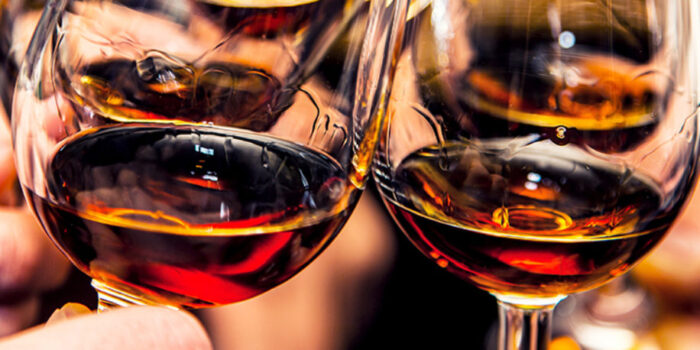
In the world of liquid indulgence, there’s more than just wine. Take cognac, for example. Often seen as a drink for old men with cigars, it actually has every potential to become hip. Neat, on the rocks and even mixed. So it’s high time to wash away that dusty image.

In the strong-alcohol segment, cognac comes pretty close to wine. With the grape as its base (rather than grain, sugar cane or agave), a French origin, barrel ageing and strict legislation, it could just as easily be wine. If it weren’t for the fact that this grape juice is distilled twice and therefore contains at least 40 percent alcohol.
Is brandy cognac?
The idea of distilling wine from the region around the town of Cognac (distillation is the heating of alcoholic juice, which concentrates the alcohol) arose in the 16th century among Dutch maritime traders. They shipped salt and wine from this Atlantic coastal area. Distilling the wine beforehand extended its shelf life and made transport cheaper.
The most refined ones come from Grande Champagne and Petite Champagne
They called it brandewijn, or brandy. A beautiful, pure product in which – unlike wine, for example – no sulphites or other stabilisers are still used. Ageing is what mainly creates quality. Brandy, by the way, is not automatically cognac. A wine distillate may only be called cognac if the grapes come from the vineyards of this area.
Grande Champagne is not a sparkling wine
Cognac has what is known as a protected designation of origin (AOC). All kinds of things are legally laid down in it, including the grape varieties (almost always the white ugni blanc) and a minimum period of ageing in special barrels. But what is what? The label of this so-called ‘elixir of the gods’ often mentions a Cru : one of six subregions, each with its own characteristics.
Generally speaking: the more limestone in the soil, the more refined the cognac. The most refined ones come from Grande Champagne and Petite Champagne, the two areas in the middle of the region. The other four crus – Borderies, Fins Bois, Bons Bois and Bois Ordinaires – surround them.
VS, VSOP & XO
Another mandatory quality indication consists of the three terms VS (very special / very superior), VSOP (Very Superior Old Pale / Very Special Old Pale) and XO (Exceptionally Old). These indicate the minimum ageing in barrels: at least 2, 4 and 6 years respectively. Naturally, the longer the ageing in barrels, the more intense the flavour. Not least because of the portion that evaporates during that long barrel ageing. This evaporation creates a subtle perfection of aromas and flavour and is poetically called ‘the angels’ share’ (or: ‘la part des anges’ ).
And never heat cognac with a flame, at most with the warmth of your hand.
Grande Champagne is not a sparkling wine
Those three official terms refer to the statutory lower limits for the youngest cognac used. But cognac is always a blend of different distillates, so the rest may be (much) older. That is why producers themselves came up with additions such as Extra, Napoléon, Hors d’Age and Ancestrale. To provide clarity and promote their products more effectively.
With a (Grande) Fine Champagne, for example, at least 51 percent of the distillates come from Grande Champagne and no more than 49 percent from Petite Champagne. And by the way, a vintage is only mentioned if everything comes from the same year. Only the very best years, then.
How do you drink it?
Naturally, any cognac can be enjoyed after a meal. Neat and preferably from a tulip-shaped glass; the classic balloon glass makes cognac’s aromas evaporate too quickly. And never heat cognac with a flame, at most with the warmth of your hand. A serving temperature between 18 and 21 degrees is perfect.
But you can do more with cognac. A young VS (or ***) is wonderfully delicious as a long drink or in a cocktail. And a VSOP aperitif with ice and a little sparkling water is a true delight too. You don’t start messing around with an XO (or older), of course. You simply sit down with it, be quiet and enjoy what time has prepared for you.
Make the ultimate cognac cocktail yourself: the cognac summit
With thanks to Business France Nederland


