


Copa Jerez proves it once again: sherry at the table is fantastic
There was once a real sherry hype in the Netherlands — for all the younger readers, we’re talking about the seventies and eighties of the last century — and for years now it hasn’t really seemed possible to get those incredible fortified wines from Jerez, Spain onto people’s tables at home. A shame, because you can eat incredibly well with fortified sherry wine, ranging from bone-dry to syrupy sweet. The 10th edition of the prestigious international cooking competition Copa Jerez proves that once again. We were there — and even better: the Netherlands managed to take home an important prize.

Sherry is excellent as an aperitif, but also pairs wonderfully with all kinds of dishes. Sherry is, for example, the only wine that doesn’t get thrown off by spicy and hot dishes. With fiery curries, aromatic tagines, olives and even bar snacks — the horror snack with every other wine — sherry holds its own. It makes perfect sense, then, that there is an international cooking competition, the biennial Copa Jerez, in which chefs and sommeliers from various countries compete to create the most beautiful sherry-and-food pairings.
Copa Jerez
Copa Jerez was created twenty years ago as a unique opportunity for chefs and sommeliers to work together and take on the sherry challenge on a renowned global stage. The competition takes place every year in the heart of sherry country, Jerez de la Frontera in Andalusia, where a glass of sherry is never far away. In Spain, sherry is simply called jerez too, after the most important city associated with this distinctive fortified wine; sherry is made in the ‘sherry triangle’ in southwestern Andalusia, around the cities of Jerez de la Frontera, Sanlúcar de Barrameda and El Puerto de Santa María.
The Netherlands in the Copa Jerez final
After several Dutch teams already made a strong impression in previous editions — restaurant Podium onder de Dom even won the overall final of the 7th edition of Copa Jerez — chef Martijn Wijnands and sommelier Randy Brouwer of restaurant Vigor* in Vught travelled to Jerez this year. In an exciting final, where they had to compete against finalists from six other countries with a starter, main course and dessert, they surprised the jury with diverse and challenging combinations featuring sherry as the star.
The jury was no ordinary one either, consisting of six international wine cracks: Jancis Robinson (Master of Wine, wine writer), Almudena Alberca (Master of Wine, winemaker), Melania Bellesini (sommelier at The Fat Duck***), Pascaline Lepeltier (wine writer and France’s Best Sommelier in 2018) and Josep Roca (sommelier and co-owner of El Celler de Can Roca***).
Best Main Course Pairing
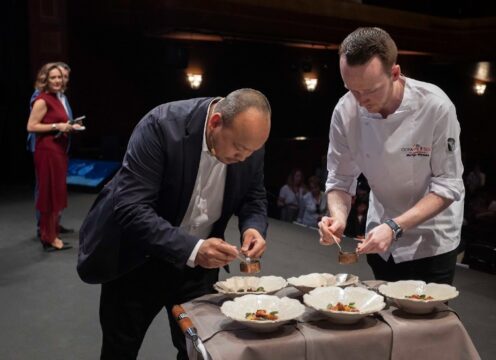
Although the overall prize at this edition of Copa Jerez went to chef Allan Schultz and sommelier Alexander Berntsen (from Parsley Salon restaurant in Hellerup, Denmark), Randy and Martijn did win the coveted Best Main Course Pairing prize with their dish of sweetbread, eel and Vigor* ‘wasabi’, paired with Oloroso Gutiérrez Colosía.
An impressive achievement!
Sherry at the table at home
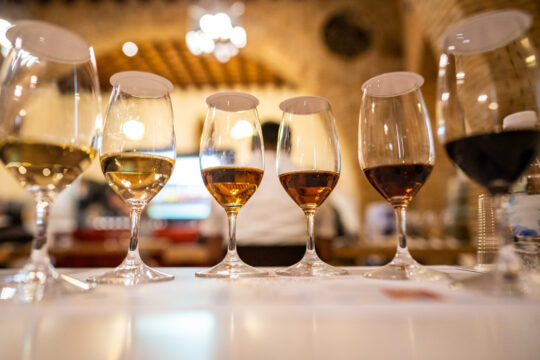
Would you finally like to drink sherry with your meal at home too? Here’s a short course to help you find the best pairings. Sherry is an umbrella term covering different styles: from spicy and bone-dry with salty almond notes (Fino and Manzanilla), to dry and aromatic (Amontillado), complex (Palo Cortado), powerful (Oloroso), and syrupy and intensely sweet (cream and PX sherry).
Food to pair with the different sherry styles
It’s precisely that versatility that makes sherry so fantastic with food; as mentioned, the possibilities are endless. To get you started, here are a few golden combinations.
Fino: light gold and clear in colour, fresh, light and bone-dry. Delicious with nuts, herring, olives, seafood, fish & chips and tempura.
Manzanilla: pale yellow and clear in colour, spicy, dry and saline. Delicious with oysters and sushi, and with the king of hams: Jamón Iberico de Bellota.
Amontillado: amber-coloured, refined, dry, aromatic and elegant. Delicious with mushrooms and truffles, smoked meat, Iberico ham, roasted nuts and tuna.
Palo Cortado: chestnut brown, complex, refined, full and rounded. Delicious with Spanish ham, complex cheeses, chocolate, oxtail and Thai dishes with coconut milk.
Oloroso: between amber and mahogany in colour, warm, complex and powerful. Delicious with red meat, duck, rack of lamb, game and mature cheeses such as Munster, Manchego & older Comté.
Cream: dark chestnut brown, friendly and velvety smooth. Sweet, but not too sweet. Delicious with terrines and pâtés, and Eastern, spicy dishes.
PX: ebony in colour, syrupy, with raisin, fig and chocolate notes, intensely sweet. Delicious with complex cheeses (creamy blue cheese!), vanilla ice cream, chocolate mousse and dark chocolate.
Good luck!
Read also:
- This tapas restaurant has been named the best in the world
- Pintxos, pinchos or tapas?
- 10 kitchen hacks from professional chefs
Header image: Tony Perez


