



Don’t fall for it anymore: many terms on your bottle of olive oil mean absolutely nothing
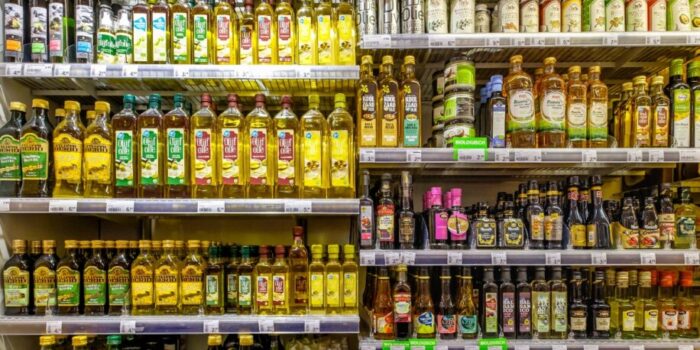
Olive oil is indispensable in the kitchen. We use it for frying, drizzling over salads, enriching pasta and dipping bread into. Olive oil has seen the biggest price increase of all supermarket products. But why is one bottle five times as expensive as another? What do all those terms mean? And how can you recognize truly good olive oil? Spoiler: ‘Classico’ sounds nice, but means absolutely nothing.

The oldest oil on Earth
Let’s start at the beginning: olive trees are ancient. Where was the first olive grove? Probably between the Tigris and Euphrates or along the Nile. We’re talking about 8500 BC. It wasn’t until 1960 that the different quality levels of olive oil were legally established. High time, then, to separate the wheat from the chaff.
Spain leads the way
80 percent of the world’s olive oil comes from the area around the Mediterranean. Spain is by far the leader (60 percent of the volume!), followed by Italy, Greece and Tunisia. An average Spanish household goes through almost 10 liters per person each year. They fry, roast and deep-fry in olive oil. Respect.
1,552 types of olives
The flavor of olive oil is determined not only by the type of olive, but also by the region, climate and soil type – just like wine. There are around 1,552 (!) olive varieties. Olive oil can broadly be divided into delicate, medium and robust. The grassier the aroma, the more robust the oil and the more antioxidants it contains. Prefer something mild? Choose oil from northern Spain or Greece. A fan of peppery flavors? Southern Italy and southern Spain are the olive oils to go.
From olive to oil
An olive tree produces 5 to 40 kilos of olives per year, enough for 1 to 5 liters of oil. Early harvest = less oil, but better quality. Just as with wine, you need to press quickly after harvesting to prevent oxidation. The biggest enemy of olive oil is oxygen.
Extra virgin, virgin, novello and marketing nonsense
Time to unravel some olive-oil jargon:
Extra virgin (or vergine):
The best olive oil. Mechanically pressed, without heating or chemicals. Maximum acidity of 0.8%. Note: the lower the acidity, the better the quality of the oil. Rich in antioxidants such as polyphenols and vitamin E. The flavor ranges from mild to distinctly peppery. Genuine extra virgin olive oil must clearly state where it was produced and may not contain any other ingredients. The terms ‘first pressing’ and ‘cold-pressed’ are marketing terms, because extra virgin olive oil is automatically produced that way.
Virgin:
Also mechanically pressed, but with acidity of up to 2%. Less complex, but still completely natural. Sometimes blended with extra virgin for extra flavor.
Novello:
Italian for ‘new’. Also extra virgin, but not filtered or decanted. It goes straight into the bottle after pressing. The result: this olive oil is often somewhat more bitter and peppery.
Mild & classic:
Sounds good, but is actually refined olive oil: neutral in flavor, with little aroma and none of the healthy polyphenols. Spruced up with a touch of extra virgin so it can still be called ‘olive oil’.
And then there are the myths:
Terms such as ‘grand cru’, ‘classico’, ‘traditionale’ or ‘original’ are purely marketing. They mean absolutely nothing.
Tips & tricks
- Dark bottle = better. Light, air, heat and time are the biggest enemies of olive oil.
- Cheap = questionable. Extra virgin for €3? Don’t fall for it. Quindi non esiste! Here’s how to recognize fake olive oil.
- Check the production date. Olive oil isn’t wine; it doesn’t improve with age.
- Use within 6–9 months. After that, the flavor deteriorates quickly.
- Use extra virgin for: dipping your bread into it, pouring it over burrata. Light frying works too. This is the best Italian olive oil according to an international competition.
- Use virgin for: frying and sauces
- Use mild and classic for: frying, roasting, high temperatures and deep-frying. And bizarrely, in the Netherlands we collectively fry in olive oil made from rotten olives..
Another myth: olive oil in your pasta water?
Some say it prevents sticking. But oil doesn’t mix with water. The oil stays floating on top while your pasta swims underneath. So it helps not one bit. Don’t do it. Use that olive oil where it does add something—such as over your pasta, after cooking.
Read also:


