


Drink absinthe and keep both ears. You can
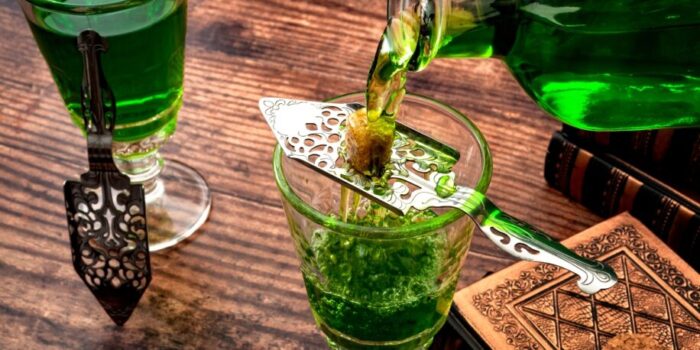
Vincent van Gogh was crazy about absinthe, the green drink that frequently inspired him. But it also drove him mad and ultimately cost him his ear. What exactly is this drink? Where does it come from, and can you drink it while still keeping both ears?

To start at the beginning: absinthe is a spirit made from anise, wormwood and fennel. During distillation, a few other herbs are added, such as coriander and chamomile, which give each absinthe its own character. Its signature features are its green color and bitter, anise-like taste. Sugar used to be added to mask the bitterness somewhat.
The green fairy
In 1797, Henri Pernod started the first absinthe distillery in Switzerland, where wormwood grows abundantly. After moving his distillery to France, absinthe became a huge success. The hallucinogenic drink was especially en voque in artistic circles. Van Gogh was not the only one who loved it: Toulouse-Lautrec, Gauguin, Picasso and Paul Verlaine were fans too. Absinthe left Verlaine in an almost permanent state of intoxication, and he came up with the nickname ‘the green fairy’.
An alternative to wine
Consumption rose from 672 thousand liters in 1873 to 48 million (!) liters in 1913, certainly also because of disappointing wine harvests, as the grapevines were ravaged by phylloxera. As a result, wine was scarce and expensive, while absinthe was an excellent and cheaper alternative.
Ear, not ears
Under the influence of absinthe, Verlaine tried to set his wife on fire and murdered one of his best friends, the poet Rimbaud, in 1873. This did nothing to improve absinthe’s reputation. Ten years later, Van Gogh cut off his left ear. He painted the famous painting ‘Café Table with Absinthe’, showing a glass of absinthe and a carafe of water (traditionally, drops of water were added to absinthe), a year earlier.
Beautiful green color
At the time, Van Gogh also experimented with other mind-altering substances, such as turpentine and the dangerously poisonous foxglove, but absinthe was his favorite. He sometimes diluted his absinthe with black ink and copper sulfate: the former for the taste, the latter to achieve a more beautiful green color. That only made the drink even more dangerous, quite apart from absinthe’s high alcohol content, which can reach as much as 70 percent!
Absinthe banned
Opponents of absinthe did everything they could to ban the drink and received help from an unexpected source: French winegrowers, who were gradually growing tired of competing with absinthe. Eventually, absinthe was banned in France in 1915. The Netherlands also introduced a ban on absinthe, which was not lifted until May 2005.
For a long time, people thought that absinthe’s hallucinatory, or even madness-inducing, effect was caused by thujone, the active compound in wormwood. Researchers have since shown, however, that the amount of thujone in a glass of absinthe is too small to have that effect.
Try it yourself
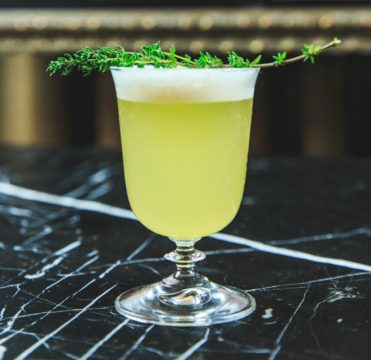
Are you willing to try? Then check with your favorite cocktail bar to see whether absinthe is on the menu, such as at The Duchess. Prefer to see green at home? You can find absinthe at Gall&Gall, among others, and at Drankgigant, which has an extensive collection.
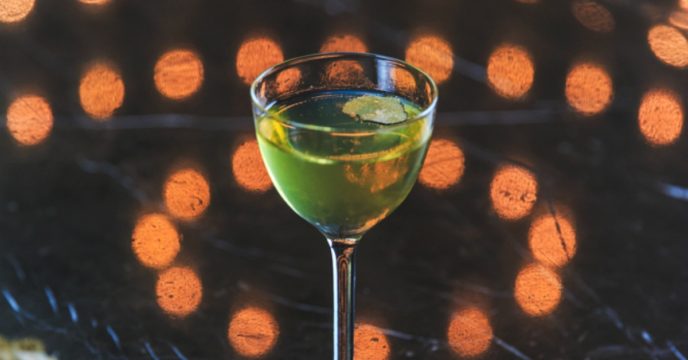
Image: The Duchess
Also read:


