


Bluff your way into: tequila
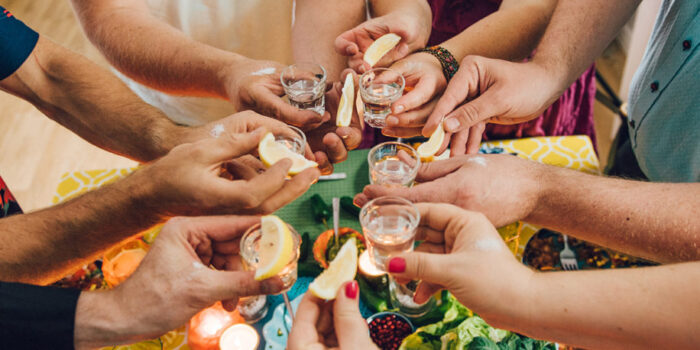
Lick salt off your hand, down the shot in one go and then bite into a lime: wow, that’s tequila! But where does this drink actually come from? And what do the Aztecs have to do with it?

Drink of the gods
Tequila is a mythical drink in Aztec civilization. A lightning strike at the beginning of time is said to have split open a large agave plant. The heat of the lightning cooked the sap, and tequila came streaming out of the plant: a true drink of the gods.
Agave
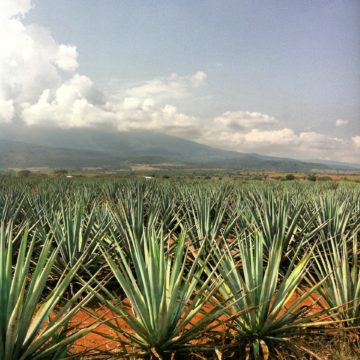
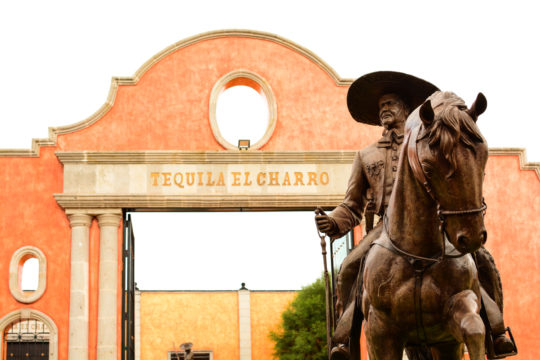
Alcohol is distilled throughout Mexico from the sap of the special agave tequilana. That drink is called mezcal. But (and only then) if the drink comes from the area around Santiago de Tequila, it may be called tequila.
Squeezing the succulent
The special blue-leaved plant grows for five to seven years and is then harvested by hand and dug out of the ground. The leaves of the succulent are discarded, while the bulb is cooked, ground and pressed. The juice that comes out is very sweet; it is the basis of mezcal (and therefore tequila too). Quality tequila is made from one hundred percent agave, but officially up to 49 percent of another spirit may also be added, for example one made from sugar cane.
Bacteria at work
Alcohol usually develops through fermentation, during which yeast converts sugar into alcohol. But tequila was originally made using a bacterium, Zymomonas mobilis. After the first fermentation, the drink is distilled twice, reaching as much as 60 percent alcohol. In the bottle, tequila contains 35 to 60 percent alcohol. Interesting fact: the same bacterium is used to make biofuel.
Te-kiel-la
Some people pronounce it te-kiel-ja, but that’s not correct. It’s simply te-kiel-la.
Young and old
Tequila usually looks like water, but it can also have a beautiful golden-brown color. That depends on its age and maturation in barrels. Young tequila, called blanco, is bottled immediately after distillation. Joven abocado is also young tequila, with its color coming from a little caramel. Reposado is a few months old, añejo matures in barrels for at least a year, and you have to wait at least three years for extra-añejo.
What’s that worm doing there?
Some bottles of mezcal contain a worm at the bottom, or even a scorpion. It is usually the caterpillar of a moth that chooses the agave plant as a place to grow and pupate. If caterpillars are found in the agave bulbs during harvesting, the quality of the mezcal is lower. No creatures may be put into real tequila.
Showing off with a cocktail
When a famous actress walks into your bar for a tasty drink, and she loves tequila, you have to show off a little as a bartender. That’s what Carlos Herrera did when actress Marjorie King walked into his cocktail bar in Mexico City in 1947. He experimented with tequila, cointreau, sugar syrup and lime juice, and voilà, the first margarita was born. It remains an incredibly popular cocktail, with its own glass (a kind of two-tiered sundae glass) and always that rim of salt.
Licking salt and biting into lemon
In Mexico, tequila straight up is served with a small glass of sangrita, a sweet-and-sour, spicy mixture of orange juice, grenadine and red peppers. Enthusiasts alternate between a sip of tequila and a sip of sangrita. The tradition of serving tequila with salt and a slice of lime isn’t really Mexican. The idea is that the salt keeps the tequila from burning your throat and that the flavor of the tequila comes through better with lime or lemon.
In one go
Okay, so tequila with salt and lime is technically wrong. If you’re going to do it wrong, do it properly: make a fist with your right hand and wet the patch of skin between the knuckle of your thumb and the knuckle of your index finger by licking it. Sprinkle some sea salt onto that damp patch of skin. Now pick up a slice of lime with that same hand and the glass of tequila with your left. Lick the salt from your hand, throw back the tequila and bite into the lemon.
Raise a glass
Tequila straight belongs in a narrow shot glass, called a caballito in Mexico. Riedel offers a special tequila glass, approved by the Consejo Regulador del Tequila.
The Champs
In 1958, the Flores Trio improvised a little to a Cuban mambo rhythm. Before they knew it, their song Tequila appeared as the B-side of a record by The Champs. Instant hit! The trio tried to score another success with their song Too Much Tequila, but it wasn’t nearly as successful.
Tequila-Tonic
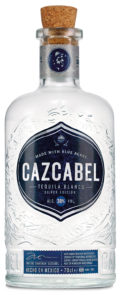
A success, though, and for anyone who wants something different from a G&T: Tequila-Tonic. T&T is at least as refreshing! Use a tequila with ‘100% blue agave’ on the label. For example, editorial favorite Cazcabel. Make a T&T by pouring 25ml of Cazcabel Blanco into a rocks glass with ice. Add a slice of orange and top up with a good tonic. Stir and serve!
Read also:


