



Eddie’s food grievances: products that go from ripe to rotten in 1 second
Adeline (nickname: Eddie) loves food, a lot and often, both at home and out. Most of the time, that goes well, but sometimes it doesn’t. In the series Eddie’s food grievances you can read about the latter. This time: things that go from a heartbeat ripe to rotten.

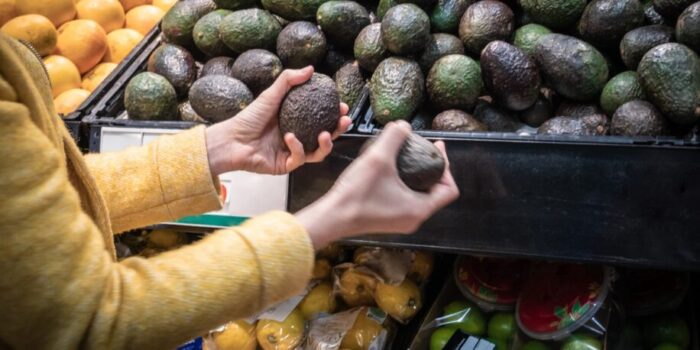
Hi, I’m the kind of person who stands squeezing avocados in the vegetable section of the supermarket. Nice to meet you. I actually have a pretty good reason for this, because have you ever tried making guacamole with a far-from-ripe avocado? You’ll be squeezing along with me if you have. With a bit of bad luck, I’ll do the same with pears and melons afterward. “Hi, I’m Adeline and I’m a squeezer.”
From apple green to relentlessly brown
This is because of my complicated relationship with products that need to ripen. It goes something like this. My groceries arrive, I notice there are some unripe ingredients among them, I place them patiently and neatly outside the fridge, and suddenly they’re rotten. I mean, in the blink of an eye they go from banana yellow or apple green to relentlessly brown. From ripe to rotten in a second—that kind of thing.
Four crappy bananas
Did you know that in Japan, supermarkets have bunches of bananas that are all at different stages of ripeness? So you start with edible and slightly sweet brown and work your way through the week to green, which starts turning that same slightly sweet brown on the day you eat it. It immediately raises all kinds of questions about how they let bananas on a single bunch ripen separately, but that’s beside the point.
It would solve a problem, and I’d never have to make banana bread again. What a godsend that would be, because I absolutely hate baking banana bread. Eating it is no problem for me. But not when I have to eat four crappy bananas in one day because they go from ripe to rotten. The same goes for avocados.
Dubious layer
Eggs, another one. How long does it take for egg yolk to develop that bluish layer inside the shell, and what the hell is it, anyway? It’s just absolutely disgusting, right? Apparently, you can easily keep a hard-boiled egg in the fridge for a week, by the way, but I prefer to eat it before the dubious discolored layer appears.
In the meantime, I consulted our wise advisor Google and it turns out to have absolutely nothing to do with shelf life; it’s simply hydrogen sulfide in the yolk that appears when an egg is boiled for too long. Now we know that too—back to ingredients that actually do spoil in a nanosecond and therefore belong in this story.
Juice on your hands
A pear. I’d really like them not to need ripening, because the riper they are, the more rotten (ha) that juice becomes as it runs over your hands when you cut the pear in question. But a far-from-ripe pear is inedible, so you put up with those sticky hands.
What I’m saying is: I have a complicated relationship with products that need to ripen.
Also read:
- Eddie’s food grievances: can we please stop sharing food for a minute?!
- Eddie’s food grievances: eating a hard-boiled egg in public
- Eddie’s food grievances: that layer of water at the bottom of the fridge


