


Even the oliebol goes vegan
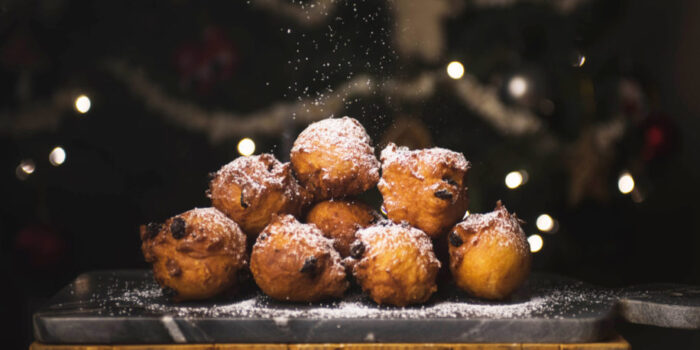
It’s the food trend of 2019: pizza bases and wraps stuffed with vegetables such as beetroot and cauliflower. Plant-based, vegan, local, lactose-free and sugar-free are the buzzwords in the food world. Even snacks can’t escape it. So why not give the oliebol — as an experiment — a makeover? Top pastry chef Jurgen Koens and food designer Chloé Rutzerveld developed the oliebol of the future on behalf of Quest magazine.

Koens, friend of Favorflav and number 20 in the Favorflav Food Top 100 last year, developed a new generation of oliebol in his food laboratory in Eindhoven that is 100% futureproof. Completely plant-based, made with seasonal products from the Netherlands, lactose-free and without refined sugars. An oliebol that also contains the necessary vegetables, such as parsnip, French bean juice and beetroot.
Experiment
‘I made sixteen versions before I was satisfied,’ says Koens. ‘A regular oliebol contains milk and butter, among other things, which makes it deliciously creamy. I used oat milk for the right binding and creaminess, and the juice of French beans, which is a natural sweetener. So this oliebol is completely lactose-free and fully vegan.’ The currants and raisins, which are produced in southern countries, were replaced with candied beetroot from Dutch soil; the salt is also a Dutch product: Wadden Sea salt.
For the icing sugar, the pastry chef came up with an ingenious mix of honey and parsnip. More precisely: ground, dried parsnip mixed with freeze-dried honey powder. To further reduce the foodmiles, lemon had to make way for tarragon vinegar. Koens: ‘The fattiness of the oliebol needs some acidity for balance. Lemon was a no-go in this experiment, so we used tarragon vinegar.’
History
Our beloved New Year’s Eve snack has a long history: the oldest known oliebol recipe dates from 1667. Back then, it was still called an oliekoek. ‘The shops are full of new versions of snacks and fast food containing vegetables,’ says Sanne Groot Koerkamp, editor-in-chief of Quest. ‘But whether all those beetroot buns and broccoli bases are healthier remains to be seen. We thought it would be fun to see whether it was possible to make a tasty oliebol that contains vegetables and combines all the other food trends of the moment.’
Food made by microorganisms
Food designer Chloé Rutzerveld, who was also involved in the project, envisions an even more radical future scenario. If it were up to her, in ten or twenty years we would be eating oliebollen made by microorganisms. ‘Bacteria and fungi can produce nutrients such as carbohydrates and proteins directly,’ explains Rutzerveld. ‘Then you don’t work with ordinary ingredients, so you no longer need livestock farming or grain production.’ The only question is how to make such a bacteriaball appealing. Rutzerveld: ‘Maybe you could print one with a 3D printer. Scientists and designers can work on that in the coming years.’ Until then, we’ll happily eat oliebollen with (or without) vegetables.
Feel like making the oliebol yourself? You can find the full recipe on the Quest website.
Read also:


