



Everything You Want to Know About Asparagus (But Then Really EVERYTHING)
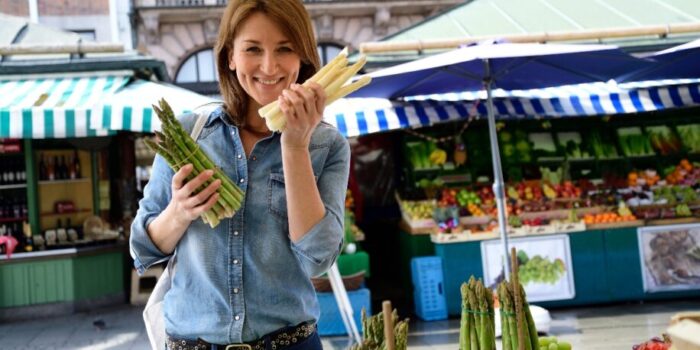
We absolutely love asparagus, the queen of vegetables and one of the last truly seasonal Dutch vegetables, and we always want to get our hands on the very best portions of this white gold. But how do you recognize quality? And what about its green and purple siblings? And how do you prepare them to make them taste their absolute best? We have the answers for you, including tips from experts.

Green, purple and white
The best-known regions where white asparagus from the Netherlands is grown are Limburg and Brabant. This has everything to do with the quality and composition of the soil, which is ideal for growing asparagus in those regions. Belgium also has a reputation as an asparagus-producing country. You can recognize the Dutch variety by a blue label on the packaging featuring the Dutch flag, guaranteeing that they come from Dutch soil.
Growing
White asparagus is ‘speared’ (in other words: harvested) while it is still underground. When the stalks emerge above ground, they turn green or purple. For white asparagus, the soil around the plant is raised by about half a meter, so that the shoot makes its way upward toward the light. Harvesting is labor-intensive: each stalk must be located individually in the field and then cut by hand underground to the correct length.
Plastic sheeting
Asparagus fields are often covered with plastic sheeting. The reason is to warm the soil, allowing the plant to grow faster and produce a higher yield, and to prevent the tips from discoloring. The season always ends on the same fixed day, the feast day of Saint John (June 24). After the season, the soil needs the rest of the year to recover, until the land is ready for a new round of asparagus harvesting. The above-ground plant, with woody stems and side branches, dies back in autumn, but the underground parts overwinter and form new stalks again in spring.
What does AAA mean?
Every year, there is a race to see who will have the first asparagus of the season grown in open ground. Last year, Nout Tieleman had the first harvest—on March 5, he suddenly discovered ripe stalks in his field, very early for that time of year. There were so few that the family ate them themselves. By now, about three weeks later, enough asparagus has ripened for sales to begin. But the true enthusiast waits a few more weeks. During the season, around the middle of it, asparagus has its highest sugar content and tastes best. White asparagus is available in various thicknesses. For white asparagus, it is best to buy the thick A version (16–20 mm) or AA version (20–28 mm). A true die-hard goes for AAA (>28 mm), which is even thicker.
Price
Good-quality asparagus comes with a hefty price tag. Growing it is a lot of work, after all, and the short season means supply is limited. At the farm, you usually pay around €10 per kilo, with prices ranging up to approximately €5 more.
Green asparagus
Only three percent of asparagus grown in the Netherlands is green; the rest is all white. The purple variety is even rarer. Purple asparagus has a high sugar content and can, for example, be eaten raw in a salad. Green asparagus is best cooked briefly in a pan, but is suitable for the same kinds of dishes as the rare purple variety. Colored asparagus is especially popular in Mediterranean countries. Unlike white asparagus, purple and green asparagus do not need to be peeled. Try this quick tagliatelle with green asparagus and goat cheese. Also delicious: green asparagus with cheese from the oven.
Tips and tricks
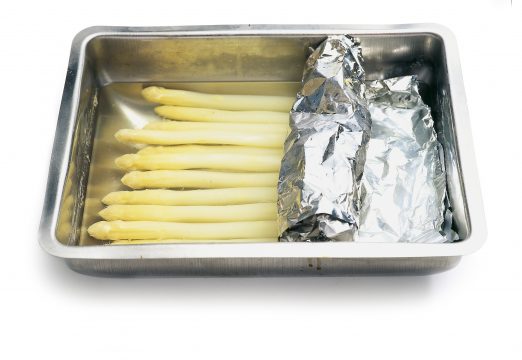
Titus Galema is the best asparagus grower in the country, as became clear several years ago during the Dutch Asparagus Harvesting Championship. We asked him for his best tips, so you can get the most delicious portion of white asparagus yourself.
If you want to be sure that your portion is fresh, buy it from a farmer nearby. “On supermarket shelves, they don’t look their best: unrefrigerated in crates and not in water. They are put in water precisely to keep them fresh for longer.”
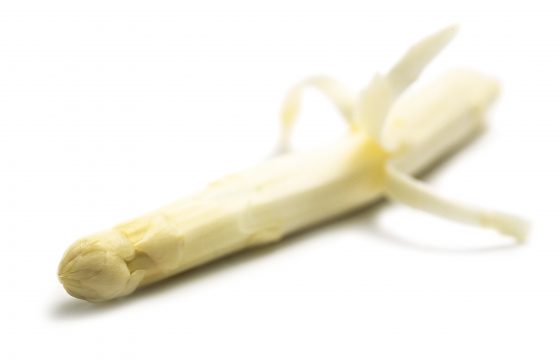
A beautiful asparagus stalk is straight and the tip should be closed. The longer an asparagus grows above ground, the further the scales on the tip open up. You don’t want that, so take a good look at the tip too.
Climate also plays a role. Galema: “The more water it contains, the faster it grows and the less time the asparagus has had to develop flavor.” There needs to be a good balance when it comes to water supply. Asparagus is therefore not suited to mass production and needs time to become increasingly delicious.
Asparagus: how to make them taste their best
Jan-Chris Krabbendam is an award-winning asparagus chef; his restaurant, Gasterij Krabbendam, was named the best asparagus restaurant of 2018 by the Brabant Asparagus Guild. So he certainly knows how to prepare that white gold: this is how to make asparagus taste their best.
I peel asparagus with an old-fashioned potato peeler; it works brilliantly. Peel 25 times while rotating the asparagus twice—12 times back and forth, and then once more. And then make Grandma Kees’s old-fashioned delicious asparagus. Don’t throw away the peelings, because they contain lots of flavor: use them to make soup (you can also purée the bottom ends into the soup), or infuse them in oil. You can even deep-fry them, giving you asparagus chips—delicious!
Deep-frying: the new way to eat asparagus!
If you want to deep-fry your asparagus, don’t cook it all the way through; just bring the water to a boil briefly and then let the asparagus cool. Pat the asparagus dry, coat it in flour, then in some beaten egg, and finally in finely ground prawn crackers. You might not expect it, but it is truly delicious. You get beautiful, crispy asparagus with a hint of the prawn crackers’ sweetness.
Also fantastic: asparagus tempura from the Airfryer.
Read also:
- Why does urine smell like asparagus?
- How to eat asparagus (almost) all year round
- Asparagus with rösti made from Yerba


