



Forage your lunch: these edible flowers and herbs can be found by the roadside
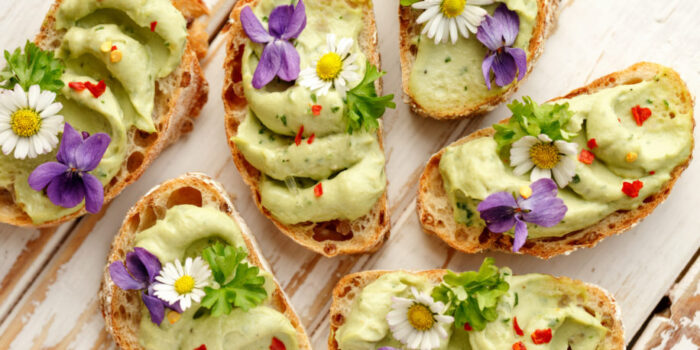
Take a walk through the park and you can easily forage your lunch. That is, if you have a reasonably sharp eye for plants and herbs, and have access to more nature nearby than just a dog-poo-strewn field. Foraged salad!

Wild garlic
A member of the garlic family. The elongated leaves and white flowers smell intensely of onion and garlic; they grow in the shade. Toss the leaves into soup and salad, herb butter and marinades. Those pretty white flowers can be scattered on top for decoration. One thing to watch out for: wild garlic leaves look like lily of the valley and autumn crocus, both of which are poisonous. If it doesn’t smell of garlic, don’t eat it.
Dandelion (mole lettuce)
Garden lovers say dandelions ruin your lawn. Fine, then we’ll eat them. Because dandelions are absolutely delicious! The leaves, also known as mole lettuce, taste slightly bitter, a little like spinach. Rinse them, stir-fry with a little garlic, and enjoy. The flowers go in tea. And those stems taste awful, so they can simply go in the green-waste bin.
Flower power
Do you like flowers in your food? Daisies are edible too, as are pink and white clover flowers. Chamomile, of course, can be eaten raw in a salad or used to make tea. Do you have a vegetable garden or a large planter on your balcony? Then try nasturtiums, marigolds or cucumber flowers too – all edible.
Ground elder
More or less the nightmare of everyone who lives in a terraced house. If the neighbor has ground elder in their garden, before you know it the entire street is on its knees in the garden, cursing as they remove those awful plants. Except that neighbor, of course, because they turn it into pesto . See ground elder somewhere? Check that it hasn’t been sprayed with a massive dose of poison, because desperate gardeners do crazy things, and then seize the opportunity. In omelets, herb butter and mash.
Elderflower
The elder trees will soon be flowering again. Their blossoms smell wonderfully sweet and you can make all kinds of things with them. Lemonade syrup , for example, for Hugo cocktails (with prosecco, mint and mineral water) or to pour over strawberries. Or you can deep-fry the flowers and dust them with powdered sugar. And if you’re patient, they’ll become elderberries. The unripe elderberries can be pickled, like capers, and ripe elderberries are said to be extremely healthy – and they taste that way too, so if you make syrup, jam or sauce with them, you don’t need to skimp on sugar or honey.
Nettles
Young nettles in particular are delicious in a witchy nettle soup. Young nettles? But it’s already May! Doesn’t matter: if a field where they grow is mowed, fresh young nettle leaves will appear again within a week or two. Pick them with gloves!
Not yet, but soon
It’s not the right season yet, but walnuts and hazelnuts also grow in parks; at the end of summer, the blackberries in the dunes are ripe, and in autumn rose hips appear. The map on Wildplukwijzer shows where you can find what.
Are you actually allowed to pick things in the park?
A grey area. Of course you may take a few flowers, but the idea isn’t to strip an entire elder tree bare to make liters of syrup, or for all the dandelions to end up in your salad. Officially, it is a criminal offense and you can even receive a hefty fine, but the Dutch Forestry Commission and police turn a blind eye to foraging – as it is officially called – when it is for personal use. So when blackberry season arrives, picking a containerful is no problem, but stripping the entire bush bare is.


