



From Dishwasher to Michelin-Starred Chef: How to Do It
Do you love working your ass off while other people are cozily watching RTL Boulevard at home? Think working days shorter than 12 hours are a bit childish? Does a chef’s jacket suit you better than the most expensive couture? Then a career in a restaurant kitchen is definitely for you! This is the shortest route to success as a Michelin-starred chef. Well, that is, if you still dare after reading the steps below…

A career as a Michelin-starred chef requires dedication, hard work and a passion for cooking. Follow the right steps, keep learning and never give up. Who knows, you might soon be the proud owner of a Michelin star! Well, that is, if you still dare after reading the steps below…
From Dishwasher to Michelin-Starred Chef
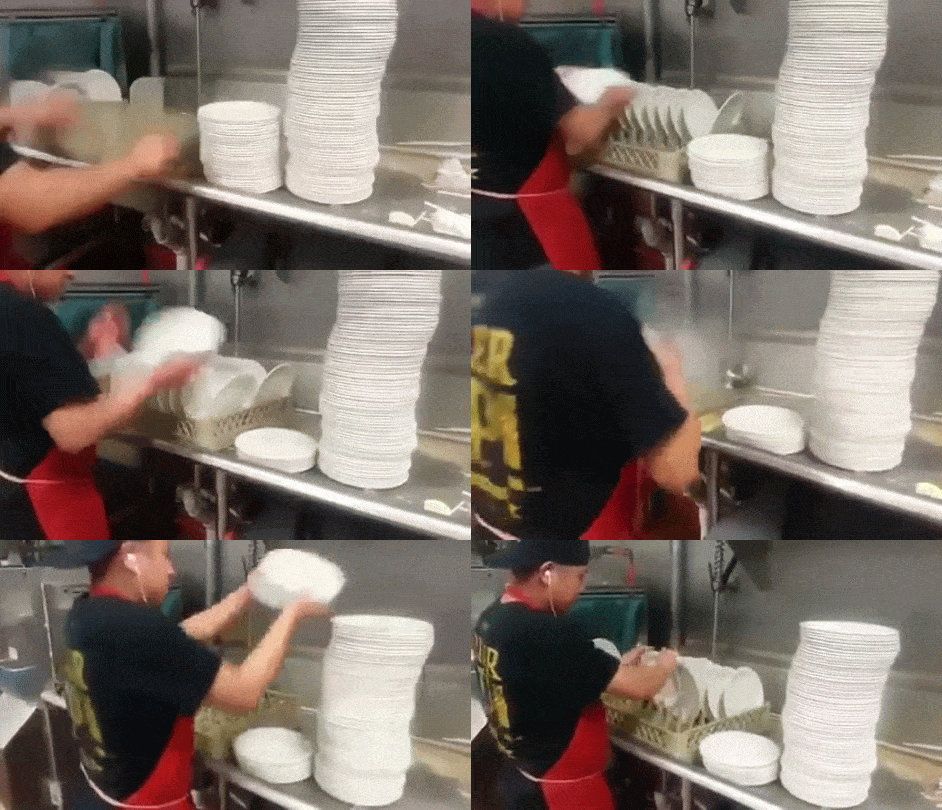
Come along through the restaurant, with its atmospheric dimmed lighting and soft hum of conversation, step through the swing door into the witch’s cauldron and walk to the little corner at the very back, with a flickering fluorescent tube on the ceiling and an angrily growling dishwasher next to an overflowing sink. This is where your kitchen career begins: the dishwashing station, or, in kitchen jargon, the dish pit.
Suds chef: the dish pit
The waitstaff rushes in and out, drops off the plates and cutlery as quickly as possible and dashes away again. The tip: collect the cutlery in a bucket of soapy water to soak, always prioritize the kitchen’s dishes, work as hard as possible and say goodbye to your French manicure, because soon your hands will be nothing but claws, waterlogged from the warm suds they spend all day submerged in.
On the other hand, dishwasher is the most important position in the entire restaurant. If the dishwashing operation breaks down, everything stops. No wonder the entire kitchen is delighted when you show up again at the staff entrance the next day.
Cold station
Step 2: the cold station. This has nothing to do with in-laws, but with the temperature of the food. Cold station: amuse-bouches, garnishes, cold starters and desserts. In most restaurants, the scheduling lines up nicely, which means you, lucky thing, have the longest shift of everyone. Expect a tiny refrigerated drawer containing a tangram puzzle of containers and jars with all the components of the dishes, which you then have to assemble at record speed, on the right plates with the right garnish.
To the stove
Now it’s starting to look like something: you’ve been promoted to chef de partie. The name of the partie reveals what you do all day: if you’re a saucier, you make soups and sauces (with the motto: whatever the meat can’t do, the sauce will fix), the rotisseur (short: roti) grills and roasts, and the entremetier handles the side dishes: potatoes, eggs and hot vegetables.
These are the men and women with red burn blisters, impressive scars from knives that had just been sharpened and tall tales about last night’s after-hours drinks. Tip: don’t put butter or lard on your burns; invest in a value pack of burn ointment.
Side trip: the waitstaff
Traditionally, there is a war between the white and black brigades, a bit like Ajax versus Feyenoord and cat people versus dog people. The white brigade—the kitchen—sees the black brigade, the waitstaff, as spoiled pains in the neck who put in completely impossible requests from guests while the kitchen is steaming and pounding with stress—or just when the cleaning has finally been completed.
The black brigade, on the other hand, sees all chefs as either drunk or crazy (and be honest: are they wrong?). Tip: spend a few weeks shadowing the black brigade, watch how they do their work and where the bottlenecks are and, above all, get first-hand feedback on the kitchen’s performance from the guests. Educational! You can put it to good use! And then: back to the kitchen.
The top, the pinnacle, the ultimate: chef
You’ve made it: of all the chefs de partie, you were the fastest, the best, the most fun or simply the one who stayed standing the longest. You worked for a while as sous-chef, the chef’s right-hand person, and now you’ve been appointed head chef. Orders? You handle them. Updating the menu? You got it. Finding new cooks? Your job. And when the restaurant is full and the kitchen is running at full speed, you keep an overview, lead your entire kitchen team like a captain on a ship and inspect every plate that leaves your kitchen.
When the kitchen brigade starts the big cleanup at the end of the evening, you can enjoy starting on the first beer in the restaurant. And placing the orders. And listening to problems about the turnover. The rent. The suppliers. The brewer. The renovation. The blazing row between the dishwasher and the sommelier.
And… hey, when was the last time you actually spent a lovely evening cooking?
Also read:
- 7 things that happen in the hospitality industry that you don’t want to know about
- 30 times people would rather have had normal tableware than this nonsense
- These are the favorite bargain wines of top sommeliers


