Goodbye street food, hello caviar
The stock markets have always had a major influence on the restaurant scene. Are traders doing well? Then they eat in expensive restaurants. If not, the hospitality industry is the first to suffer. Share prices are rising sharply again, and so fine dining is making a comeback after years of street food – but in a different form. Nouveau fine dining with a French accent.

During the banking crisis, now ten years ago, an entirely new hospitality landscape emerged, made up of informal establishments serving basic and affordable dishes. Street food also took off, often sold from food trucks, and there was a whole wave of informal little places with both furniture and food from the street.
David Chang
A major pioneer and source of inspiration was the Korean-American chef David Chang, who sparked a revolution in the restaurant world with his New York restaurant Momofuku SSäm: exceptionally good food served in snack-bar style. When Frank Bruni, America’s most important critic at the time, visited the restaurant in 2008 and awarded it the highest possible rating in The New York Times, the attack on fine dining had officially begun.
At least, that is how the co-owner of über-fine-dining restaurant Eleven Madison Park (number 1 on the World’s 50 Best Restaurants 2017 list) put it ten years later to the online magazine Bloomberg. Renowned haute-cuisine establishments such as Alain Ducasse’s Adour in New York and Fleur de Lys in San Francisco closed their doors. Top chefs rapidly opened fast-casual restaurants, either instead of a chic establishment (just like Ron Blaauw), or on the side. Table linen disappeared and sneakers became the go-to attire of every black-clad brigade.
Le Coucou
And then the Dow Jones started doing better again, and in 2016 Le Coucou opened in New York. A hotel restaurant with gleaming silver, copper and crystal, chic table linen and a female maître d’ who greets guests not in sneakers but in haute couture. Waiters place cloches on the tables, beneath which ducks with caviar and foie gras emerge – inspired by time-honored French haute cuisine, but with a distinctly modern twist.
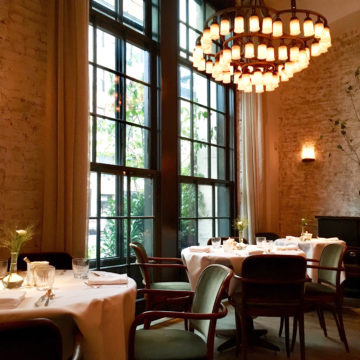
A place whose interior may be a far cry from the bare tables and benches at Momofuku, but which also doesn’t resemble the classic haute-cuisine establishments in beige and gray. Informally lively, yet simultaneously fancy and grandly theatrical. And – very importantly – without shared dining.
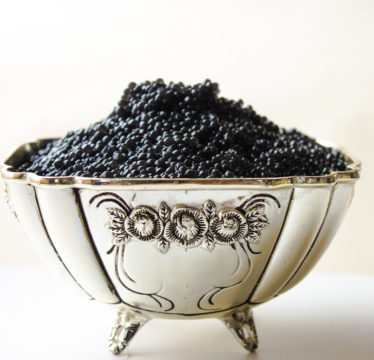
Goodbye hamburger, hello (sustainably farmed) caviar.
Bougainville
After Le Coucou came other establishments for which guests once again dress up. Not only in New York, where Dadong from Beijing is one of them, but also in San Francisco and Washington. And, very cautiously, in Amsterdam. Think of Bodon, Bougainville, ARC and even 212, even though guests at this newly opened establishment eat informally at the bar. Hedonism is back, concludes Bloomberg. Even David Chang has upgraded his establishments with napkins and banquettes.
Bloomberg’s seven signs by which you can recognize nouveau fine dining:
1. Classic dishes reinterpreted. Often with a French foundation, the birthplace of fine dining. Once driven out the door worldwide from Brooklyn because of the ‘fuss’.
2. An à la carte menu with the familiar formats ‘starter’, ‘main’, ‘dessert’. These chefs simply find the fuss of shared dining… Well, a fuss.
3. No hamburgers. Perhaps one still appears on the lunch menu, but certainly not on the dinner menu.
4. Tables with chairs instead of high stools at a bar or a several-meter-long communal table with benches that are incredibly uncomfortable.
5. Staff in starched shirts and even in suits. Tattoos poking out from underneath in every direction are no problem.
6. A new class of stylish sommeliers who open an affordable geeky bottle with just as much flair as one of the classic Grand Crus in a jeroboam format.
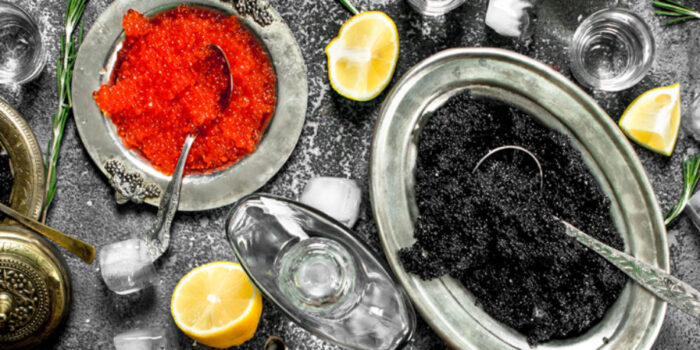
7. Expensive options. Duck is one of the signature dishes, but not simply roasted over an open fire. And caviar. Hopefully lots of sustainable (farmed) caviar.