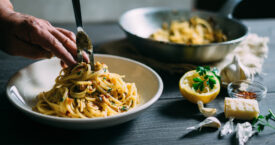
Happy New Food Year!
It’s still okay to wish each other a happy New Year for a little while… Did you know that all kinds of dishes are considered bringers of good luck? All over the world, different types of food symbolise protection, prosperity, wealth and a new beginning. We’ve listed the 7 most fun (superstitions) from around the world for you:

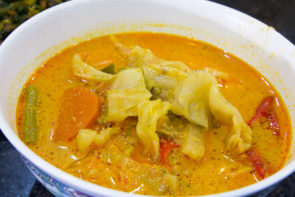
Sajoer Lodeh
This Javanese vegetable soup is often prepared in the Netherlands as a side dish with a little less liquid, but the original version is a rich, coconut-creamy soup that is vegetarian at its core but can be supplemented with chicken or beef. It has been prepared for centuries as part of a selamatan ceremony, and is intended to ward off natural disasters.
Noodles
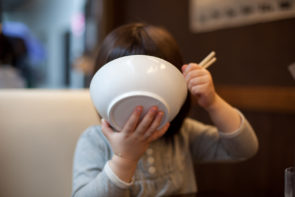
In Japan, it is tradition to eat soba noodles (made from buckwheat) around New Year’s, and in China yi mein (a type of egg noodle). Of great importance: try to slurp up the long strand in its entirety without breaking it, because what else would break then? That’s right, your good luck.
Grapes
Traditionally, in Spain and Mexico, a grape is eaten at every stroke of midnight on New Year’s Eve, one for each month ahead. A sweet grape means a good month, but have you got a sour one? Then be prepared for some bad luck that month.
Fish
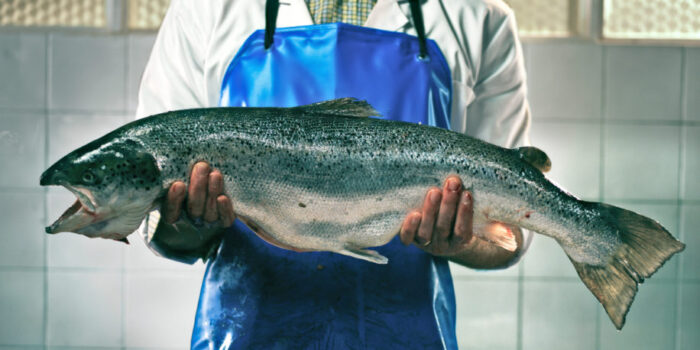
An old Polish custom is to keep large fish scales in your wallet to bring wealth. And eating fish around the turn of the year is considered a harbinger of prosperity and abundance in many cultures, because fish move forward in large schools.
Beans
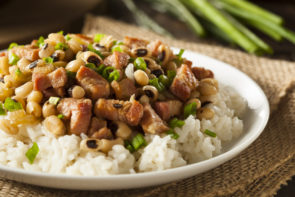
In the southern United States, the black-eyed-peas dish Hoppin’ John is eaten to usher in the new year with good fortune. The beans are associated with coins, and green leafy vegetables are served as a side dish; green like dollar bills. A piece of cornbread is also part of it, because of its golden colour. You’re supposed to leave three beans on your plate to make this magic wish come true, and to show that all this money wouldn’t turn you into a greedy glutton. And as a sign of admirable frugality: eat the leftovers the next day – then the dish is called Skippin’ Jenny.
Pomegranate
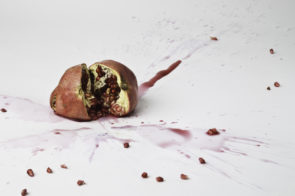
A symbol of life and fertility, this fruit with its many blood-red seeds. In Greece, the new year is ushered in with a good whack on a pomegranate in front of the door – the more seeds that scatter, the more luck will come your way.
Cake
In Greece, they bake a coin into the orange cake vasilopita, and bless the year of the lucky bastard who finds it in their slice. We have something similar in the form of Three Kings’ cake, into which a (dried) bean or porcelain equivalent is baked, and the finder gets to be king or queen for a day. Okay, it’s not a whole year, but you’ve got to make the most of what you can get!