


The future is fat – and more good news

You can’t ignore it: worldwide, there’s a major wake-up call underway to remind humanity that we all need to start consuming differently than we did, say, 20 years ago. Awareness, looking ahead and health are playing an increasingly important role in what and how we eat, and for anyone currently shouting ‘nananananana’ with their fingers in their ears: wherever there’s a movement, there’s indeed a counter-movement. We’ll be hearing more about these in 2020:

Fat chance (part 1)
Let’s start with the healthy news. Fat is now completely bon ton again, avocados have been almost impossible to keep in stock for years, and thankfully we no longer have to separate eggs for an omelet. In America, keto and paleo diets are almost mainstream. Although I would never recommend a diet to anyone except ‘be sensible’ (or rather, in the words of Michael Pollan: ‘Eat normal. Not too much. Mostly plants’), avant-garde developments are taking place in America: fatbutters, for example – peanut butter and similar products with extra fat added, or plant-based yogurt with added coconut cream. Let’s just say that after one spoonful of that, you’re so full you can’t eat anything else anyway. And that’s how you end up on a diet.
Fat chance (part 2)
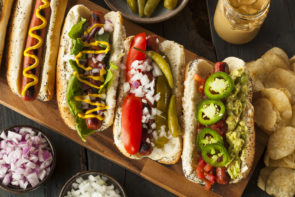
And then there’s the less healthy fat flag: the counter-trend is still going strong too. Unhealthy fats remain irresistible to many people, who, tired of the health cult, want to catch their breath in the snack aisle. The frikandel celebrated its sixtieth birthday to the cheers of millions of fans, fries now come in truly all kinds of cultural forms, and hotdogs don’t seem to be going anywhere at all. And with plant-based burgers (with far less saturated fat than meat burgers) and similarly plant-based rainbowshakes, vegans can now show that they’re definitely up for a bit of fun too.
Adaptogens
These are herbs and plants that help your body adapt (‘adjust’) to, for example, stress or fatigue. Ashwagandha (a plant that has been used for centuries in Ayurvedic cuisine) and reishi (a little fungus) are examples. You can simply stir them, ground into powder, into your yogurt or soup, but I wouldn’t try to find your balance by blending them into your freakshake, for example. That’s not how it works. And as with everything: moderation, okay? Taking a trip is the other extreme. First, find out whether it’s really for you.
Transparent business and local consumption
Knowing where your food and drink come from is becoming increasingly important to many people, and honesty is appreciated. Multinationals can no longer avoid making an effort to show how products are made, and small business owners or farmers who share their story are also widely appreciated. If that’s your thing, you can spend hours watching a livestream of cows (being milked), or simply find out why every type of cow produces different milk. Visiting a sausage maker as a company outing or making your own rum; educational too. And delicious!
Also read:


