



How to care for your Dutch oven or cast-iron pan
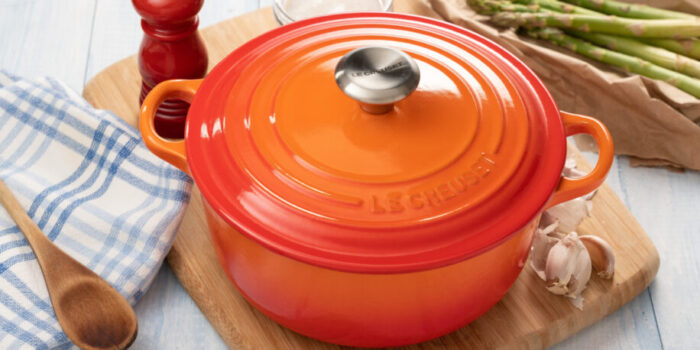
Your grandmother already knew: cast-iron Dutch ovens are not only versatile and durable, but they also enhance the flavor of your dishes. When I bought my first cast-iron Dutch oven, I honestly had no idea how to handle it. It looked sturdy, heavy and indestructible, but after the first use I was afraid I had already ruined it. How are you actually supposed to clean such a pan without damaging that beautiful layer? And what can and can’t you put in one?

Cooking in a cast-iron Dutch oven
I love Dutch ovens, even though buying one of good quality can be expensive. But believe me: if you treat them well, they will last a lifetime. And what can’t you make in one? From perfectly seared meat to stews that simmer for hours; a Dutch oven is a true all-rounder. You can even bake bread or prepare a delicious risotto perfectly in this pan. This versatility makes it an indispensable piece of cookware. I’m happy to share my best tips for keeping your pan in top condition.
Before using a cast-iron pan
With the right care, a cast-iron pan can last for generations. But before using your new cast-iron Dutch oven, it’s important to treat it properly. Start by washing the pan with warm water and a soft brush (no soap!) Then dry it thoroughly. To season the pan, apply a thin layer of vegetable oil to the surface and heat the pan over low heat. This creates a protective layer, helping the pan perform better and making it less likely to rust. Repeat this process occasionally to keep the pan in top condition.
Using a well-seasoned cast-iron Dutch oven can deepen the flavors of your dishes, as the natural oils from previous preparations form a layer that holds and intensifies the flavors.
Cleaning after use
Cleaning a cast-iron Dutch oven is easy, but requires a little attention. Do not use soap or harsh cleaning products, as they can damage the protective layer. After use, wash the pan with warm water and a soft brush. Dry the pan thoroughly and then apply a thin layer of oil to prevent rust. Avoid soaking the pan in water, as this can damage the cast iron.
Be careful with acidic ingredients
Acidic ingredients, such as tomato sauce or wine, are not ideal for preparing in a cast-iron pan. The acids can damage the pan’s protective layer, causing the cast iron to react with the food and potentially creating a metallic taste. For acidic dishes, it is better to use another pan, such as a stainless-steel or enameled pan, to keep your cast-iron pan in top condition and avoid affecting the flavor of your dishes. Good to know!
Also read:
- You can now buy a copy of Le Creuset pans at Lidl
- When is it actually time to replace your pans?
- These are the 10 things you’ll want most when you’re just starting to cook
Source: Meesterslijpers


