


How to: choose a plant-based milk
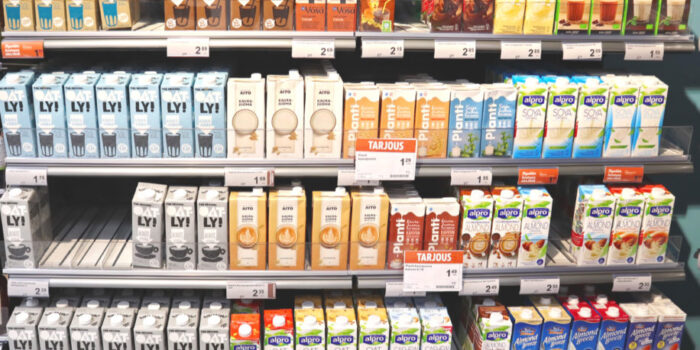
Do you ever find yourself standing in front of the plant-based milk aisle at the supermarket, wondering what on earth all that stuff is? It is indeed dizzying, but it is all rather appealing too; those vegans certainly know how to give it a fun twist with cheerful packaging, not to mention those almost tangible pats on the back from the karma gods… So, for anyone afraid of drowning in the plant-based milk pool – we get it. That’s why we’ve put together this super-handy guide, so that (if you’re not much of a DIY-at-home type) you’ll never again have to wonder which carton to pull past the self-checkout.

The top baristas we spoke to told us, among other things, that the rise of plant-based milk in coffee cannot be stopped (not even as a trend, but simply here to stay), but there is also plenty to choose from for breakfast at home or for cooking if, for whatever reason, you want to leave the cows in peace. Almost all plant-based ‘drinks’ (which officially cannot be called milk) are made by soaking the basic ingredient, then finely grinding and straining it, and mixing the collected liquid with water. To be clear: we know that the official name for these products is ‘drink’ or ‘beverage’, but for the sake of what rolls off the tongue nicely, we’ll just call them all milk for now.
Choosing plant-based milk
Cashew milk
Quite thick, creamy and nutty, but still mild. A lot of the nutrients remain in the pulp after straining, so most of these nut drinks have vitamins added.
Almond milk
A slightly sharper nutty flavour than the cashew version, and most supermarkets stock both sweetened and unsweetened varieties. The unsweetened one is also made from unroasted almonds, making it even milder and more naturally flavoured.
Soy milk
The original alt-milk, and often the subject of health debates. Soy yoghurt has also become a fixture in the chilled section, and unsweetened varieties are on the rise there too. It seems a product first has to become mainstream (helped along by flavours and sweeteners) before people are willing to embrace the next, purer step and accept a flavour as it is.
Rice milk
Quite thin and naturally rather sweet. Uncooked brown rice is soaked, ground and strained, making it a good alternative for people with a soy or nut allergy. Popular with children, I can say from experience.
Hemp milk
Not standard in supermarkets, but available at most organic shops, this unsweetened drink is made from hemp seeds and hemp oil. No, it won’t get you stoned, because it contains no THC, but a pleasantly sweet and nutty drink is welcome too, right?
Oat milk
Those mega in-your-face advertising campaigns Oatly regularly runs seem to have had an effect; their oat drinks are incredibly popular. A factory will even open in Vlissingen soon, the second outside its home country of Sweden, due to growth in this region. According to many professional and home baristas, the barista variety foams best of all, thanks to the added acidity regulators and fats. Alpro also makes a barista oatdrink.
Coconut drink
Indeed, observant reader, this one I do call a ‘drink’ because coconut milk has become so well established as a cooking ingredient. And even that can cause confusion, because there is also coconut cream and coconut crème—and believe us, it’s all delicious and worth keeping at home. Coconut drink is mild and easy to digest, fuller in flavour than rice milk, for example, and unsweetened too.
Read also:
- Going vegan? Here’s how
- These are the biggest vegan innovations from Horecava 2020
- Is this the new milk craze?


