



How to maintain your cast-iron pan
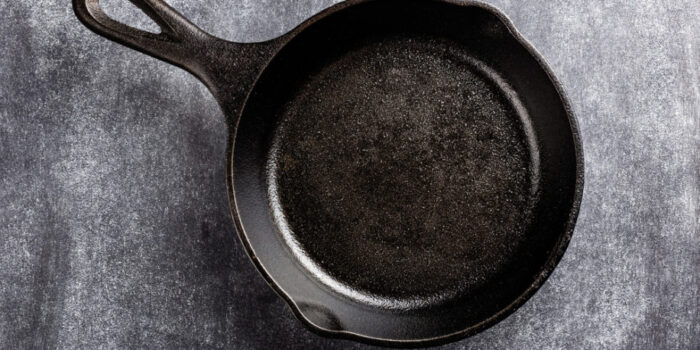
A cast-iron pan – whether it’s a frying pan or a Dutch oven – should not be missing from the cookware collection of a true foodlover. It does require a little more attention than your standard pan. But maintaining it is easier than you think—just read on.

Seasoning
The first thing you do with your brand-new pan from the (online) store is season it. This involves applying layers of oil to the pan, protecting it and preventing food from sticking. Pans are often sold already ‘seasoned’, but an extra few layers can never hurt.
Rub the cast-iron pan (whether it’s a cast-iron Dutch oven or a cast-iron frying pan, also known as a skillet) with a very thin layer of oil and spread it out with kitchen paper. The layer really needs to be very thin: the pan should shine slightly, but the oil should be completely spread out. Place the pan in a preheated oven at 230 degrees for half an hour. Open the windows, as it may start to smoke. Repeat this process three to four times.
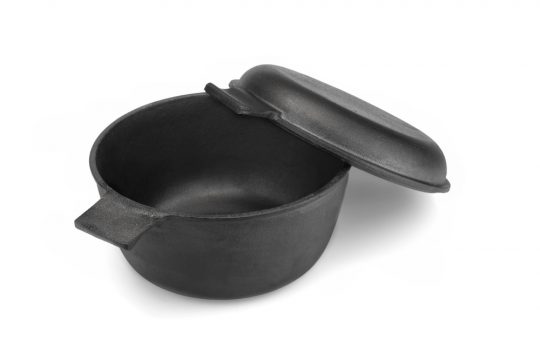
Greasing
Every time you bake something in your cast-iron pan, you’re actually seasoning it further. The flavors of your steak, spring onion and cornbread all soak into the pan, making everything you cook next even more delicious. The more often you use the pan, the more resistant the oil layer becomes and the more flavor the pan develops. So cooking more means better-quality cookware—if that isn’t motivation, I don’t know what is.
Let the pan dry thoroughly after washing it; you can briefly place it on the heat to speed up the process. Grease it again with a paper towel using a very thin layer of oil and leave it on the stove for a few minutes. That’s it!
Washing
Let’s make one thing clear: you should never, ever put a cast-iron pan in the dishwasher. The myth that you’re not allowed to use dish soap is not true, by the way.
The more often you grease the pan, the thicker the layer of oil becomes. Because you burn in the oil each time, you create a protective layer, and a little dish soap won’t do much damage. Still, always be careful, don’t use the abrasive side of your sponge, and always grease the pan after washing it.
Enamel
There are also Dutch ovens made of enameled cast iron, which have a layer of enamel over the cast iron. The advantage of these pans is that you don’t have to treat them like a completely bare cast-iron pan. They are naturally less prone to sticking and are also lighter, making them somewhat easier to handle. The downside is that enamel doesn’t absorb flavors the way cast iron does, so these pans don’t impart any extra flavor to your food.
Also read:
- Experiment: dry-aged steak in Nutella—is this a good idea?
- Oops! Man misreads the menu and orders a €360 steak
- The toasted-sandwich revolution that will change your life


