



Italian pasta from Japan: the best of both worlds
The Japanese cuisine itself is, of course, unbelievably delicious, but Japanese people are also very adventurous when it comes to trying out other cuisines. Italian food is particularly popular there, and is called Itameshi. So how do they put their own twist on it?

First of all, there are of course countless amazingly good Japanese noodle dishes, and we have already described the differences between Italian pasta varieties and Asian noodles. But dried Japanese pasta is also produced entirely according to Italian methods and techniques, and traditional pasta dishes such as puttanesca, primavera and bolognese are given a distinctive local twist!
Differences in the basics
Perhaps chopsticks rather than forks come into play, but there are also different types of long ‘eating’ chopsticks specially designed for cooking. And slurping spaghetti into your mouth is just as easy with chopsticks, honestly. In Japan, these types of pasta are also more likely to be drained over a bamboo mat than in a colander. And since people in Japan eat an enormous amount of fish and vegetarian food, these ingredients play a bigger role than, for example, heavy meat sauces.
Convenience in a sachet
Some sauces have specific Japanese characteristics, and since people there love convenience, a number of sauces are sold in special sauce sachets. Here are a few:
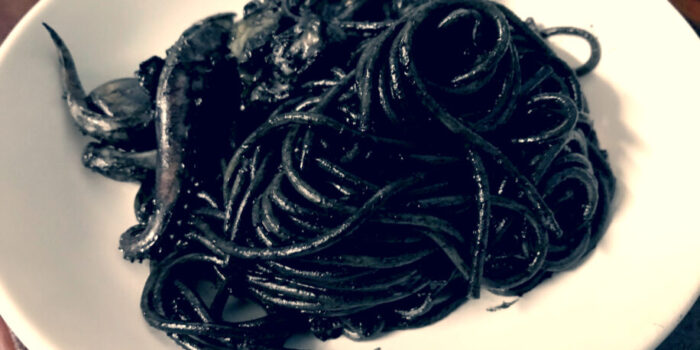
- Squid ink sauce. In Italian cuisine, cuttlefish is regularly used in cooking, and the Japanese version also has a robust sea flavour, turning the pasta deep black. You’ll certainly make an impression with this! Afterwards, everyone should check their teeth in the mirror before flashing those pearly whites again.
- Sea urchin cream sauce. Sea urchin is a true delicacy in Japan, so combining it with pasta and cream is an easy choice. Briny and savoury, with the softness of cream.
- Tarako spicy cod roe pasta sauce. Tarako is salted cod roe, and with a spicy kick from peppers and herbs, it is delicious with pasta. Think of dried bottarga, for example—also so good grated over pasta…
- Chilli pepper, garlic and olive oil. Ha, we know this one too! This is, of course, the basis of the classic ‘aglio, olio e peperoncini’, but the Japanese version is even spicier, with an even stronger garlic flavour.
- Japanese plum umeshiso sauce. At an authentic Japanese sushi restaurant, you could ask if they can make umeshiso maki for you: a combination of umeboshi (pickled plums) and shiso leaves. Very fresh and umami at the same time, which is why it is also a beloved combination for pasta sauce in Japan.
These sauces are sold ready-made in Japan, but above all, let the list inspire you to get started yourself! Most of the ingredients can be found at well-stocked Asian supermarkets (and chilli pepper, garlic and olive oil, of course, everywhere), so don’t be afraid of surprising flavour combinations and try them out as the best of two worlds!
Read also:
- 9 tips from chefs for the best, simplest pasta
- Tips for the ultimate bolognese
- How to make your sauce cling perfectly to your pasta every time
Source: Pogogi


