


Know before you go: 10x Portuguese dishes you might want to avoid
Portugal has a rich and ancient food culture. This results in the tastiest but sometimes also rather strange dishes. Feel free to order them; after all, immersing yourself in the culture is part of going on vacation, but with this list, at least you’ll know what to expect.

Arroz de Cabidela
You’ll often see ‘Arroz de…’ on the menu. It means ‘rice with…’ These are often the most delicious dishes, such as Arroz de Marisco (rice with seafood) or Arroz doce. Arroz de Cabidela? Sounds good, rice with chicken. Important detail: every part of the chicken is used, including the feet and the organs. And if you were still wondering why the mixture is so brown? That’s blood. Because yes, the poor thing is cooked in its own blood.
Omelete de Mioleira
Portuguese people like to eat generously filled omelets for dinner, with fries and rice on the side. But don’t be mistaken: omelete de mioleira is not an omelet with ham, cheese or mushrooms. Omelete de mioleira literally translates as brain omelet. Pig brains, that is.
Burras Assadas
Burras Assadas is honestly a tasty dish. But do know what you’re ordering before you literally sink your teeth into other teeth. Only after gnawing the roasted pork from the bone will you see which part of the animal it is: the jaw. What’s left? A beautiful set of teeth. Say cheese.
Green life is happy life? Not in Portugal!
This isn’t a dish, but a warning: vegetarians don’t have it easy in Portugal. They don’t really know how to prepare vegetables. Of course, there are exceptions; there are good restaurants, and especially in the larger cities, vegetarian and vegan restaurants are beginning to make a comeback. But smaller establishments, especially in the countryside, prefer to cook their vegetables completely to death. As in: boiling them until all the vitamins have disappeared and you barely need to chew.
Well done
Are you at the opposite end of the vegetarian spectrum and do you prefer your meat as rare as possible? Then we have a tip. The reason is unclear, but Portuguese people have trouble simply putting meat on the grill for a short time. Your steak often comes back well done, even if you ask for rare or medium rare in English. So ask for it in Portuguese. The magic words? ‘Muito mal passado.’ The muito (meaning ‘very’) is important. If you ask for ‘mal passado’, you’ll get your meat medium rare. With the word ‘muito’ in front of it, you should get it nice and rare
Maranho
Are you a fan of the Scottish dish haggis? The meat dish made from sheep’s heart, lungs and liver, mixed with suet and stuffed into an (artificial) casing like a sausage. Then you should definitely order maranho: Portugal’s version of haggis. While the casing in Scotland is now often artificial, the Portuguese are still old school; there, the casing is made from a sheep’s stomach.
Francesinha
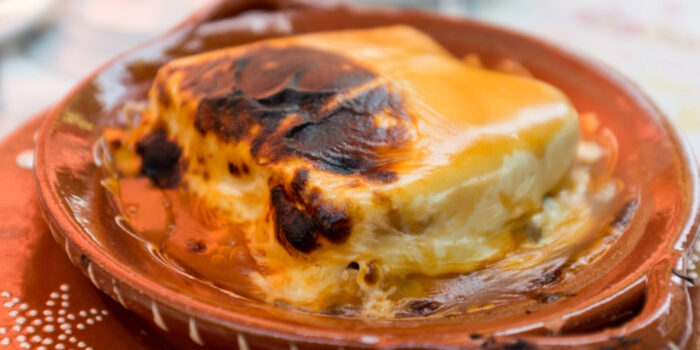
The Francesinha was Portugal’s attempt at a croque madame. They failed. Okay, it really is an iconic dish, and you never know until you’ve tried it, so just order it. Especially if you’re in Porto, where the Francesinha comes from. But be warned: the chances of an instant heart attack after eating this sandwich with cheese, ham, sausage, entrecote, tomato sauce, thick cheese/beer sauce, fried egg and fries are high. And once you’re back on Dutch soil… you can eat the tastiest Francesinha in Amsterdam.
Bacalhau a Zé do Pipo
Bacalhau is better known as cod in the Netherlands. According to the Portuguese, there are 365 different ways to prepare the fish, one for every day of the year. They love it. Bacalhau a Zé do Pipo is a strange one, especially because Portuguese people don’t necessarily use a lot of mayonnaise in their cooking. In this dish, the bacalhau is first cooked in milk, then put in the oven with a layer of onions, mashed potatoes and, yes, a very thick layer of mayo. Add some black olives and you’re good to go.
Salade de Orelha
After reading that there isn’t much for vegetarians to find in Portugal, you might now be very happy to see the word salad in this dish. Well, think again. Salade de Orelha means ear salad. Yes, it’s true: pig’s ears are chopped into pieces and tossed through your salad.
Too salty
Suffering from high blood pressure? Portugal might not be the best destination for you. Portuguese people love salt. The salt and pepper shakers are on the table so you can add even more salt to your omelete de moleira or salade de orelha, but you probably won’t need to.
Read also:
- Know before you go: 10x Italian delicacies you might want to avoid
- Know before you go: 12x German dishes and drinks that sound funnier than they taste
- Know before you go: 10x Spanish delicacies you might want to avoid


