


On holiday in Spain? These 8 Spanish dishes are ones you really want to avoid
When you think of Spanish cuisine, do you mainly think of paella, tapas and sangria? Good. But there are also dishes you probably don’t want to include in your holiday memories. From bull testicles to cockscombs and sheep intestines: Spain has culinary specialties that are more horror than haute cuisine for the average tourist. So before you enthusiastically shout “sí” at the menu on the Costa del Sol, learn these names by heart.

8 Spanish dishes to keep far away from your plate
Yes, because even though these dishes aren’t on your bucket list, it pays to know what’s on the Spanish menu. Nothing is more awkward than having a plate of cockscombs in front of you while you thought you had ordered ‘just chicken.’
Criadillas
Let’s start with something substantial: bull testicles. In the time of Ferdinand the Catholic (1452-1516), they were the alleged Spanish Viagra. Nowadays, you’ll find them as a tapa, especially in northern Spain, often served with a spicy vinaigrette. Whether they work? Not scientifically proven.
Caracoles
It’s actually strange that France always gets the credit for snails, because they are particularly popular in Spain. Especially a hit in May and June, they are boiled in a spiced broth. Traditionally order a cold beer with them… and above all, don’t forget what you’re biting into.
Crestas de gallo
Cockscombs, that is. They are quite the delicacy here. You’ll mainly find them around Cuenca and Zamora, where the cartilage-like combs usually end up in a stew. They always continue to look like cockscombs in it, which is honest, but also, um, rather off-putting.
Zarajos
For the die-hards among us, we’ll stay in Cuenca for another local delicacy: zarajos. Sheep intestines, in English. Marinated and rolled around a stick. Then fried or roasted. In Aragón they are called madejas, and in La Rioja embuchados, but they remain rolled-up intestines.
Morcilla
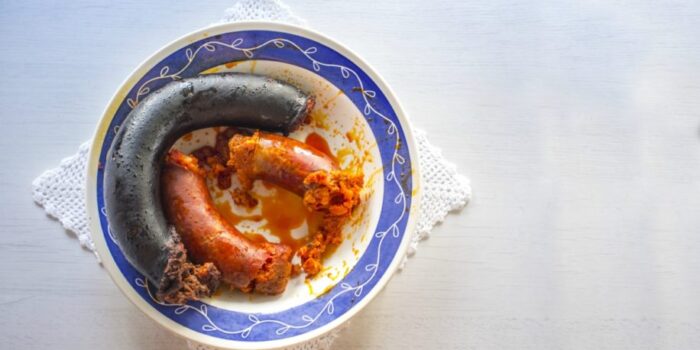
A typical Spanish delicacy is blood sausage. The main ingredient is pig’s blood. You’ll also find all kinds of other things in it. Rice, often, as well as onions and lard. And depending on the region, various other ingredients: pine nuts, anise, hazelnuts, ginger, cumin, pumpkin, cinnamon and sugar. That all sounds very delicious, and of course it is. In moderation.
Oricios
Someone must once have fished up a sea urchin and thought: let’s taste it. That person must have realized that putting spines in your mouth was a bad idea and cut it in half. They were immediately confronted with the bright orange interior. If the outside consists of spines and the inside is bright orange, surely all the warning lights are flashing red? But no; in Asturias, Galicia and Catalonia, they enthusiastically enjoy the briny orange tongues (which, incidentally, are the animal’s reproductive organs, but let’s set that aside).
Orejas
Pig’s ears, fried or grilled. In Madrid, recently named the culinary capital of Europe, they know what to do with them and serve these crispy pieces of pride as a tapa.
Gallinejas
Gallinejas are also typically Madrilenian: the lamb’s offal. Originally, scraps. Intestines, stomach, sweetbreads—the entire inside of the lamb is fried in its own fat and served on a bed of… fries. And somehow, everything turns out all right after all. Buen provecho!
Read also:
- 6 things you shouldn’t do when you’re in Spain—but probably do anyway
- Aha: this is why they eat dinner so late in Spain
- Recipe: Ajo Blanco, cold garlic and almond soup from Spain


