


Mind-blowing: this is why you don’t get anything to eat at people’s homes in some countries
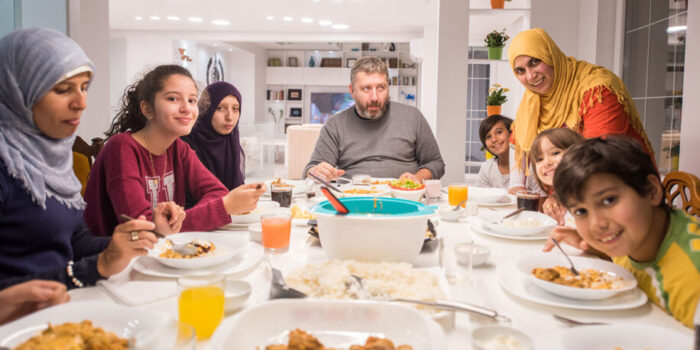
The internet exploded when someone revealed on Twitter that in Sweden, children who come over to play aren’t automatically invited to stay for lunch or dinner. Not hospitable, backward and generally unpleasant, were the reactions. An amateur historian has delved into the matter and found the explanation for this typically Northern European behavior.

A map shows the likelihood of being invited to eat along with your hosts somewhere. In Spain and Portugal, that likelihood is fairly high; you’re almost always presented with a plate. In France, northern Italy, Ireland and Scotland, it’s roughly fifty-fifty, while in England and Belgium you can’t count on it either. But throughout Scandinavia and in the Netherlands, the chance of being able to join in for dinner is more or less zero.
This is blowing people’s minds, so as an amateur historian and sociologist I’m going to try to explain this development/ cultural artifact. pic.twitter.com/vNF0MMpMFK
— Incompetent Beneficiary of Nepotism (@WallySierk) May 29, 2022
Pot of chicken soup
Recognizable: when I was younger, I had to sit in the front room at my friends’ houses while they ate, and wait until Mom or Dad came to pick me up so I could eat a slavink at home. Friends who stayed and could share in our chili con carne or spaghetti bolognese? That simply never happened. Only a pot of chicken soup would occasionally make its way to the neighbors, but only if the entire family on the other side of the fence was laid up with the flu. Treating people? That was only done on your birthday, and never otherwise.
Violent culture
Wally Sierk, the amateur historian, sees a geographical connection between not offering food and the northern regions of Europe. Coincidentally, these are also areas where Viking culture determined how things were run here centuries ago. And in that Viking culture, it was more or less compulsory for higher-ranking people to provide food and drink to those of lower standing, Sierk explains. There was an obligation in return: in money or in loyalty. Viking culture was particularly violent anyway; they fought in one brawl after another duel.
Uncomfortable
It was only when the Christian faith began to gain some ground in our regions that it became socially acceptable to give something away, such as food, without expecting anything in return. According to this historian, it never gained a completely firm foothold, so it is embedded in our culture to make someone feel uncomfortable with your generosity. We want to avoid that, so eating along unexpectedly isn’t an option.
Drinking like fish
The writer of the Twitter thread recognizes this behavior among people in the north of North America, areas where Scandinavian settlers have traditionally lived. They drink like fish, he writes, to forget their personal sorrow and prevent interpersonal conflicts.
Can’t be bothered
Is that true? If someone invites you over for dinner, do you feel obliged to cook for them the next time? Or do you always bring something when you go out to eat? Do you not want to embarrass anyone by simply joining in somewhere? Or do you just not feel like feeding your children’s entire circle of friends as if you were a food bank? Makes sense: it’s the Vikings’ fault.
Also read:
- Warning: your orange juice contains… bugs
- Etiquette expert gets it wrong: a plate for the neighbors is not leftovers
- To drink or not to drink: what’s the etiquette for that bottle of wine you brought?
Source: Bored Panda, Twitter


