


Not So Chinese
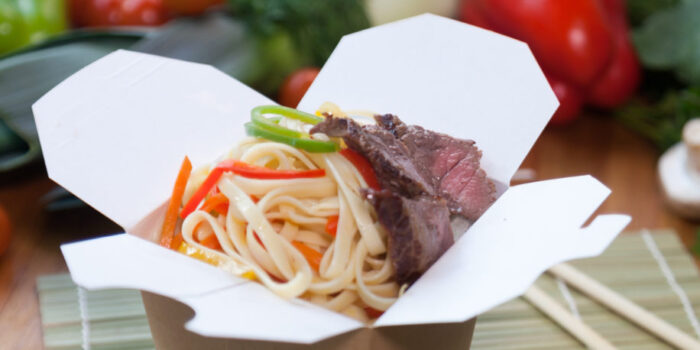
The traditional ‘Chinese’ takeaway still usually packs our takeaway meal in the white plastic container with a transparent lid. The leftovers go home in it too. Street food vendors in food halls and trucks, as well as the new generation of delivery restaurants, prefer to spoon their meal into the upright Chinese takeout box.

The history of this cardboard box, which we once mainly knew from American television series and trips to the States, is longer than many people suspect. The one-piece cardboard design was patented in Chicago as early as 1894 by Frederic W. Wilcox.
Origami
In terms of its folding method, this American was inspired by the Japanese folding technique origami. However, he had no intention of using it to transport Asian food. What for, then? No one knows. In any case, the design did not become an immediate success.
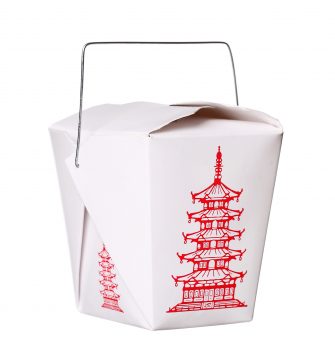
It was not until the 1970s that a red Chinese pagoda appeared on the front.
It was only after WWII that the box became popular in North America, thanks to the rise of Chinese takeouts in the equally burgeoning suburbs. The then entirely white box was adopted by Chinese takeout restaurants as takeaway packaging.
Pagoda
And it was only in the 1970s that an unknown designer placed a red Chinese pagoda (temple) on the front. From that moment on, the box was seen even more as an exclusive and typically Chinese thing. But it is just as Chinese as dishes such as General Tso’s chicken and the fortune cookie handed out in America after every Chinese meal.
Fortune cookie
That is why you will encounter few of these boxes on Chinese streets. No more than you will find fortune cookies or General Tso’s chicken. Unless it is at an American-inspired takeaway concept.
https://youtu.be/I4k9bIXNpr8


