



Parmesan vs. Pecorino: what are the differences?
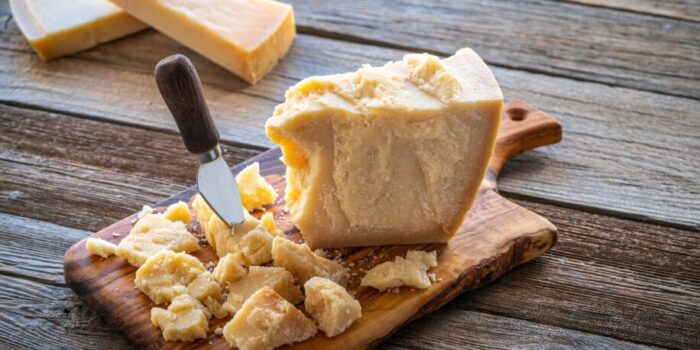
In principle, we always want all the cheese, and we’re therefore pretty obsessive when it comes to amazing cheesy Italian pasta recipes. You too? What you’ll often come across then: Parmigiano Reggiano or Pecorino. These are the most notable differences.

Both will make you deliriously happy, that goes without saying, but actually they can’t really be compared. They differ more from each other than the Grana Padano and Parmesan we compared earlier. And did you know there’s also a surprising twist to ultimate comfort foods such as spaghetti Carbonara and Cacio e Pepe?
Both from the pasture
First of all, the clearest difference: Pecorino is made from sheep’s milk and Parmigiano Reggiano from cow’s milk. Pecorino comes from the Italian word for sheep, pecore. Parmigiano means ‘from or of Parma’ and Reggiano ‘from or of Reggio’. This cheese came (and still has to come) from the area between Parma and Reggio Emilia, which is how it got its name.
Oldie vs. young’un
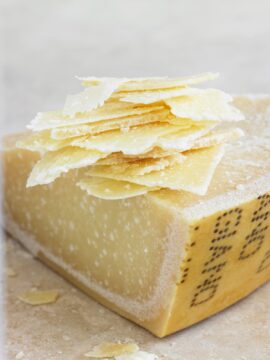
A real Parmesan must mature for at least twelve months, but the average maturation time is two years. For Pecorino, it’s between five months for the slightly softer version and eight months or longer for the hard, very salty cheese that you can grate. Not much is done with the rind of Pecorino, but you really should save the rind of a piece of Parmesan! That rind is wonderful to simmer in soups, stocks or stews and adds a delicious umami, slightly fatty flavor.
Tastes differ
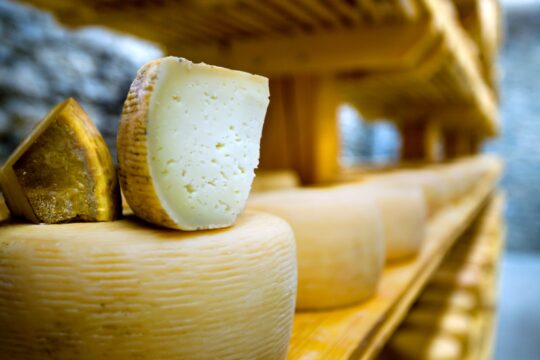
Naturally, there are also differences within the cheeses themselves, but you could describe the difference between them as follows: Parmigiano Reggiano is nutty and complex, while Pecorino (though certainly no ‘simple’ cheese) is salty, fresh and strong.
Did you know…
Both Carbonara (this is how you make the real Italian version) and Cacio e Pepe (here’s the original Roman recipe) are traditionally made with Pecorino and not Parm, which is what most people use? That’s pretty surprising, right? It has to do with the fact that both pastas originated in Rome. And Rome is in the Lazio region, where the sheep grazing in the mountains there traditionally supplied the milk for Pecorino Romano. So, in the beginning, these two world-famous pasta dishes were always made with sheep’s cheese. If you manage to find a nice piece of Pecorino, you should definitely try making these pastas with it. But no one will tell if you make them with mountains of Parmesan… And can’t choose? Then simply have both!
Also read:
- First aid for cheese emergencies
- Handy list: these cheeses are safe to eat when you’re pregnant
- Recipe: Toscanini’s pasta with almond pesto


