


Protests against foie gras on the menus of Amsterdam restaurants
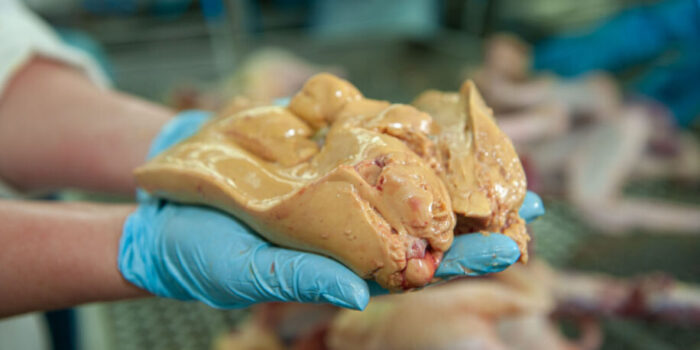
Foie gras has been a controversial product for years. It originates in classic French cuisine: goose liver. It is controversial because, to put it mildly, it is obtained in a way that is not exactly animal-friendly. The geese (and ducks, in the case of duck liver) suffer enormously during its production: they are force-fed through a 20–30-centimeter-long funnel. Warning: don’t look up any videos of this, because it is truly disgusting.

Among others, culinary critic Hiske Versprille has spoken out about this before: ‘your conscience starts to nag.’
The animals have not had a good life
With animal products, you can still speak of the animals having had a good life beforehand, according to Versprille: ‘That is not possible with foie gras. It can only be produced in a way that causes the bird considerable suffering. It has been demonstrated that geese and ducks genuinely suffer as a result.’ And she is far from the only one to make this justified criticism, yet many restaurants continue to serve it.
And that was the reason protest group Active for Justice took to the streets last weekend, protesting outside four restaurants against the foie gras on their menus. Bistro Neuf, Sins of Sal, Café Parlotte and Café Nobo found protesters at their doors, making their message clear with signs and songs.
‘It is difficult to get clarity’
Before their visit, they sent the restaurants an email asking them to remove foie gras from the menu because of the animals’ bizarre ordeal. Not a single restaurant sent an email back. The owner of Bistro Neuf, Rex Neve, has since responded in Het Parool: ‘I don’t get angry about a protest like that. It is good that the discussion is taking place. That email also set a process in motion for us. We asked our two suppliers: where exactly does the duck liver come from? It is difficult to get a clear picture, but it is clear to us that feeding with funnels, as was often done, is no longer acceptable. It must be animal-friendly.’
I find that response remarkable myself—if you find it difficult to get clarity, why are you still serving it? Especially if you say you think it is good that the discussion is taking place. Assuming you do not support the current production method, surely you want one hundred percent certainty that this is not the case with the products you buy? Hopefully, more restaurateurs, like Versprille, will develop a guilty conscience. Foie gras really is no longer acceptable.
‘As long as people want it, we will serve it’
For now, Neve does not seem to be considering that: ‘Then you might as well ban all animal products. We are not a vegetarian restaurant. We are here for the guests. And if they ask for foie gras and lobster, then we serve them.’ Ah, of course. As long as they can fill their pockets, this kind of animal suffering does not matter. Neve knows that perfectly well himself, of course, and is therefore trying to make a strange comparison with other animal products—while it has already been demonstrated several times how terrible foie gras is for the animals themselves. To suggest that not serving foie gras means making your entire menu vegetarian—you really haven’t understood it, I’m afraid.
Maybe next time I will simply join Active for Justice on the streets. The only (major) downside, in my view, is that they advocate a completely vegan lifestyle, something I cannot relate to at all. But as far as foie gras is concerned: absolutely right, ban this product.
Read also:


