



Ramen vs phở: these are the differences
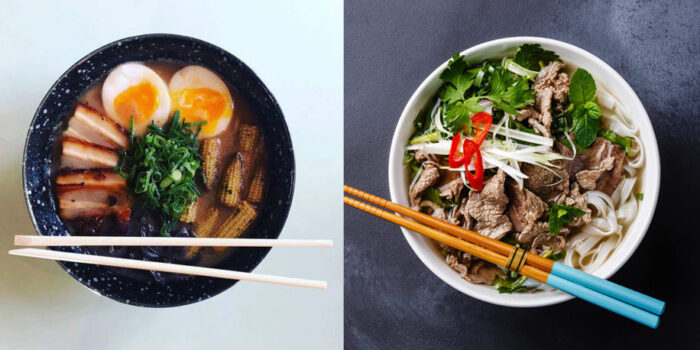
Asian, popular and filled with noodles. That’s where the similarities between ramen and phở end. Yet the two are often lumped together. Unjustly so, because: one steaming bowl of noodle soup is not the same as another. These are the differences.

Country
Stating the obvious, but: Asia is not a country and ‘Asian cuisine’ is a broad concept. Ramen is a Japanese noodle soup and phở is Vietnamese. With French roots, by the way: it is the Vietnamese version of ‘Pot au Feu’ (Vietnam was once a French colony). And ‘feu’ is also how you pronounce it, with a slight French sound…
Broth
From shio (salt) and shoyu (soy) to miso (fermented bean paste) and tonkotsu (pork bones), ramen broth comes in many varieties, but is generally darker, more robust and cloudier than phở broth, whose base is traditionally made from beef (phở bo) and seasoned with star anise, cinnamon and ginger. There is also a chicken-based version (phở ga). Another major difference is that phở broth is not boiled but simmered, which keeps it clear. A technique they adopted from the French.
Noodles
Ramen noodles are made from wheat and egg, like those also found in Chinese cuisine. They are longer, chewier and firmer than the rice noodles used in phở.
Toppings
While phở is mainly garnished with Thai basil, coriander, bean sprouts, jalapeños and lime, ramen toppings vary widely: from a boiled egg and sheets of nori to kimchi and enoki (mushrooms).
Time of day
We mainly eat phở for dinner, but traditionally it is a breakfast dish. The Japanese are less strict: breakfast, lunch, snack or dinner, it’s ramen all day every day.
Also read:
- 11 cheap ways to pimp your instant noodles
- Recipe: Ramenstein ‘Du hast pork’
- Homemade ramen, step by step


