



Recipe: dukkah salad from Syrian cuisine
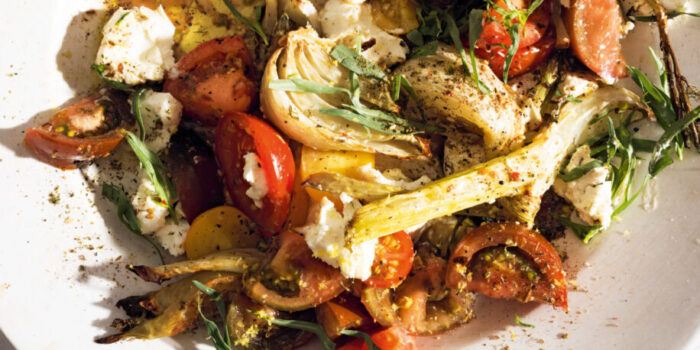
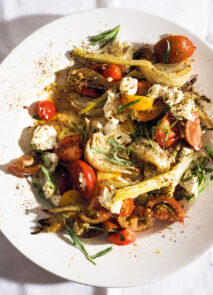
Make this salad in summer, when tomatoes are at their best. The better the tomato, the better its flavour, so feel free to pay a little more and buy good tomatoes.

What is dukkah and how do you make it?
Every family has its own recipe for dukkah (which literally means ‘finely pounded’ in Arabic), so feel free to make your own version. I haven’t added any nuts or seeds yet; I prefer to do that just before using it. The spices are drier than the nuts, so they would absorb the oil and moisture from the nuts, meaning they would not stay as crunchy and fresh.
- Toast the cumin and coriander seeds, stirring, in a dry frying pan over high heat until they just start to smoke. Remove from the heat, add the pink peppercorns and toast for 30 seconds in the residual heat.
- Grind the still-warm spices finely in a mortar and add them to a small bowl.
- Stir in the Urfa chilli flakes and pul biber and leave to cool. Transfer to a jar and store for up to 1 month.
- Just before using, toast any nuts and seeds you have at home until golden brown (I like to use cashews and white sesame seeds), grind them finely in a mortar and add them to the spice mixture.
How to make dukkah salad
- Preheat the oven to 200 °C.
- Cut the fennel into 6 or 8 wedges, depending on its size. Toss with the olive oil, za’atar and salt to taste and roast for 25 to 30 minutes on a baking tray in the oven, until the fennel is tender, slightly crisp and golden brown. Leave to cool slightly.
- Mix the tomatoes with a little salt and the extra virgin olive oil, grated lemon zest, lemon juice and the dukkah.
- Crumble the goat’s cheese and spread it over a large plate, followed by the roasted fennel and then the tomatoes. Garnish with the tarragon.
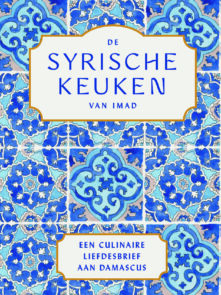
Title: Imad’s Syrian Kitchen
Author: Imad Alarnab
Price: €29.95
Publisher: Good Cook B.V.
Imad’s Syrian Kitchen is not just a cookbook; it also tells the story of Imad Alarnab, chef and owner of, among other things, three successful restaurants in Damascus. From respected citizen to refugee. Just under six years later, after many ups and downs, he opened Imad’s Syrian Kitchen in London. His remarkable story runs like a common thread throughout this cookbook and shows, among other things, that eating and cooking together connects and unites people.
Also read:


