


Recipe: Ottolenghi-style cheesecake with roasted apricots
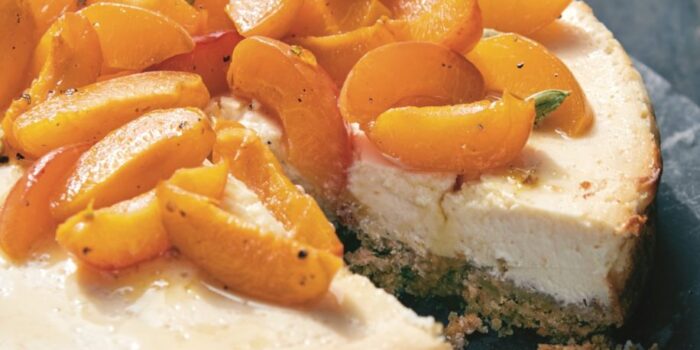
Yotam Ottolenghi is one of the most successful bestselling authors of the past decade. Two of his loyal cooking buddies from team Ottolenghi wrote their own cookbook: Falastin. An absolute must for every Yotam fan, because this book is also packed with mouthwateringly delicious and colourful recipes from the Middle Eastern kitchen. Such as this Ottolenghi-style cheesecake with roasted apricots.

Cheesecake is not traditionally eaten in Palestine, but all the ingredients are: labneh and filo pastry, for example, as well as nuts and fragrant orange blossom. For the base, chop the sheets of filo pastry into crumbs. If you then mix them with the nuts, it is reminiscent of baklava. Very special!
Prepare ahead: make your own labneh
Labneh is an Arab cheese made from yoghurt that has lost almost all its moisture by being left to drain: the longer the yoghurt can drain, the drier and firmer it becomes. Labneh is one of those products whose preparation may seem excessive until you actually try it and realise how simple it is. Hanging up the laundry takes considerably more time than draining yoghurt. If you make your own labneh, you need to do so 1–5 days in advance. To obtain the required 500 grams of labneh, start with 820 grams of Greek-style yoghurt mixed with two-thirds of a teaspoon of salt. It is best to bake the base and cheesecake filling the day before, so it can cool overnight in the refrigerator. It is best to roast the apricots on the day of serving, arrange them over the cake and eat the cake that same day.
Variations
Instead of orange blossom water, you can also use rose water or vanilla extract. If you choose vanilla, use 1 teaspoon of vanilla paste or scrape the seeds from 1 vanilla pod, and add them to the vanilla extract already specified. Instead of the apricots chosen here, you can also use all kinds of other fruit: peaches, plums and cherries are delicious too, as are strawberries. The same applies to the nuts; you can choose others than the varieties specified here, such as Brazil nuts or macadamia nuts. Both are delicious in combination with the base: do use the same net weight.
How to make the cheesecake with apricots
- Preheat the oven to 160°C. Grease the base and sides of a 23 cm springform tin and line it with baking paper. Set aside.
- For the base, place one sheet of filo pastry on a clean work surface. Weigh out one-third of the butter – this will be used to grease the filo sheets – and set the remaining 60 grams aside for later. Grease the sheet so that it is well covered with butter and place a second sheet on top. Continue in this way until all the filo pastry and butter have been used. Brush the final layer with butter.
- Place the stack of filo pastry in the baking-paper-lined tin and bake the pastry for about 20 minutes until golden brown and crisp. Remove it from the oven and leave it to cool for 15 minutes (or longer) before breaking it into pieces.
- Put the filo pieces into a food processor in two batches and blend for about 10 seconds into fine crumbs. Transfer to a medium-sized mixing bowl and put the nuts in the food processor. Blend for about 20 seconds until fine, but not powdery.
- Add the nuts, flour, sugar, spices, sea salt flakes and the remaining two-thirds of the butter and mix everything until combined. Tip the nut mixture into the base of the lined tin and press it down firmly so that the base is covered with an even layer of crumbs. Bake for about 12 minutes or until lightly golden brown. Remove the tin from the oven and set aside.
- For the filling, clean the food processor and add the labneh, ricotta, sugar and salt. Mix everything for a few seconds using the pulse button. Scrape down the sides of the bowl and add the eggs, egg yolks (you can use the whites for something else), orange zest, orange blossom water, vanilla extract and cornflour. Pulse for about 15 seconds until everything is combined, then pour the batter into the cake tin.
- Bake the cake in the oven for 60–70 minutes until it starts to colour slightly around the edge and is still wobbly in the centre. Remove it from the oven and leave the cake to cool for 1 hour at room temperature before placing it in the refrigerator for at least 4 hours or (preferably) overnight.
- On the day you are serving the cake, preheat the oven to 200 °C and prepare the garnish.
- Place the honey, orange blossom water, orange juice and crushed cardamom in a small pan over medium-high to high heat. Boil the liquid for 4–6 minutes, stirring regularly, until it has reduced by half and begins to become syrupy.
- Arrange the apricots on their sides on a baking tray lined with baking paper and drizzle them with the syrup. Bake them in the oven for 8 minutes, turning them halfway through, until completely soft but still holding their shape. Remove them from the oven and set aside for 30 minutes until completely cooled.
- Just before serving (no more than 1 hour ahead if you are making the cake in advance), remove the cake from the tin and place it on a round cake platter. Arrange the apricot segments on top – do not let them overlap – and drizzle with the remaining syrup. You can also use the crushed cardamom pods as a garnish – they look lovely, but are not edible. Sprinkle the cake with the mint leaves if desired and serve.
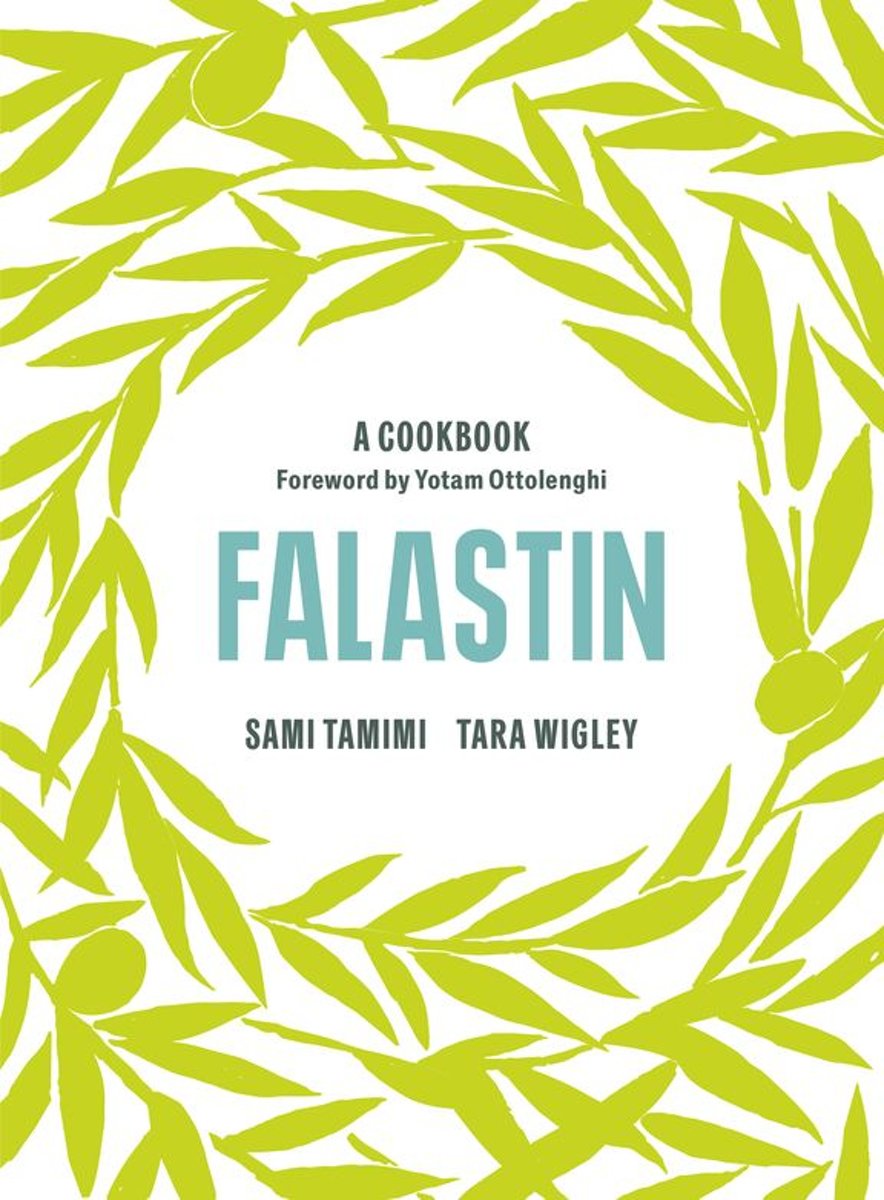
Title: Falastin
Authors: Sami Tamimi & Tara Wigley
With a foreword by Yotam Ottlolenghi
Publisher: Fontaine Uitgevers
Price: € 29.95
Read also:


