


Red meat is nowhere near as bad as we thought
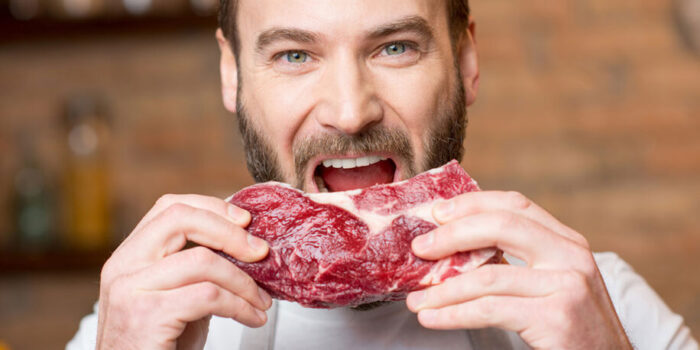
Vegans rail against it, health freaks cross themselves when they see it, and vegetarians are disappointed and sad when you order it: red meat. Unhealthy because of heart problems, cancer, you name it. But is that really true? Professor Tim Spector takes a closer look at steak and concludes: don’t worry about it.

Red meat is unhealthy—that is strongly emphasized. The World Health Organization (WHO) has even classified meat as carcinogenic. And as if that weren’t enough, livestock farming is also bad for the environment, so your steak is making Mother Earth sad too. But in his book Spoon-Fed, Professor Tim Spector examines famous food myths, including this one. He compares stacks and stacks of scientific research and draws conclusions based on it. In this case: red meat really isn’t that bad.
Fat = bad
According to him, much of the resistance to meat stems from the emphasis on the dangers of fat in the diet, especially in relation to cardiovascular disease. Saturated fat is the culprit, and meat is a source of saturated fat. Dietary guidelines therefore recommend replacing red meat with lean alternatives such as chicken and turkey, cutting off the fatty edge of the sirloin steak and choosing lean ground meat instead of fatty sausage. Does that make sense?
Leaving data out of the report
A study that followed the health of a group of women for eight years to see whether a low-meat diet could help prevent cancer found no effect. Another British study linked eating red meat and processed meat, such as sausage and ground meat, to colorectal cancer. However, according to Spector, there are some issues with that study. For example, the research committee consisted mostly of vegetarians, data was omitted from the report, and the conclusions were based on observational data—which is generally not strong data. He calls the conclusion that eating meat is just as bad as smoking fearmongering.
Which type of meat matters
When it comes to the environment, the EAT-Lancet report, published in early 2019, states that people should eat a maximum of 14 grams of beef, lamb or pork per day to keep the planet healthy. But, says Spector, no thought was given to what kind of meat people eat. Is it organic meat, or does it come from an intensive livestock operation? Because that makes a significant difference to its environmental impact.
Yuck, meat
Another interesting fact: women who eat little red meat are twice as likely to develop depression or an anxiety disorder, according to an Australian study. The type of meat you eat also matters: grain-fed beef contains fewer omega-3 fatty acids than meat from grass-fed cows, and that could make a difference.
Nice and crispy
And those black edges from the barbecue—do they give you cancer? According to Spector, there is no clear link to cancer. Don’t cremate every steak, the author advises, as that won’t do the flavor any favors either. But you don’t have to lie awake worrying if something comes off the grill a little too crispy.
Read also:
- Study says: 73 percent of men would rather die 10 years earlier than give up meat
- After meat-free sausage, now milk without a cow
- Meat 2.0: a steak from the printer


