



Research reveals appalling conditions in the Brazil nut industry
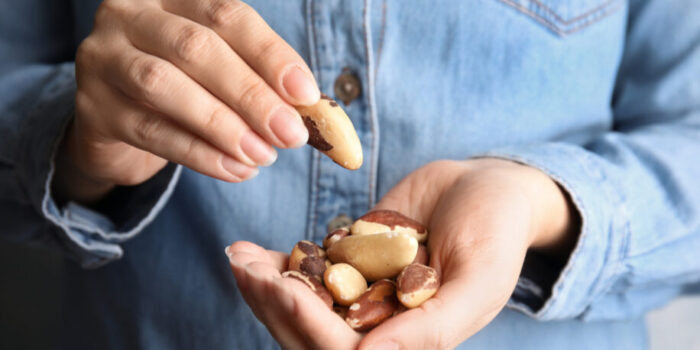
If you like eating a muesli bar, or sprinkling some delicious breakfast cereal into a bowl in the morning, it might be worth checking whether it contains Brazil nuts. We read the following news about these delicious large nuts, and it left us deeply saddened…

They are also wonderful nuts to chop into pieces and use to brighten up your Greek yoghurt, or to place on a cheeseboard with some fresh grapes. But this story about the background and origin of these nuts immediately leaves a nasty aftertaste, just like the story about the abuses in the cocoa industry.
Sad conditions
The Dutch Centre for Research on Multinational Corporations (SOMO), together with the Belgian NGO FOS and the Bolivian Centre for Research and Promotion of Farmers, investigated working conditions in Bolivia’s Brazil nut sector. And the result was dismal. The main conclusions? Child labour is involved, wages are too low to support a family, and workers feel trapped in their jobs because of debts owed to their employers.
Rainforest nuts
In English, they are called Brazil nuts: these elongated nuts can only grow in the rainforest and cannot be cultivated elsewhere. Seventy-eight percent comes from Bolivia, with the rest coming from Brazil and Peru. The trade can help motivate local communities to preserve the rainforest, but it also causes other abuses.
Trapped in the chain
Sixty-four percent of Bolivian workers bring their children with them, a third of whom are under fourteen years old. As a result, the children fall seriously behind in their education, which does not improve their prospects for the future. Families still do not earn enough to make ends meet, so many workers request an advance and their debts pile up. They also often depend on those same employers for basic necessities; they live in isolated camps (barracas) where the shops are owned by the plantation owners. A vicious circle, in other words.
Unfair Trade
The research also focused on how value is distributed throughout this production chain, and, unsurprisingly, it shows that workers have not benefited at all from price increases in recent years, while all the other parties have.
The fact that research has been conducted into this for the first time, and the insights it generated, have enabled workers and small Indigenous producers to unite for the first time. Together, they can negotiate more powerfully for higher prices and wage increases. We sincerely and emphatically hope that all other parties and companies in this Brazil nut chain will now commit themselves to sustainability and fairness in this relatively small (and therefore fairly transparent) industry.
Read also:
- Eat chocolate, save the world
- Is it allowed to hide snacks from your housemates during quarantine?
- You’re doing it wrong! This is how to close a cornflakes box
Source: SOMO (Centre for Research on Multinational Corporations)


