



Say what?! Most bakers sell supermarket croissants
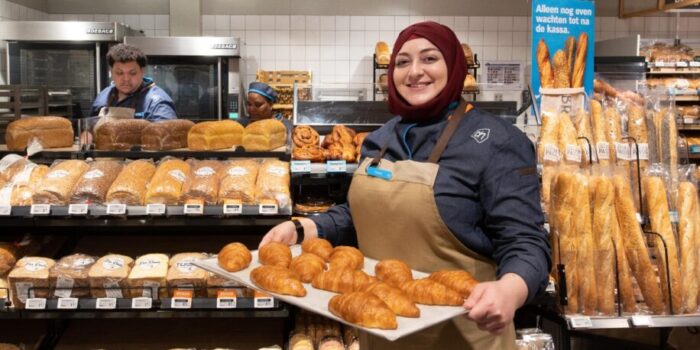
Just like the baguette, the croissant is sacred to the French. They eat millions of them every year—not only in France, but in the Netherlands too, where we absolutely love them. Preferably, we get this French classic from the bakery rather than the supermarket. Because bakery croissants are simply tastier and fresher… or are they?

The croissant under the microscope
At the bakery, you pay considerably more for a croissant than at the supermarket. Of course, you’re happy to pay that because you assume these croissants are made in-house and baked fresh throughout the day. But is that really the case? Keuringsdienst van Waarde investigated.
Delivered frozen from the factory
And what do you know? A croissant from (almost all) Dutch bakeries is anything but homemade! Just like supermarkets, they receive croissants frozen from the factory. Even in France, the artisanal croissant is threatened with extinction. And for both bakers and supermarkets, the purchase price of a croissant is the same.
A time-consuming process
The fact that bakers choose not to make croissants themselves anymore seems to have mainly to do with the complicated and time-consuming process (3 days!). On the first day, the dough is made; the next day, the baker folds in the butter; and on the third day comes the baking process. But then you really have something: a real croissant has that enticing buttery aroma, an airy texture, and crumbles when you poke it with your finger. It practically falls apart. Pure finesse that takes real baker’s hands to achieve—not a machine.
The price difference
But how is it that at the bakery you often pay as much as four times more for a machine-made croissant than for the same version at the supermarket? This has to do with the fact that the price once charged for homemade croissants—and now charged for the factory-made version—has not changed.
Besides… if one baker can sell it for €1.20, another baker obviously can too, and competition also ensures that the price remains just as high. Finally, the supermarket keeps this price low because it attracts customers who also do the rest of their shopping there, while the baker has to make a living from bread alone and therefore cannot afford to charge less.
Differences in butter content
A small side note: not all croissants contain the same amount of butter. In the programme, an employee of a croissant bakery reveals that different customers get different recipes. One croissant may contain 12% butter, while another contains 30%. Either way: factory-made croissants are not bad at all. Add a little butter and some jam: delicious!
The best croissants in Amsterdam
But as the food snobs we sometimes are, we prefer the real deal. Croissants baked by the baker themselves. Here you’ll find the best croissants in Amsterdam, more than worth the detour. And if you’re at the supermarket anyway… It has been tested: for the tastiest ham-and-cheese croissants, this is the supermarket to visit.
Also read:
- This is the airiest croissant in the world
- Sfogliatella: Italy’s answer to the croissant
- Croissant cereal is the coziest breakfast ever (and not even that difficult to make)


