


Shocking: ‘healthy snack’ raisins turn out to be heavily contaminated
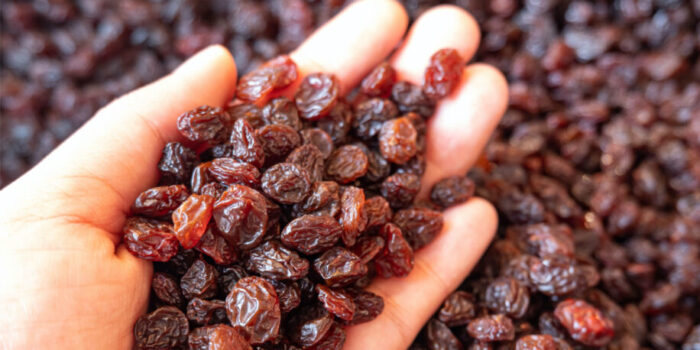
According to the Netherlands Nutrition Centre, raisins are a healthy snack for children and adults. Yet research commissioned by that same organisation shows that raisins increasingly contain an absurdly high amount of pesticide residues. Research by Radar now shows that 95 percent of more than 27,000 consumers surveyed by the Radar Test Panel are concerned about toxic substances on fruit and raisins, with a majority being very concerned. Consumer organisation FoodWatch believes that supermarkets and the government must finally take real action.

FoodWatch previously discovered that goji berries contained far too many pesticide residues, and in the summer of 2022 it became clear that sesame seeds and locust bean gum – an ingredient in various snacks such as Mars ice creams and Heksenkaas – still contained excessive amounts of the toxic substance ethylene oxide. Consumers in Belgium were warned about this, but not really in the Netherlands.
Twice as many
FoodWatch therefore requested the test results from the Netherlands Food and Consumer Product Safety Authority. This organisation carries out random checks on our supermarket food. When testing raisins, they found residues of twice as many different pesticides last year as in 2018.
Cumulative effect
These pesticides are certainly no mineral water: they can disrupt hormones, be carcinogenic or otherwise harm nature and the environment. Legal exceptions make it possible for raisins to sometimes contain residues of as many as 15 different types of pesticides, some of which are banned in the EU because they are simply too toxic. Yet the raisins are not removed from sale: the amount of toxic substances remains below a set threshold.
FoodWatch is concerned about the combination of the different pesticides, known as the cumulative effect. The level of each individual pesticide may remain below the permitted limit, but added together, you still end up consuming quite a lot of filth. Moreover, you never eat only raisins: other foods may also be contaminated with small amounts of pesticide, and in this way you can still consume too much poison in a single day.

Fungi becoming resistant
The research shows that raisins from Turkey in particular are extremely contaminated. It appears that the fungi threatening the grape harvest are increasingly resistant to pesticides. As a result, more pesticides, and different types, are being used. Ironically, this resistance to the products is caused precisely by their being used too often and in excessive quantities, so this is a snake biting its own tail. In general, organic raisins are much less contaminated, the same research shows. These raisins are much cleaner: they contain less residue and fewer different residual substances.
FoodWatch: time for action
FoodWatch has been calling for action for some time. The consumer organisation previously urged politicians to take precautionary measures. They believe supermarkets must also do something about these contaminated raisins, such as using their purchasing power to reduce pesticide use during cultivation. Allowing a maximum of five pesticides per product would be a start. FoodWatch is therefore launching a new international campaign, which began this week by asking supermarkets about their future plans regarding pesticide policy.
ALDI & Lidl doing a good job
The Radar Test Panel had already asked several major supermarkets about their efforts to reduce pesticide residues. Albert Heijn, ALDI, Dirk, Jumbo, Lidl and PLUS allow fewer pesticide residues on their potatoes, vegetables and fruit than the legal maximum. They also test for these residues. In addition, only ALDI and Lidl apply a maximum number of different pesticide residues to their fresh produce: no more than 5. At ALDI, these requirements, which go beyond the legal minimum, also apply to raisins and other dried fruit.


