


Should we also be wary of steakhouses?
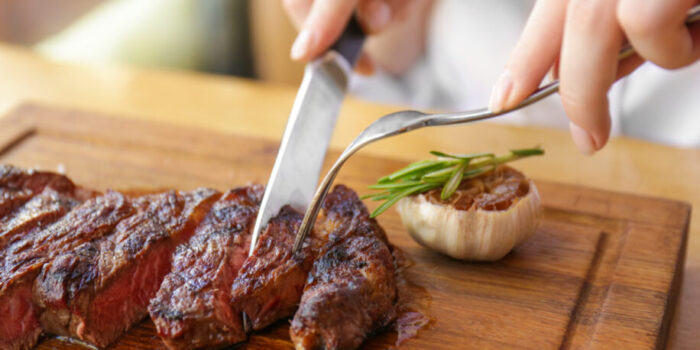
In the Netherlands, steak chains Loetje and Gauchos are fairly well known, with locations throughout the country. And at home, many people also enjoy cooking a steak, with plenty of tips on how to cook the best steak yourself. We should admit that we have no inside information about what goes on behind the scenes at the two steak chains mentioned. But in America, where the phenomenon of the ‘steakhouse’ is hugely popular, there are said to be a few steakhouse secrets that are useful to know.

Dry-aged isn’t always authentic
You also come across dry aging in the Netherlands: it is the term for meat that is aged in the air in a special maturation cabinet to achieve an even higher concentration of flavor. Officially, this must be done for at least 21 days and under close supervision for food safety reasons, but according to food platform Eat This, in practice it sometimes happens that the meat has simply been kept in a refrigerator for somewhat longer than usual. Difficult to check, but at restaurants that are genuinely proud of this, you can often see the maturation cabinet, so you can trust that things are in order.
Quality varies by doneness
Do you get lower-quality meat if you order a well-done steak? According to employees of the major steak chain Outback, yes: they say that when someone asks for a well-done piece of meat, the chef chooses one of lower quality from the stock.
Fake Kobe
In the Netherlands, Wagyu is generally listed properly on the menu when it concerns Wagyu beef, rather than Kobe. According to Eat This, this does happen in America. What is the difference between the types of meat? As explained on the Dutch website Cadeska.nl, Wagyu is the term used for Japanese beef, but it can also refer to meat from animals bred in the Netherlands according to Japanese methods. Kobe beef, on the other hand, refers to meat from a very specific breed, Tajima-Gyu, which may only be bred and processed according to strict standards in Hyogo Prefecture. The capital of Hyogo is Kobe, hence: Kobe beef. So not every type of Wagyu beef may be called Kobe.
Non-negotiable
Next, Eat This ‘reveals’ two more ‘tricks steakhouses would rather keep secret,’ but honestly, in our view, besides the logical starting point that the meat must be of very high quality, these are the two pillars of a well-cooked steak. First: butter! Lots of butter! And second: salt! Enough to properly season a piece of meat.
Eat This may be trying to encourage people to make healthier choices, but in our opinion, no one has ever become happier from a bland little steak without some fat. And yes, of course, everything in moderation, but as far as we’re concerned, these two points are non-negotiable ?.
Read also:
- 5x the biggest nonsense about Wagyu, the most celebrated meat in the world
- Insane: who cooks a steak like that?
- Emma’s food annoyances: ladysteaks
Source: Eat This


