


Step by step: bibimbap
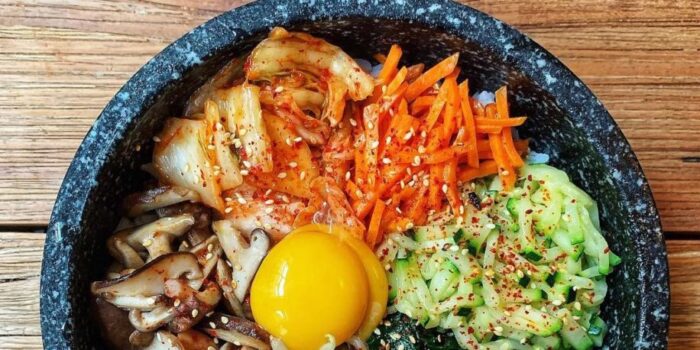
Bibimbap. By now, it is one of the most popular Korean dishes outside Korea. That’s hardly surprising: the multitude of flavours and textures really captures the imagination, and with so many crunchy vegetables, it’s a healthy dish too. What exactly is it, and how do you make it yourself? FavorFlav’s Randy explains it to you step by step.

Bibimbap literally means mixed (bibim) rice (bap). The base is a stone bowl (dolsot) containing rice with various (vegetable) toppings, an egg yolk and gochujang. The dolsot is coated with sesame oil and then heated with all the fillings inside. This makes the rice crispy, allowing you to serve the bibimbap sizzling, steaming and fragrant. The crispy rice combined with the different vegetables creates a rich texture. The flavour is a perfect harmony of spicy, salty, sour, sweet and nutty.
Symbolic value
Apart from the flavour, the colours in the dish also have symbolic value. There are five colours, each representing a direction and a part of the body: black/dark (the north and the kidneys), red/orange (the south and the heart), green (the east and the liver), white (the west and the lungs) and yellow (the centre and the stomach).
A dolsot or a pan?
Not everyone has a dolsot at home, but this dish can also be prepared perfectly in a cast-iron pan or, if necessary, in a regular pan. Dolsots are available at better Asian grocery stores (Shilla, Amazing Oriental, Dun Yong) and cost between twenty and thirty euros. Please note: a dolsot is only suitable for a gas flame.
Basic recipe: bibimbap
Below, I’ll give you the basic recipe for bibimbap. This is how we make it at Korean Kitchen during our Korean cooking workshop, where you learn to prepare many more Korean dishes in addition to bibimbap. This version is vegetarian, but you can supplement it with meat. How about bulgogi or minced meat with soy sauce, honey and sesame oil? The egg yolk cooks while mixing, but if you prefer to serve a fried egg with it, you certainly can.
The recipe is suitable for a 1-litre dolsot (suitable for 2 people). Are you making the recipe in a larger pan? Multiply the quantities proportionally. For the rice, preferably use a dry grain such as basmati. ‘Wetter’ types of rice such as pandan are also suitable, but cook them slightly drier than usual.
How to make bibimbap
1. Cut the carrot and courgette into strips (julienne). Slice the shiitake. Peel the garlic and crush the cloves flat.
2. Heat a splash of sesame oil in a frying pan over medium heat. Briefly fry the vegetables one at a time in the following order: spinach and a garlic clove, courgette and a garlic clove, shiitake and a garlic clove. Use a little more sesame oil for the shiitake.
3. Clean the pan in between and heat another splash of sesame oil in a frying pan over medium heat. Briefly fry the bean sprouts and a garlic clove, followed by the carrot and a garlic clove. Remove all the garlic cloves after frying the vegetables.
4. For the sauce, mix 6 tablespoons of soy sauce and 4 tablespoons of sesame oil in a small bowl. Finely chop 1 spring onion and add it.
5. Thoroughly coat the inside of the dolsot or cast-iron pan with sesame oil. Divide the cooked rice over the dolsot and smooth the top. Divide the fried vegetables and kimchi over the rice.
6. Place the egg yolk in the centre of the bowl on top of the vegetables. Garnish everything with the sesame seeds and gochugaru. Divide 2 level tablespoons of gochujang over the vegetables.
Serving
Place the filled dolsot or cast-iron pan on a gas burner or other suitable heat source. Heat the dolsot or pan until the rice starts to crackle vigorously. Then wait a few more minutes and carefully mix (bibim) the rice, vegetables and egg together. Finally, season the bibimbap with the sauce.
Also read:


