


Sustainable fish: tuna is a no, mussels are okay
Sustainable fish: where do you buy it? And which fish is truly a no go? Christine Absil is an expert who knows exactly which fish you can responsibly buy and which you’d better avoid. Her advice may surprise you: ‘Fish fingers are absolutely fine; Iglo was a pioneer in responsible fishing.’ That hipster beard is no coincidence—the captain turns out to be incredibly sustainable!

The documentary Seaspiracy on Netflix certainly puts things into perspective. If you thought you were making the right choice by eating fish instead of meat, think again. Fishing can be just as harmful to the environment as the meat industry. But giving up fish altogether isn’t a solution either, says expert Christine Absil. ‘Then you don’t change anything about the system. Buy sustainable fish and you support sustainable fishing. That way, you make a difference.’
Check the fish guide
What is sustainable fish? You can always check the fish guide, Absil advises. She knows what she’s talking about: she is the founder of the Good Fish Foundation and an adviser on sustainability and fisheries management. ‘Sardines and herring are sustainable in any case. They are caught in nets, so there is little damage to the seabed, and there is little bycatch because they swim in schools. Numbers vary from year to year, but management of the species responds well to that. Mackerel is caught in the same way, but there is currently a problem with its management. That’s why this species has now lost its MSC certification.’
Supermarket rather than market
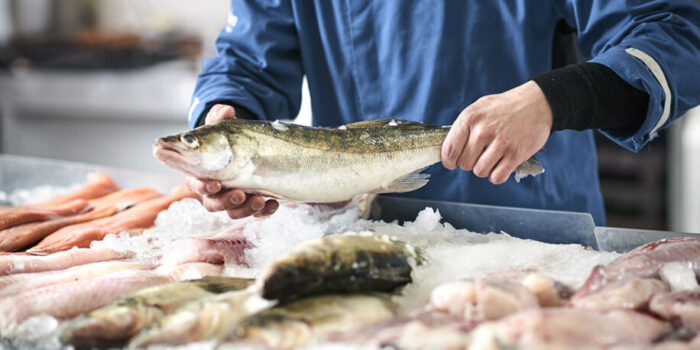
If you buy fish at the supermarket, it is always clearly indicated whether it has an ASC or MSC certification. At the fishmonger and at the market, unfortunately, that is still uncertain. Want to make the best choice? Choose mussels, vongole or oysters, because shellfish are definitely a good option, says Absil. ‘Shrimp usually are too, but check the certification, because they can come from anywhere.’ Another safe choice: fish fingers. ‘Sounds strange, right? But Iglo was one of the companies that started the whole sustainability movement. They saw the danger of overfishing and took action. So those fish fingers definitely carry a certification.’
Choose farmed fish
Farmed fish is generally not a bad choice, according to Absil. ‘Pangasius and tilapia were vilified by Dutch fishermen because our own flatfish could not win the competitive battle against these farmed fish. The fish is extensively researched and tested upon import and, honestly, there’s nothing wrong with it. They are easy to farm; they are even called “water chickens” because they eat just about everything and aren’t picky. And for the Dutch market, it is very beneficial that neither fish has a pronounced flavor, because many consumers don’t like a strong fishy taste.’
Algae, not fish
Wild salmon from the freezer? Highly sustainable, just like portions of farmed salmon in the freezer, as long as you pay attention to the ASC or MSC label. And the story that salmon have to eat five times their own weight in fish to grow? ‘That’s no longer true; there has been a lot of innovation in fish feed. A large part of that fish has been replaced by plant-based food such as soy. The animals also do well on fish oil extracted from algae. Look, salmon will never become vegetarian fish—they will always need animal-based food, but that food can also be responsibly sourced.’
Yellowfin tuna: a big no
For species such as tuna, it is very difficult to find a good option. ‘There are several tuna species, and some are doing better than others. It also depends on where and with what fishing gear they are caught. If you think you can find that information on the packaging, you’re out of luck: the origin does not have to be stated on canned tuna. The tuna steaks in the Netherlands are mainly yellowfin tuna from the Indian Ocean. And that population is currently in bad shape. The countries have been unable to agree on a management plan.’
Read also:
- Farmed salmon vs. wild salmon: what are the (other) differences?
- Vegan fake tuna: even cats fall for it
- Why I’m addicted to Japanese Kewpie sesame sauce (and soon you will be too)


