


Farmed salmon and wild salmon: these are the differences

Research shows that many people make assumptions about fish that are completely inaccurate. About sustainable fish, for example. When it comes to salmon, this is often about farmed salmon and wild salmon. But what exactly are the differences between wild salmon and farmed salmon? In other words: between Atlantic salmon and Pacific salmon? And what types of wild salmon are there, anyway? We’ll explain.

Whether you choose a delicious meal salad with smoked salmon, sticky salmon with honey and garlic, or feel like throwing a good salmon steak on the barbecue: salmon is your best friend! But it’s always good to know what you’re choosing. Are you going for farmed salmon (Atlantic salmon), or wild salmon (Pacific salmon)?
Farmed salmon (Atlantic salmon)
When we talk about farmed salmon, we mean Atlantic salmon. This salmon is no longer commercially caught in the wild. Atlantic salmon is farmed in large cages in the sea. It’s clear that there are major differences between farms: as with other animals, there are companies that don’t take sustainability and a certain degree of animal welfare very seriously, and (fortunately) those that do take animals and the environment into account. This may depend on how much salmon swims in the cages, what feed they receive, and whether hormones and antibiotics are added to that feed.
Tip: always check carefully whether the packaging of farmed fish carries an ASC certification (Aquaculture Stewardship Council), or ask your fishmonger. Note, however, that this certification concerns the treatment of the environment and nature. FavorFlav friend Bart van Olphen, known for the sustainable Fish Tales, swears by salmon from Kvarøy in Norway because of its extremely sustainable farming methods. Fish Tales is very transparent about this; for example, you can see here what’s involved with their Atlantic smoked Norwegian salmon.
Wild salmon (Pacific salmon)
This salmon is caught exclusively in the wild, particularly in the waters of Alaska. This 49th state of the United States—also known as ‘The Last Frontier’—is entirely focused on salmon fishing during the summer months. And with three million lakes, 34,000 miles of coastline and 12,000 rivers, you can imagine that there’s plenty of fish to catch. This is done in a very sustainable way, by the way.
The salmon is born as a larva at the beginning of the river and then makes its way to the ocean, where the fish hunts for food for four to six years. It then finds its way back to exactly the same place where it was born to spawn. Once enough salmon have swum up the rivers, the authorities allow fishing at designated times.
Types of wild salmon
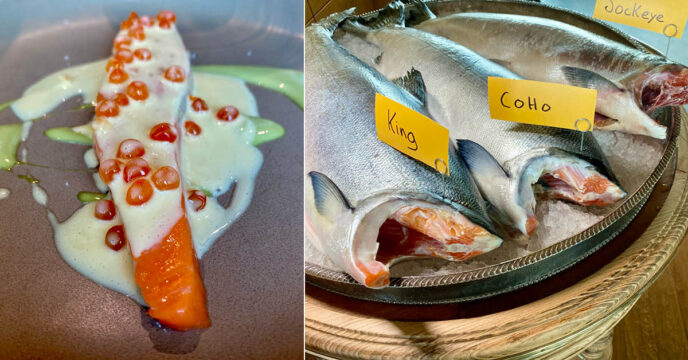
During a salmon tasting at the wonderful Wils* restaurant in Amsterdam, Bart taught us that there are five different types of wild salmon:
- Sockeye salmon is the best known here. You can recognize it by its deep red color, thanks to the small crustaceans this wild salmon species eats. Perfect for smoking.
- Keta salmon—also known as Chum—is lighter in color because this fish eats small white fish. Perfect for curries, fish soup or pan-fried with crispy skin.
- Pink salmon is mainly available in cans. Mild in flavor and low in fat, it’s perfect for a quick salad or as an alternative to tuna.
- Coho salmon—also known as Silver—is known for its firm texture and pink flesh. A top salmon for the grill and barbecue.
- King, called Chinook in Alaska, is the largest and most sought-after species. This is the crème de la crème of salmon, loved for its rich, delicate flavor. Raw, grilled, baked in the oven—you can do anything with it.
With a bit of luck, you can find fresh wild salmon during the summer, but this all-natural salmon is mainly found in the freezer section. Even when buying wild salmon, check whether it carries at least a certification. In this case, MSC, from the Marine Stewardship Council.
Incidentally, what is sold in stores as organic salmon is always farmed salmon. This certification can only be awarded when the origin and the rest of the supply chain are precisely known, and matters such as living conditions and feed comply with very strict rules that must be verifiable. And that isn’t possible in the wild…
Cooking with salmon
Craving salmon? We have several recipes for you on our site. How about Jamie Oliver’s crispy salmon tacos? Salmon burgers with grilled asparagus and tarragon mayonnaise or Ottolenghi’s za’atar salmon with tahini? Bring it on!
Also read:
- 3 common mistakes when preparing salmon
- What is that white stuff coming out of salmon?
- 8 ingredients that unexpectedly pair fantastically with salmon


