



Soy sauce vs. tamari: what’s the difference?
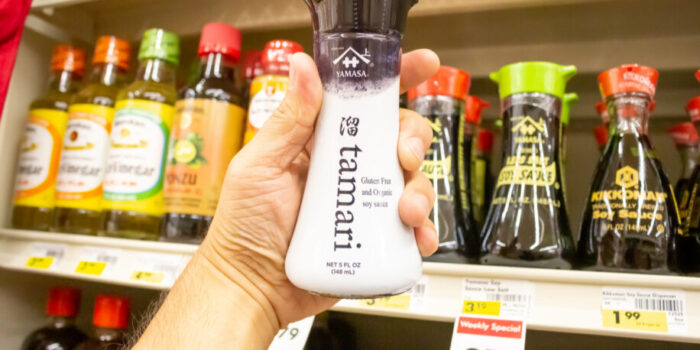
You may have come across it while browsing international food websites, in the Asian section of the supermarket, or when specifically looking for gluten-free recipes or flavorings. Tamari… What is it, and can you just use soy sauce instead? We’re happy to explain the differences.

If you already thought the two looked alike, you certainly have a point. Both give Asian dishes a salty, umami flavor, and fermented soybeans are the basis of both. So how are they different after all?
Not made from tamarind
First of all, tamari is not derived from ‘tamarind’, the tropical plant with thick pods containing a delicious, tart, sticky substance that serves as a flavoring in many exotic dishes. Tamarind is delicious, but that’s a story for another time. Back to tamari. The biggest difference from soy sauce is that tamari contains no (or very little) gluten. This is because no wheat is used in the fermentation process of the soybeans when making tamari. (At least, that’s the idea, but if necessary, always check the label to make sure it doesn’t list wheat or ‘wheat’.) Wheat is generally added to soy sauce to speed up the fermentation of the soybeans. So making tamari takes longer, and you can see that reflected in the price: it is usually more expensive than soy sauce.
A local product
In addition, soy sauce is a product made in many Southeast Asian countries, while tamari is purely Japanese. It is also, for example, nicer to dip refined ingredients (think sushi) in tamari instead of soy sauce. Here we’re talking about traditional soy sauce; after all, tamari is also a variety of soy sauce.
Salt levels
Tamari is generally slightly less salty than standard Chinese soy sauce or Indonesian kecap asin, which is also why it’s nice for dipping sushi. Naturally, there are differences in quality between both sauces, but you could cautiously say that the flavor of good tamari is somewhat richer, slightly better balanced and darker in color than good soy sauce. But undoubtedly, a good soy sauce is better than a bad tamari. So keep testing and tasting… No problem, we think, especially with this insanely delicious recipe for dumplings with a crispy skirt!
Also read:
- It’s been researched: eating sushi makes you smarter
- Whaaat?! Oh, so that’s what that little soy sauce fish is for with your sushi!
- Recipe: sticky pork belly


