


Tasty grape #2: cabernet sauvignon
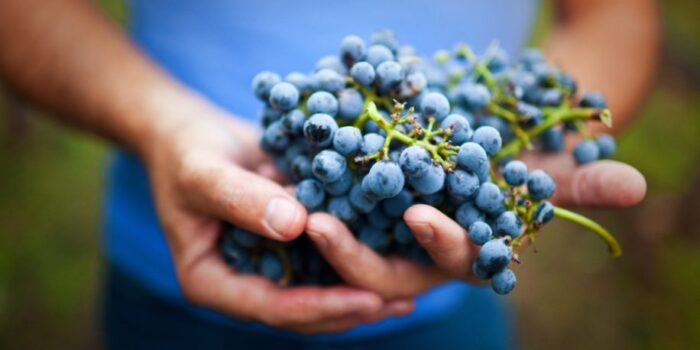
There are thousands of different grape varieties, and every year more are added through new crossings or (re)discoveries. Which grapes do you really need to (learn to) know? In the series ‘tasty grape’, I share my favourites, along with wine tips. This time: the king of red grapes: cabernet sauvignon.

King Cab
The history of cabernet sauvignon, or ‘King Cab’, reads like a fairy tale. It came into the world through an accidental crossing between cabernet franc and sauvignon blanc and began its career as one of the leading actors in the famous wine region of Bordeaux. So its future career as a grape was off to a good start.
World fame
By now, you can easily say that cabernet sauvignon is the most famous red grape in the world. And it produces serious wines. World fame in the cabernet world? Without a doubt, the Premier Grand Cru Classés from the Médoc (Bordeaux); showy bottles that you can leave to age for years, often making them only better.
Favourite high-school boy
Cabernet sauvignon is like a popular high-school boy, with winemakers as cheerleaders. They love cabernet, and not only in Bordeaux. With its thick skin and strong vines, it isn’t easily susceptible to diseases, and while other grapes can be very demanding when it comes to soil and climate, you can plant cabernet sauvignon almost anywhere. As long as there’s enough warmth for it to ripen nicely, it finds its groove.
Recognising the style
Because everyone wants to date this tough guy, he is planted all over the world. Wherever your bottle of Cabernet Sauvignon comes from, outside Bordeaux you’ll also find plenty in Chile, California, South Africa and Australia; you’ll always smell and taste blackcurrants and spicy aromas such as cedarwood and eucalyptus. But there are definitely differences.
Old versus new world
Wines from the ‘new world’—all wine-producing countries outside Europe—are more sultry, with riper fruit and wonderfully juicy flavours. It makes sense, because the warmth allows the grape to build up more sugars. That also immediately explains the higher alcohol percentage of new-world wines. They are often somewhat softer than ‘old-world’ cabs.
Old goat or young god
The age of the wine also has a clear influence on its flavour. High-school boys are mainly fruity, but once they have properly graduated, the wine develops aromas and flavours of cedarwood and tobacco, among other things. Perfect with a little cigar.
To blend or not to blend
King Cab does perfectly well on his own, in the bottle, but he also blends easily with other grapes. The best-known is the classic Bordeaux blend with merlot and cabernet franc. Other combinations include shiraz (as in Australia), carmenère (Chile) and tempranillo (Spain).
Cab at the table
With their tough character, Cabernets are truly food-friendly wines. Such a broad-shouldered wine can handle a lot. Top of the list: a beautiful piece of grilled meat, such as steak, entrecote, rib-eye or lamb. The meat acts as a catalyst and brings out all the flavours of the wine, while the tannins (the aromatic compounds that come from the grape skins and seeds) become softer and smoother.
Wine tips!
Serving you: three showstoppers, increasing in price.
Laurent Miquel Pere et Fils Cabernet Sauvignon, France, €7.95
You’ll also find cabernet sauvignon planted elsewhere in France besides Bordeaux. In the southern French wine region of Languedoc, for example, also known as Pays d’Oc. Thanks to the region’s excellent value for money, you’ll find many Pays d’Oc wines in the Netherlands. Like this Cab. This is cassis for grown-ups: deliciously fruity, soft and slightly spicy. Not as jammy as a new-world cabernet. Open it for Meatless Monday and serve it with grilled vegetables, such as stuffed aubergine with almonds and parsley. Top combination!
Salentein Barrel Selection Cabernet Sauvignon, Argentina, €14.95
In warmer climates, unlike in Bordeaux, you often find wines made from 100% cabernet sauvignon. In these so-called monocépages, the tannins are riper and the acidity softer. The use of oak is popular and creates a fusion of black fruit with the vanilla effect of the barrels. This is sultry with a hint of pepper. And a finish that stretches all the way to the Andes. Fire up your outdoor BBQ, because this Argentinian loves grilled meat and grilled vegetables.
Kendall-Jackson Vintner’s Reserve Cabernet Sauvignon, California, €27.95
If there’s a wine begging for lamb chops with rosemary, this is it. During a visit to this beautiful winery a few years ago, I ate the best leg of lamb of my life here, accompanied by a deliciously juicy house Cab. Dark fruit all over the place. You can also enjoy this wine with drinks, because it holds its own with aged cheeses, such as an old yet creamy goat’s cheese. Lovely after a walk in the woods; light the fire or turn the heater up nice and high.
Read also:


