



The bizarre truth behind ‘fresh’ tuna: are we eating painted fish?!
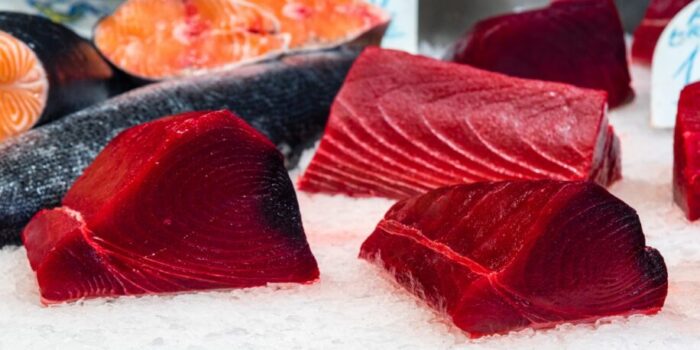
We don’t just eat with our mouths, but certainly with our eyes too. We want whatever we’re served to look appealing. Take a piece of fresh tuna: ideally, you want it to be bright red on your plate. Because let’s be honest, brown tuna doesn’t look appetizing at all, does it? Research by Keuringsdienst van Waarde shows that bright-red tuna could be a red flag . There is a real chance that such tuna has been dyed. Excuse me?

Yes, really. It could be that you’re eating dyed, manipulated tuna. Super shocking, because that seriously puts your health at risk. Besides, you don’t expect the fresh tuna you just bought to have been dyed! What kind of shady practices are these?
Beetroot juice
In the episode, fishmonger Jakob Doorn is interviewed. He shows presenter Ersin Kiris a video clearly demonstrating the manipulation. He explains that it is crucial to properly treat the blood and temperature of tuna in order to keep it as fresh as possible. The color says something about the quality. Red means fresh, brown does not—and the browner it is, the less fresh it is. After about a week, tuna is actually no longer edible. You can recognize the signs by the color, but also by the smell.
Fishermen are sometimes at sea for days before reaching land. The fish may already have been on board for three days. The discoloration process of tuna has already begun by then. How do they make sure tuna still looks as fresh as possible once it reaches land? For example, by coloring the fish with beetroot juice. The red juice is literally injected into the fish. In vacuum packaging, you can even see the juice with the naked eye: it is the liquid that ‘floats’ around the tuna.
Extremely dangerous
The juice keeps the tuna red for weeks. Sometimes even four weeks. But don’t be mistaken: the juice does not slow down the rotting process of the tuna. All beetroot juice does is give the fish a bright-red color. And that is precisely what makes this entire process so dangerous. How can you tell from a bright-red, fresh-looking fish that it is actually already three weeks old? Yes, the smell will probably give a lot away, but many people also rely on what they see. And that puts us at risk. You can bet that eating such old fish puts you at risk of food poisoning. Depending on your health, this can lead to life-threatening situations.
Illegal
The Netherlands Food and Consumer Product Safety Authority is clear: such practices are prohibited. Nevertheless, presenter Marijn Frank, together with chef Imko Binnerts, picks out 9 pieces of tuna that are clearly ‘dyed’ from a sample of 32 pieces. These are slices of tuna that had been caught from the sea about 16 days earlier, each with a bright-red color. When the duo places a dish of untreated pieces next to them, the difference could hardly be greater. One piece on the untreated dish is almost black. Inedible, in other words. But actually, the red pieces of tuna are too. You just can’t see it.
The conclusion? Don’t just look—smell carefully too before eating tuna. A distinct fishy smell is not a good sign. Curious about the full episode? You can watch it on NPO3 on September 1, 2024, at 8:30 p.m. That marks the start of the new season of Keuringsdienst van Waarde. Guaranteed to be another delicious watch. One extra tip for fans: the creators of Keuringsdienst van Waarde are also launching a new program. From July 15, 2024, you can watch Alles van tafel. (for 6 weeks). This program also uncovers the reality behind our food. Don’t miss it!
Read also:
- You’re being deceived right before your eyes: ‘fresh’ fish is often simply frozen fish
- 7 foolproof ways to prepare fish
- 25 of our favorite fish recipes: from spaghetti vongole to homemade fish sticks
Source: KRO NCRV – Keuringsdienst van Waarde


