



The dark secret behind Kopi Luwak, the most expensive coffee in the world
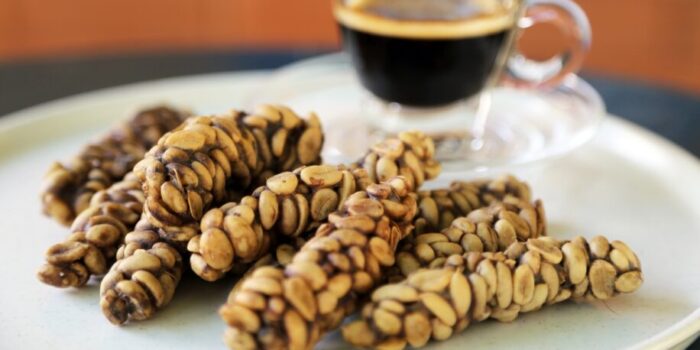
We previously wrote an article about the 10 grossest drinks ever made. The list also included Kopi Luwak coffee. What makes this coffee so gross is that it’s made from coffee beans found in civet cat droppings. Shocking? Just wait until you read the story behind this coffee. It will send shivers down your spine.

Kopi Luwak is mainly produced in Indonesia, Vietnam and the Philippines. It is the most expensive type of coffee in the world. You don’t pay this much for any other coffee: € 90 to € 550 per 500 grams. Gulp. If you drink the coffee at a café, you’ll pay at least € 10. Why on earth is this drink so expensive? It all has to do with the production process behind this cup of coffee. And once you know how that production process works, you’ll also understand why Kopi Luwak coffee is so controversial.
Civet cat droppings
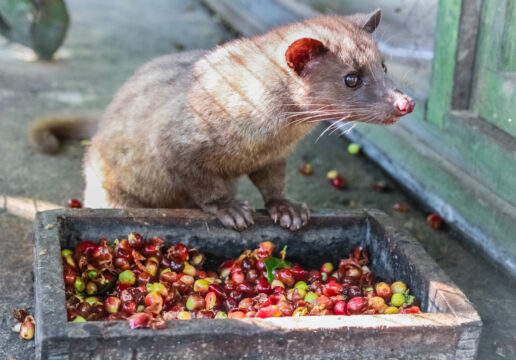
Kopi Luwak coffee cannot be made without the civet cat. You can also deduce that from the name: ‘Kopi’ is Indonesian for coffee and ‘Luwak’ refers to the civet cat. The civet cat, and especially its digestion, plays a crucial role in making Kopi Luwak coffee. The cat first eats raw coffee cherries. The flesh of those cherries is digested, while the pits remain intact. The civet cat then poops out those pits (or beans). Coffee farmers collect the pits from the droppings, wash and dry them, and remove their husks. What remains is roasted and eventually processed into Kopi Luwak coffee.
Luxury product
So it’s a complicated, time-consuming and intensive production process. That is precisely why the cost of a cup of Kopi Luwak coffee is so high. Because of the high prices and difficult process, many people see it as a luxury product. But it has a dark downside. Wherever animals are involved, there is a risk of animal cruelty, and unfortunately that happens far too often in the production of Kopi Luwak coffee.
Captivity
Virtually all civet cats involved in producing Kopi Luwak coffee are kept in captivity. This gives farmers better control over them. The conditions in which most of the cats are kept are far from ideal. They are often kept in small cages, on floors with extremely sharp grates that continuously cause wounds. They have little freedom. In fact, they have none at all. They spend 24 hours a day trapped in their cages, in their own excrement and wound fluid. Cleaning them? Many farmers fail to do that properly.
Poor health
On top of that, many civet cats are not in good health. They do not receive a healthy and varied diet. The civet cats are seen purely as part of a business model, so they are given only coffee cherries. Because, indeed, they ultimately help produce Kopi Luwak coffee. Cats with no room to move quickly become far too fat, while those that can move around more are extremely thin. Sad.
The wild civet cat
Not all Kopi Luwak coffee is made with the help of captive civet cats. Some civet cats also live in the wild, with plenty of room to move and access to good food. The droppings of wild civet cats are incredibly difficult to find, though. That is precisely why Kopi Luwak coffee from wild civet cats is even more expensive than ‘regular’ Kopi Luwak coffee. Only 200 to 250 kilos are produced each year. What do you pay for this coffee? Sometimes as much as € 6500 per kilo. On top of that, it is often very difficult to determine whether you are actually drinking Kopi Luwak coffee from a wild civet cat. Some packages bear a certification label, but various studies show that those farms often still keep civet cats in captivity. So you cannot rely on it completely.
What does Kopi Luwak coffee taste like?
You might think—and hope—that coffee drinkers who know this story do not drink Kopi Luwak coffee. Yet this type of coffee remains hugely popular among enthusiasts. Yes, it did appear on the list of the grossest drinks in the world, but that is mainly due to the production process. The taste of Kopi Luwak coffee turns out to be very good. The civet cat’s stomach acids and enzymes play a major role in this. Among other things, they ultimately create Kopi Luwak’s smooth, rich, earthy, syrupy flavor. Still, your cup of Kopi Luwak coffee may taste different from one occasion to the next. If the civet cats experience a lot of stress, you can taste it in the coffee. That adds an extra bitter aftertaste.
However luxurious the product may seem and however delicious the flavor may be, it is better to avoid Kopi Luwak coffee during your holiday in Indonesia, Vietnam or the Philippines. You don’t want to support a production process involving so much animal cruelty, do you?
Also read:


