


The difference between Serrano and Ibérico ham
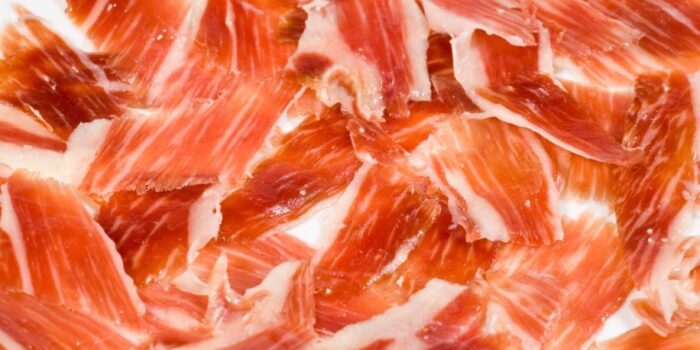
Although I hardly eat any meat, I can’t resist Spanish ham. Delicious, those slices of ham on the sharing board! But one Spanish ham is not the same as another. Depending on your taste preferences, it’s useful to know whether to buy Serrano or Ibérico ham.

Serrano ham
Serrano ham is a cured ham made from various crossbred ‘white’ pig breeds. You can recognise a good Serrano ham by its dark pink colour. The ham is thicker and less marbled than Ibérico ham, and the leg is shorter. Because of the shorter and less nutritious diet, the fat is white, firmer and less supple. Serrano ham smells sweet, has a pronounced umami flavour and tastes saltier than Ibérico ham. Try to get freshly sliced Serrano ham or, if you buy Serrano ham in a packet, choose one with the origin and curing time stated on the label (such as Teruel or Trevélez).
Ibérico ham
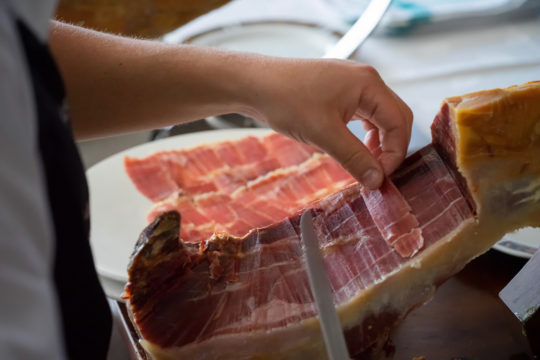
Ibérico ham is cured ham from the black Ibérico pig. This ham is red, lightly marbled and has a fruity aroma. Its flavour is slightly sweet and briny. The label provides information about the pigs’ living conditions and diet, and there are four categories: bellota 100% Ibérico, bellota Ibérico, cebo de campo Ibérico and cebo Ibérico.
Top of the bill
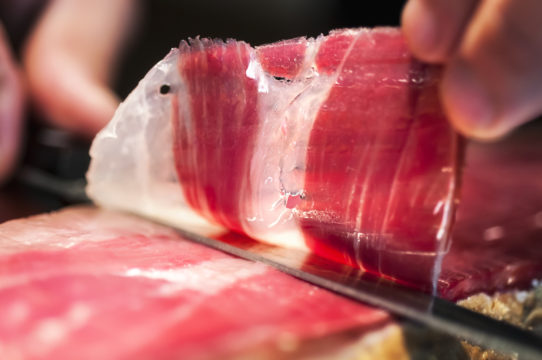
100% Ibérico ham is the absolute top tier and comes from black, purebred Ibérico pigs that have roamed freely and eat nothing but acorns (bellota) – up to 10 kg a day! That is why the ham is also called Jamón Ibérico de Bellota. Ibérico ham is more muscular and longer, with a fine hock and a characteristic black hoof (hence the name ‘pata negra’). The colour is dark red or light purple, and the ham has a sweet, nutty flavour. To make sure you are buying real Ibérico ham, it is important to have it sliced in front of you. You can recognise genuine Ibérico ham by its fat: soft and sweet, it should melt at body temperature, for example by warming a small piece between your fingers.
The most famous producer of bellota ham is Joselito. You can easily pay 700 euros for its Joselito ‘Gran Reserva’!
Not every pata negra is the same
It is worth knowing that Jamón Ibérico de Bellota is indeed pata negra ham, but pata negra ham is not exclusively Jamón Ibérico de Bellota. Most other producers use a cross with English Duroc pigs, which reproduce more quickly and produce more meat. These crossbreeds do not always have black legs. If 75% Iberian blood runs through the pigs’ veins, the ham may also be called Ibérico.
Bellota Ibérico refers to a cross between Ibérico and Duroc pigs. One of the pigs must be 100% Ibérico. They are raised in the same way as the 100% Ibérico pigs.
A few acorns, lots of grain
Cebo de campo Ibérico is ham from a free-range crossbreed, but not in the forests and hills where bellota pigs roam. These pigs are kept more intensively. The animals receive a mixed feed of grains and legumes, but also eat acorns. Cebo Ibérico refers to ham from crossbred pigs raised in intensive farming. These pigs have eaten only grain and had little freedom of movement. These factors affect the quality of the ham.
At room temperature
Always let ham come to room temperature before eating the slice, as this allows you to taste its full flavour. The thinner the slices, the better the ham tastes. A few drops of olive oil (or even better, really good truffle oil) on a slice of ham is simply divine.
Buying ham?
In Amsterdam or Rotterdam, you can go to Ibericus for genuine Spanish ham. A truly wonderful shop where you can buy and, of course, taste and eat many different qualities of ham. The ham is sliced on the spot by well-trained Spaniards.
With thanks to Monika Linton/Brindisa.
Also read:
- How to become a charcuterie pro
- The difference between chouriço and chorizo
- 3x drinks and bites in Breda


