


The Strength of Your Garlic? It Depends on This
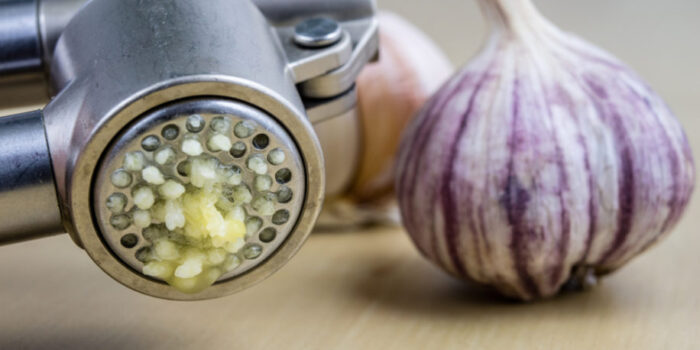
For garlic lovers (are you talking to me?), there are few dishes that aren’t even more delicious with a clove of garlic. Try making that garlic soup with three (!) bulbs or my favorite garlic shrimp with white wine. But before you start… did you know that the way you cut garlic has a considerable effect on its flavor?

Garlic owes its spicy, strong flavor to the compound allicin, which is released as soon as the outside of the clove is broken when you cut or crush it. We’ve listed the levels of intensity and preparation methods for you.
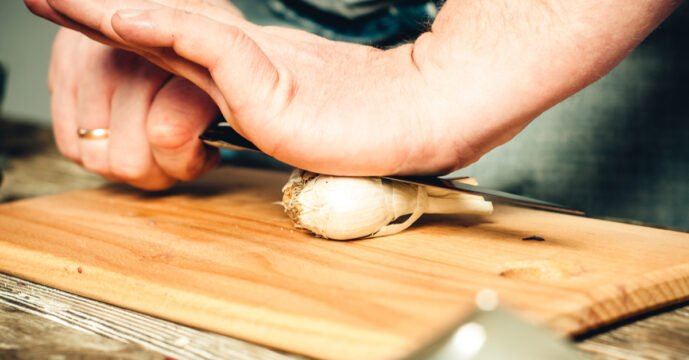
Whole cloves
If you leave the cloves whole, the flavor will be the mildest. That’s because you don’t break those so-called walls of the garlic. Confit in oil, garlic develops a subtle flavor. Once the clove is soft, you can spread it on a piece of toasted bread.
Slices
When you cut garlic into thin slices, the flavor becomes slightly stronger, but it’s not too spicy yet. Are you cooking the garlic at high heat for a short time? Always cut the clove into slices, otherwise it may burn too quickly.
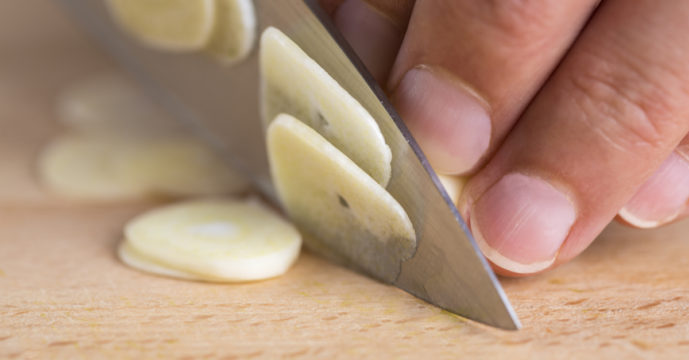
Finely chopped
You can probably guess: if you finely chop the garlic, you can expect a deliciously strong garlic flavor. If you leave the chopped clove on the cutting board for a while, the flavor becomes even stronger because the allicin continues to develop.
Grated
A finely grated garlic clove is delicious in pesto or aioli and by far the strongest in terms of flavor. Want your garlic superfine but not super-strong? Sprinkle some salt over the grated garlic and use the flat side of your knife to rub the salt into the garlic, so to speak. And, uh… you can leave that garlic press in the drawer!
Also read:
- An ode to garlic sauce
- Jarred chopped garlic: gross or gold?
- What you shouldn’t do with garlic (and what you should!)


