



These are the differences between barn, free-range and organic eggs
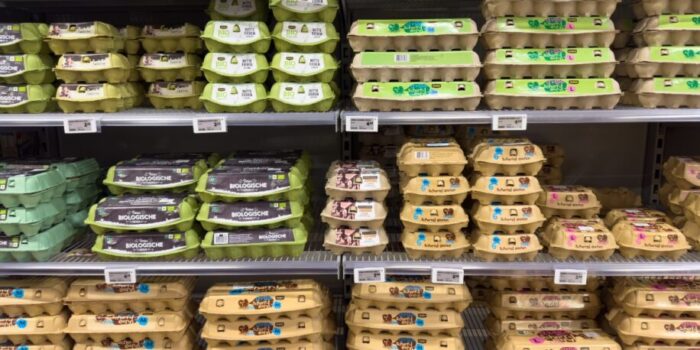
A tasty egg always hits the spot. Fluffy scrambled eggs, hearty omelettes or soft-boiled eggs—delicious. When looking for a box of eggs at the supermarket, you can choose between barn, free-range or organic eggs. No idea what the difference is? Or how to know which type of egg you’re putting in your cart? Kassa investigated.

The terms have everything to do with the welfare of the hens that lay the eggs. They say something about the conditions in which the animals live. How good are those conditions? Barn, free-range and organic are legally protected terms. So they cannot simply be printed on the packaging of an egg carton.
Barn, free-range and organic: this is the difference
If you were to compare the three types of eggs, organic eggs are the best choice when it comes to animal welfare. Free-range eggs come next, followed by barn eggs. Compared with the others, the living conditions of barn hens are therefore the worst, while hens that lay organic eggs have the best living conditions.
Barn eggs
Did you think barn hens happily wandered freely around the farm? Then you’re mistaken. These hens never go outside. They stay indoors, with nine hens per square metre. The law does not allow that number to be exceeded. Farmers must also ensure that at least one-third of their barn consists of littered space, and that the hens can walk on a layer of bedding. This is the most common type of hen in our country.
Free-range eggs
Free-range hens have it a little better than barn hens. They are not confined indoors around the clock, but must be given at least eight hours a day to roam outside. The outdoor area must be at least four square metres per hen: that is what the law requires. If the space is smaller than four square metres, the hens may officially not be called free-range hens.
Organic eggs
Of the three types of hens, organic hens live in the best conditions. They not only have more outdoor space per hen than free-range hens, but are also better accommodated in their barns. For example, they can rest indoors on perches and the floor they walk on is pleasantly soft. Organic hens are also given fewer antibiotics than barn and free-range hens.
The code on your eggs
How can you tell what type of egg you are dealing with? Sometimes it is stated on the box, but you can also see it on the eggs themselves. Many eggshells have a code printed on them. The code starts with a number, followed by two letters, and ends with a series of digits. The simplest example of such a code is 2 NL 1234567. You can break down the code as follows. The first number indicates the type of egg: barn (2), free-range (1) or organic (0). The two letters that follow are an abbreviation of the country where the eggs come from. NL therefore stands for the Netherlands. The string of numbers at the end refers to the farm of origin. With the code, you can always quickly find out which farm to contact if something is wrong with the eggs.
What does the starting number 3 mean?
You almost never see egg codes beginning with the number 3 in the supermarket. Thankfully, because the hens that laid these eggs have a truly terrible life. The code stands for ‘colony housing’. These hens never see daylight, have only 90 centimetres of room to move around and live packed tightly together. What are these hens’ ‘cage eggs’ used for? Mainly products containing processed eggs, such as pasta or mayonnaise.
Stars for a Better Life
Those walking past the egg section at Lidl may spot blue boxes of Kipster eggs. And at Albert Heijn, Blije Kip eggs. So what are these? They are not organic eggs: you will not see code 0 printed on them. But they are eggs that have received the maximum three stars from the Beter Leven quality mark. In this case, the hens do not follow a 100% organic diet, but they do live in good conditions. For example, they get plenty of time and space to roam outside and live in large barns with lots of room.
Why are eggs so expensive now?
Is there also a price difference between barn, free-range and organic eggs? Definitely. You pay considerably more for organic eggs than for barn eggs. Better living conditions simply cost the farmer more money. But honestly: in general, we have had to pay more for eggs lately anyway. In February last year, we paid over 26% more for our eggs than the year before. (And what about America: there, eggs were even 55% more expensive!) The main reasons for those extreme price increases? The high cost of chicken feed—due to the war in Ukraine—and the low supply of eggs caused by bird flu. As long as those situations continue, the chances of the price of your eggs falling are slim.
Read also:
- 11 common mistakes when preparing eggs
- So brown and white eggs are not the same
- You’ll be shocked: this many eggs hens ‘have to’ lay per year
Source: Kassa


