



These are the experts’ top tips for making perfect temaki (hand rolls) at home
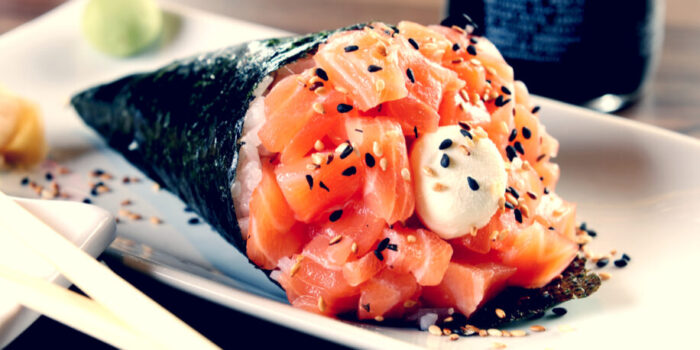
Can you still remember the enchanting finesse of a sushi master creating the most refined dishes right in front of you and serving one delicious maki or nigiri after another? No, neither can we—not really—and it hurts. So we’re really hoping that within the foreseeable future, hospitality venues will be allowed to reopen, and until then we’re ordering and picking up food to our heart’s content. And if you’d like to channel your inner sushi chef at home, these experts have the ultimate tips for making the best temaki (hand rolls)!

Because, say these highly skilled and award-winning sushi chefs (who sharpened their knives at America’s only three-Michelin-starred sushi restaurant Masa***), the real high-class rolling and arranging is best left to the pros, who study it for years. That stress and precision may not be what you’re looking for at home, but the good news is that temaki (you know, those ‘cones’ of seaweed filled with all kinds of sushi deliciousness that you simply eat by hand) offer the perfect solution.
From Michelin setting to laid-back neighborhood spot
Taka Sakaeda and Jihan Lee have also taken a step back from the three-star sushi level, but perhaps a step forward in terms of chill. At their cozy new spot, Nami Nori in New York, they make no concessions when it comes to flavor and quality, but their approach to making hand rolls is simple and laid-back. And you can do that at home too, they say!
You can do this
Don’t be intimidated, says Taka. In Japan, it’s quite common to have temaki ‘parties’, where all the ingredients are simply laid out on the table and everyone starts rolling their own.
The best foundation
The most important element is the rice. Choose good-quality sushi rice (short-grain), and rinse it well under the tap until the water runs clear through the sieve or colander. According to Taka, using a colander or a (not too fine) sieve is important so that small broken pieces of rice can be rinsed away; otherwise, they release a lot of starch, making the rice too sticky. At home, he uses a rice cooker for the best results and adds sushi vinegar once the rice has cooked according to the appliance’s instructions.
Time to fill
Make sure you have good-quality nori sheets, and then you can get creative with the fillings. Put out an assortment of raw vegetables and garnishes such as strips of cucumber, spring onion, avocado, daikon, shiso leaves or cress. See if you can find really good wasabi and stay away from the powdered variety, say the chefs. According to them, Kikkoman soy sauce is perfectly good quality for home use. And then there’s the fish!
A little adventurous, a little safe
Try to find a fishmonger who is honest about the origin of the fish you buy and can advise you on which fish is suitable for raw consumption. If slicing perfect pieces intimidates you (or if you don’t have a well-sharpened knife), you can choose to cut the fish into smaller cubes. And beautiful scallops that you’ve briefly seared in a hot pan are delicious too! Steamed crab or shrimp also work very well if you prefer fish that isn’t raw.

Let loose
Taka and Jihan aren’t too strict when it comes to combining flavors at home. ‘Above all, try flavor combinations that seem logical and delicious to you,’ they say—and they certainly don’t have to be strictly Japanese. Chinese XO sauce is delicious with those scallops, and gochujang (Korean red pepper paste) is wonderful with sea bass. Cream cheese with salmon? Sure, go for it! And a sauce on top finishes things off, as the chefs recommend: anything mixed with Japanese Kewpie mayonnaise works! So your favorite hot sauce mixed with Kewpie for your homemade spicy tuna temaki—that sounds amazing, right?
You can simply leave that bamboo mat in the kitchen drawer, because anyone can get started with hand rolls. Build your own temaki and roll it up like an oublie cone, or simply fold it closed like a taco. Either way, have fun with your homemade temaki and, above all, don’t be too hard on yourself!
Also read:
- Sacha sauce is the sauce you need to get at home right away
- How to make the ultimate white bread: Japanese milk bread
- For all sushi lovers: this is what that second hole in the soy sauce bottle is for
Source: Robb Report


