


These are the most notable findings from the National Beer Survey 2025
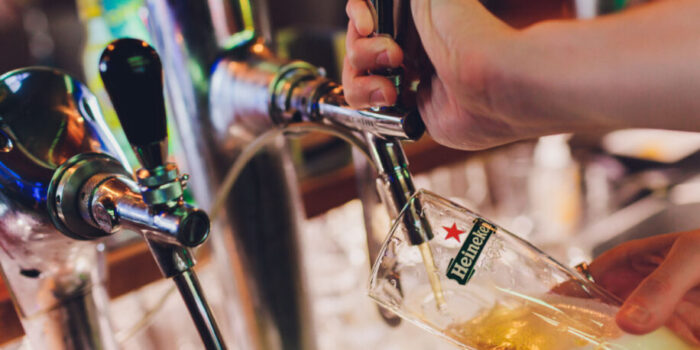
Beer is still a beloved drink in the Netherlands, but the way we drink it is changing. Alcohol-free specialty beer is growing enormously, and more and more Dutch people are choosing to buy beer in neighboring countries because of the lower prices. This is evident from the figures in the recently published National Beer Survey 2025*.

Alcohol-free beer: from alternative to trend
In recent years, alcohol-free beer has not merely been a trend; for many beer drinkers, it has become a fully-fledged alternative to traditional beer. The National Beer Survey 2025 revealed that two-thirds of consumers choose alcohol-free beer as a substitute for beer with alcohol. Why? Simple: it tastes increasingly better, the range is broader, and it is an ideal drink when, for example, you have to drive or do not want to drink alcohol for a while.
The fact that more and more Dutch people are embracing alcohol-free beer has not come out of nowhere. The range has increased enormously, from classic pilsners to alcohol-free specialty beer. And yes, those flavors can now compete with beers containing alcohol—in short, a win-win!
Beer remains popular: conviviality is key
In the Netherlands, beer is primarily associated with conviviality. 42% of Dutch people regularly drink beer, and it is still the favorite drink for social occasions. Whether at a party, at friends’ homes, or simply on sunny summer days—beer is the connecting factor. Most beer drinkers usually drink their (alcohol-free) beer at home (71%) or at friends’ or family members’ homes (48%). Restaurants (39%), parties/social gatherings (38%), and cafés, bars, or pubs follow—and beer on the terrace (33%).
Specialty beer on the rise
The survey also shows that more and more people are discovering specialty beer. Whereas just 33% of beer drinkers drank specialty beer regularly two years ago, that figure is now 42%. The expansion of the range and the growing popularity of wheat beer and witbier are contributing to this. For example, ALDI recently expanded its Schultenbräu range with new specialty beers. Here are some tips right away: buying specialty beer at the supermarket: what to look out for.
Cross-border shopping: buying beer in neighboring countries
Buying beer across the border is on the rise, and this has everything to do with the high excise duties in the Netherlands. According to the survey, 41% of beer drinkers sometimes buy beer in Belgium or Germany, mainly because of the lower prices. It is therefore no surprise that more and more Dutch cities near the border—such as Groningen, Zwolle, and even Utrecht—are experiencing lost sales and tax revenue as a result of cross-border shopping.
Read also:
- Action scores a hit with mini fridge for gamers (cools and heats!)
- 3 favorite hotspots on Texel (with Texel Brewery at number 1)
- This Loetje deal at Albert Heijn is going viral—and we understand why
*This survey was commissioned by Nederlandse Brouwers and conducted by Ruigrok. The target group consists of Dutch people aged 18 and older, and the sample is representative in terms of gender, age, and educational level. Representativeness was achieved through stratification of the sample beforehand and quota sampling during data collection. The Panelclix panel was used as the sampling frame; a total of n=1,551 respondents completed the online questionnaire between August 19 and September 3.


