



This is how long you should marinate or brine chicken (+example!)
We really can’t say it often enough: marinating really improves your chicken! All chicken, but especially the parts that otherwise tend to turn up dry and lackluster (we’re talking to you, chicken breast). But marinating (tip: in pickle juice!) doesn’t mean blindly throwing it into a container of stuff and taking another look the next day (thank goodness, because sometimes you just want chicken right now!). Here’s how to do it:

Because tough, dry chicken is the enemy, and tender, juicy chicken is what you want. We already explained how to prevent dried-out chicken breast, but let’s zoom in on that marinating! And for convenience, we’ll include brining too, because honestly, that’s probably the easiest of all—especially if you do what we do…
How long should you marinate and/or brine chicken?
That depends on the dish you’re going to make. Never longer than a day, but there are still a few nuances. If you just do something at random, there’s a chance you’ll change the texture of the raw chicken either not enough or too much, and neither is good. That’s why it’s important to match the timing to the cut of chicken you’re using, as well as what you’re going to do with it.
Hard or soft
If you use a very concentrated, barely diluted marinade, fifteen to thirty minutes can sometimes be enough. You can even do this at room temperature, which has the added benefit that the meat won’t go into the pan ice-cold. With a less concentrated marinade, it’s best to allow at least an hour. But marinades high in acid, or very salty brines, should not be left for longer than 8 hours if you’re going to fry chicken breast, for example.
Keep an eye on the clock
After that amount of time, there’s a chance (depending on the acids in the marinade or brine) that the chicken will start to cook because of the acidity. Just think of how you make ceviche, where the raw fish also cooks in the lime juice. In chicken, this could damage the fibers and proteins too much for further cooking, leaving you with grainy chicken. Not delicious.
Sustainable option
Marinating chicken in a plastic (resealable) bag is pretty popular, especially in America, where you’re constantly bombarded with these kinds of marinating techniques. It is convenient, absolutely. But I’ve realized that I just can’t bring myself to use one of those (expensive) bags once for marinating and then throw it away. So I always do it in a Tupperware-style container, which can simply go in the dishwasher afterward. I also have glass ones for when a truly intense curry/masala marinade is involved and I don’t want a greasy film left on the plastic. (Although apparently this TikTok trick gets containers clean in no time!)
Look, like this
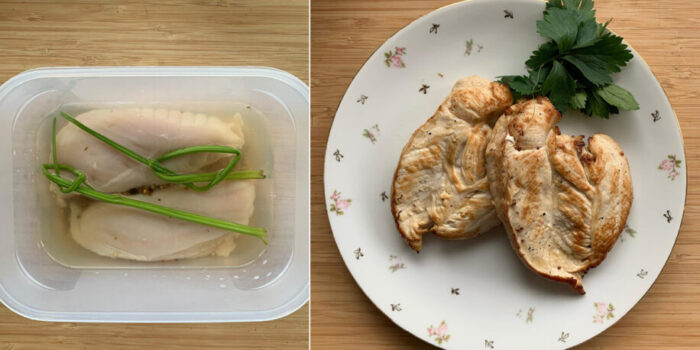
Need an example of a brine? We’ve got one! My carefully hoarded jar of cornichons from France finally ran out recently, and I couldn’t bring myself to throw away the pickle juice. So, into a container it went with two beautiful chicken breasts, plus a few sturdy parsley stems from the school garden (tied in a knot so they’d be easy to fish out without getting salmonella juice everywhere!), lid on, and left undisturbed in the fridge for five hours. After that: patted thoroughly dry with paper towels, flattened a little more with the bottom of a random coffee mug, and cooked through in a frying pan with olive oil. (Browned for two minutes per side, then another six minutes over low heat with the lid on the pan, followed by ten minutes of resting with the lid on.) So good! You could definitely still taste the cornichons, so you have to be in the mood for that, but the result was truly excellent: tender, juicy, fresh chicken with a lovely crispy edge. Mmmmmmm…
-
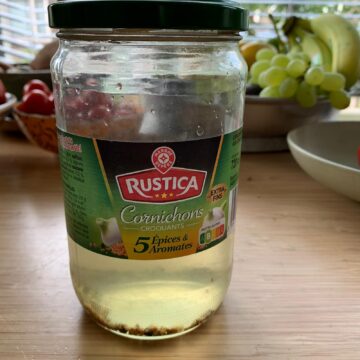
- Cornichons-vocht is ideaal om mee te pekelen
-
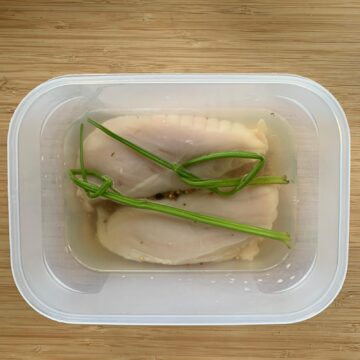

- Even laten intrekken en zie hier…
-

- Malse, sappige, frisse kip met een lekker krokant randje!
Read also:
- How to defrost chicken
- Recipe: easy spicy chicken satay
- How to check whether your chicken is perfectly cooked


