



This is the best way to dispose of oil or fat after cooking
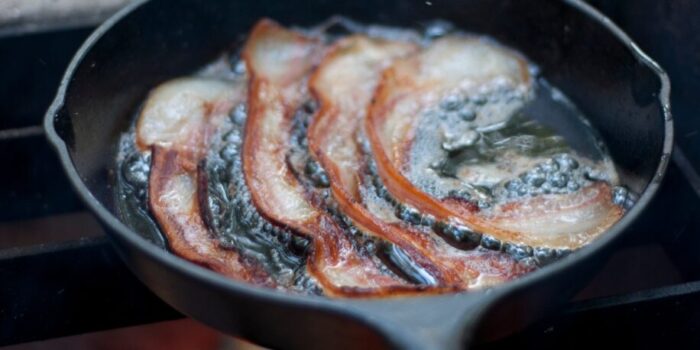
If you ever fry in oil (everyone, I’m guessing) or cook something that releases fat (bacon, yay!), you’ve probably found yourself wondering what on earth to do with that oil or fat afterwards. Maybe you leave it in the pan overnight, hoping the fat fairy will magically make it disappear by morning. Or you flush it down the toilet (NO!), or turn on the hot tap and say a little prayer that you won’t be shelling out a few hundred euros to a plumber tomorrow…

None of these are particularly good ideas (although we can understand the well-intentioned logic behind the last one). So what should you do? This:
First, see if you can reuse the oil or fat
Liquid oil that you’ve used for deep-frying can definitely be used again. It would of course be a real waste to throw away (rather expensive) peanut oil immediately after using it just once to, for example, fry ravioli (do it!). It’s a good idea to keep an empty (different) oil bottle, let the liquid oil cool completely, and pour it into the empty bottle through a small sieve and funnel. That way, you can easily use it again for deep-frying.
Flavor booster
If you’ve used oil to gently fry shallots or crisp up chili flakes, it’s also incredibly delicious in a dressing, or drizzled over soup. Bacon fat, or the rendered fat left over after cooking a duck breast, is wonderful for making truly crispy oven potatoes. Just make sure you haven’t used too high a heat, because there’s no making burnt oil with the taste of bitter bits of meat in it delicious again.
Here too: let it cool first (but not so long that it solidifies again!), then pour it through a sieve and store it in a well-sealed container in the fridge. Bonus points if you have an ice cube tray specifically for this kind of thing (because nobody wants an ice cube with a greasy duck layer in their Moscow Mule). Pour the fat through the sieve into the ice cube tray, store it in the freezer, and take out a few cubes when you’re making oven potatoes or frying them in a pan.
Throw it away?
But sometimes keeping it isn’t an option. Once again, those saved empty bottles or jars come in handy. An old milk carton with a screw cap, or a large empty jam jar with a lid; they’re all useful for disposing of cooking fats. Yes, disposing of them—put them in the bin. It’s not ideal, but for now the high temperatures of a waste incinerator are the best solution for getting rid of small amounts of fat. This does not apply to ‘official’ frying fat, by the way; the packaging often explains how consumers can recycle it. Solidified animal fat can also easily be scraped out of the pan with a wooden spoon and then put in a jar or directly into the bin. Just don’t do this if your bin is outside in the sun during summer, because if there’s a hole in the bag, the fat will naturally drip straight out of it and into the bin.
In any case: leftover fat and/or oil absolutely do not belong in the sewer! They cause blockages and pollution, and the alternative takes barely any more effort. So save your half-litre milk cartons, chickpea jars and one-litre cola bottles, and everything will end up in the right place. Good luck!
Also read:


