


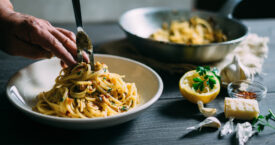
This is the twist your cacio e pepe is still missing
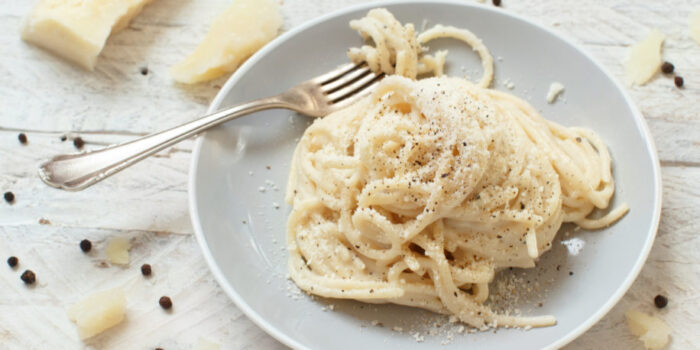
Cacio e Pepe means cheese and pepper in Old Roman, and is the perfect example of a truly Italian pasta dish. In fact, it’s especially representative of Cucina Povere; the ‘poor people’s cuisine’, in which Italians use humble, few ingredients to conjure up the most delicious steaming pasta dishes. This version has a fantastic twist!

And that twist isn’t suddenly caviar or anything, because then there wouldn’t be much povere left to it. No, it’s an addition that you could, so to speak, pull straight from your own vegetable garden, or otherwise pop into your basket for a few cents.
This is the twist that makes your cacio e pepe even more delicious
A very thinly sliced shallot, fried over medium-low heat in a tablespoon of butter for about 10 minutes and slightly caramelized, is delicious with that salty cheese. At the very last moment, spoon the shallot (which you can fry at the same time as the pasta cooks and you grate the cheese through the Microplane) into the cacio e pepe as we make it – following Toscanini’s cacio e pepe recipe.
But isn’t it called cacio e pepe e shallots?!
That’s true, you’re absolutely right, and by all means start with the basics first (all Italians will stress this to you too). But if you feel like giving it a delicious extra umami twist, in which the sweetness of the caramelized onion perfectly complements the gently salty creaminess of the melted cheese, this is the way to go!
Also read:


