


This Is What We Ate and Drank in the ’90s, Part 1
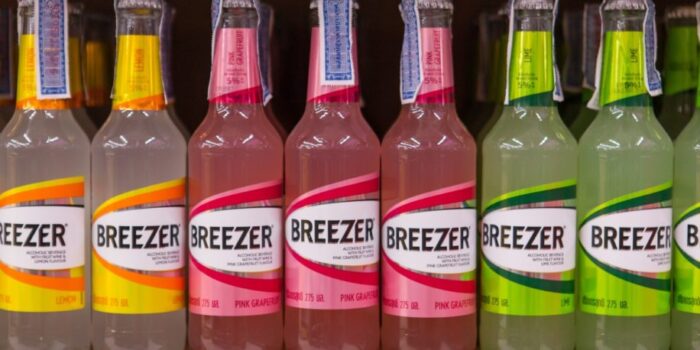
Dancing along with Britney Spears, sobbing along with Sinead ‘O Connor and humming along with the Crash Test Dummies, the nineties are an emotional roller coaster. Luckily, there’s plenty to comfort our tummies: shawarma sandwiches with garlic sauce, buckets of Ben & Jerry’s and, if all else fails, Bacardi Breezers in every color of the rainbow.

Grocery Shopping with Allerhande
Albert Heijn’s cooking magazine, Allerhande, began in the fifties as a black-and-white leaflet distributed door to door, but by the nineties it had grown into a leading glossy about food. And it was free! The other culinary magazine of the era, Tip Culinair, had its work cut out for it. That AllerHande had a major influence is proven by arugula. Until 1996, hardly anyone had ever heard of it, until the magazine’s editorial team persuaded the buyer to put it on the shelves for once. The editors came up with a few fun recipes featuring arugula and voilà: it couldn’t be kept in stock.
Potatoes with Shoe Polish, Soup with Cigarette Smoke
In the nineties, food photography really became ‘a thing’. The sad photos in sixties cookbooks of wilted lettuce and deader-than-dead chickens were overtaken by chic, glossy photos of dishes that made your mouth water. Not everything was as tasty as it looked: potatoes were brushed with brown shoe polish to give them a nicely browned crust, and hot soup steamed because an intern blew cigarette smoke over the plate just before the camera clicked. Brown food was out; everything in the photo had to have color, and the result was sometimes so futuristic that you could no longer recognize a dish because it consisted of colorful cubes on a sheet of glass with a spotlight underneath. But hey, it was artistic, exciting and innovative, so in the nineties you could get away with that very easily as a food photographer.
Ice Age
Thank God, enlightenment reached us in the nineties. Nothing religious, but at last, besides those kilo tubs of vanilla ice cream from Het IJspaleis and Jamin ice cream cones (with a gumball at the bottom), we could eat grown-up ice cream. Magnum introduced its ice creams as a snack, an instant success. Ben & Jerry’s opened its first scoop shop in Amsterdam in 1996, and the tubs of ice cream appeared in supermarket freezers. Häagen-Dasz followed closely behind – the name was actually invented by the American parent company to sound as European as possible.
Two Shawarma Sandwiches and a Cup of Milk, Burp
What was going out like before shawarma joints existed? Did everyone go straight home from the pub for a healthy whole-wheat cheese sandwich and a glass of water? No idea, because in the nineties shawarma joints suddenly started popping up everywhere. What they served actually had little to do with the original shawarma from Israel, but at four in the morning that didn’t matter much. The traditional garlic sauce wasn’t all that traditional either, but was invented by Amsterdammer Ben Cohen, who noticed that people didn’t go for tahini with their shawarma. He came up with something involving mayonnaise, herbs, lemon juice, plenty of garlic and a splash of vieux, sold tens of thousands of liters of it and was convinced that corporate spies from Calvé had stolen his secret recipe.
New: Breezer Sex
There it was, at the end of the nineties: the Bacardi Breezer. In every color of the rainbow, sweet and fruity, ideal for novice drinkers. In 2002, no less than thirty million liters were sold, so it’s no wonder that the NIGZ was concerned about increased alcohol consumption among young people. Breezer culture, named after the cute little bottles, refers to a promiscuous youth culture, and the new word ‘breezer sex’ appeared in Van Dale: sex in exchange for a Breezer or another little gift.
Flippo Millionaire
Don’t just wolf down a bag of chips; check the Flippos first. In 1995, plastic discs that you could collect were inserted into bags of Smiths crisps. Looking back, you may not understand the appeal of those little things featuring Looney Tunes characters, but in the nineties they were a craze. Flippos were a Dutch invention that then conquered the rest of the world: in Austria they were called Kelly Caps, and in Mexico they were known as Tazos. Their inventor, Hans Zandvliet, became a millionaire from them.
Read also:
- This Is What We Ate in the ’70s, Part One
- This Is What We Ate in the ’70s, Part Two
- This Is What We Ate in the ’80s, Part One


