


This is what you can do yourself to prevent food poisoning (and yes, unfortunately, you do have to clean)

When it comes to the risk of food poisoning, many people (myself included) don’t take advice on how to prevent it all that seriously. Raw meat (such as steak tartare), raw fish (sushi), raw-milk cheeses—we happily eat plenty of it. We can also be lax when it comes to storing food, and with a bit of common sense you can surely smell or see for yourself whether something is still safe to eat, right? And what about cleaning the fridge at your house?

Because certainly not everyone does that regularly. Most people know that the fridge temperature setting naturally determines how safely you store the food itself (and not just whether your beer is chilled exactly the way you like it), but the amount of bacteria from outside also affects how safe something is to eat later. That’s why the advice is to keep the fridge clean too.
Extra caution for vulnerable people
In the AD, professor of food microbiology Marcel Zwietering says that it’s especially important for people with poorer health to be careful and follow storage advice more precisely. For example, after opening the package (if you manage to do that at all), you can still eat sliced meats for three to five days if the fridge is really at 4 degrees and they are stored on the bottom shelf (just above the vegetable drawer).
How often you should clean
And those puddles that form underneath the vegetable drawers, or worse, inside them? You should clean those immediately. The same goes for surfaces that become dirty due to, for example, a leaking milk carton or juices running out of meat or fish packaging, says professional organiser Esther van Dijk. And do you know how often she says you should give the fridge a deep clean? Every two months—and then you really should take everything out and clean it, including shelves, bins and vegetable drawers.
According to Esther, wiping it down with a cloth every now and then is sufficient in between, but a thorough cleaning every two months ensures that you can store your food safely, thereby reducing the risk of food poisoning.
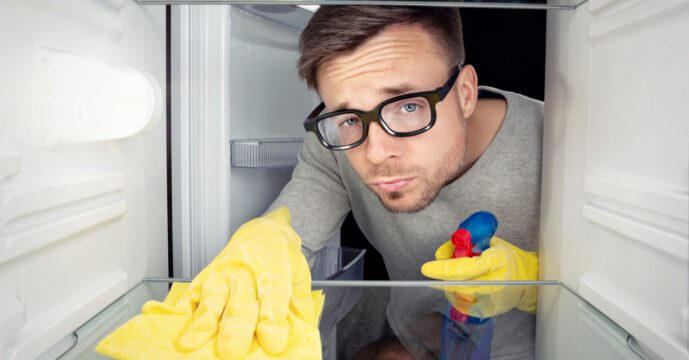
Yes, that may be a little alarming. But spending a night hanging over the toilet isn’t much fun either, and this tip from Esther might help too: “Plan the cleaning for just before you do your weekly grocery shopping; that’s when it’s at its emptiest.”
Also read:
- You are what you eat: the fridges of 14 families from around the world prove it
- Do you also wonder how to prevent that puddle of water at the bottom of your fridge? Here’s how!
- Can you put hot food in the fridge or freezer?
Source: AD


