



Do you also wonder how to prevent that puddle of water at the bottom of your fridge? Like this!
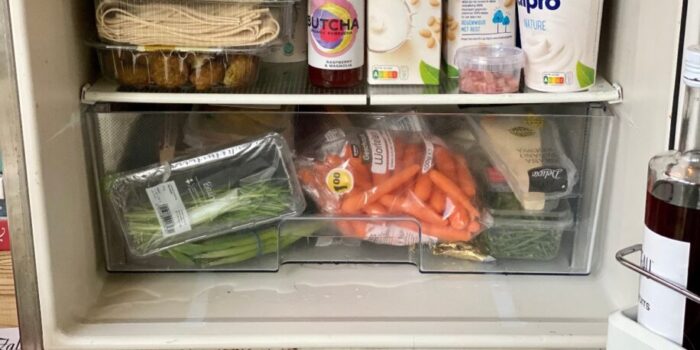
When colleague Adeline (nickname Eddie) once again shared one of her Big-E Annoyances recently, the response was enormous. So relatable! Because indeed: that puddle of water at the bottom of the fridge, which comes flowing out in little waves every time you open the vegetable drawer, is MEGA annoying…

And how great it is to see that, alongside all the cries of recognition, so many tips are shared in the comments on how to prevent this. Experiences were shared, experts were consulted, and so we can nicely follow up this story with advice from the experts on how to prevent a puddle of water at the bottom of your fridge.
Don’t take it to the thrift shop just yet
First of all, it’s good to know that, unless it’s taking truly extreme forms, this is completely normal. It certainly doesn’t have to mean that all kinds of things are broken, or that you immediately need to launch into a Marktplaats horror story. For example, follow these tips from fridge manufacturer Liebherr, and preventing that puddle of water at the bottom of the fridge becomes a lot easier:
Down to the drain
It all starts with condensation forming inside the fridge. It forms on the back wall (the coldest spot) and then drips down towards a channel and a small drain. At the bottom of the drain, out of sight, it is collected in a container located above the compressor, and the heat from the compressor evaporates the moisture.
Get poking
However, when the water remains in the channel, the drain is probably clogged. How do you fix this? Carefully (!) clear the blockage by poking it through with, for example, a cocktail stick. I use a thin chopstick myself because they’re less sharp, wrapped in a small piece of kitchen paper to poke around a little. The piece must be large enough that you don’t lose it in the drain! Otherwise you’ll be even further from home. Good grief, I really do live on the edge… Then pour in two drops of bleach (using a teaspoon), followed by a few teaspoons of water. If all goes well, you’ve now removed all the gunk and bacteria.
Prevention is better than…
This is the solution for a clogged drain and you should do it every now and then anyway, but naturally the best thing is to try to allow as little condensation to form as possible. Here’s how:
- Don’t set the fridge too cold. The colder the air, the less moisture it can hold and the more condensation forms on the back wall.
- Store vegetables and fruit in the drawers, as they contain a lot of moisture that is released inside the fridge. You should also let hot dishes cool down first so that no condensation, or less of it, forms.
- Try to open the door as little as possible, and don’t stand in front of the open door for ages wondering what you’re supposed to eat now. Cold pancake? Leftover tabbouleh? You’re now letting warm, moist air in, which means the compressor has to run longer to bring the temperature back down. This can cause ice to form on the evaporator behind the back wall, and on the wall itself.
- Keep an eye on whether the door seal remains in good condition. If cracks develop in it, the door no longer seals properly and the compressor has to work harder again, with the same result as above.
With these tips, it should work, right? Here’s to a puddle-free fridge—good luck!
Also read:
- 6 things you should store in the fridge
- Come on, be daring—put your (expensive!) red wine in the fridge
- You shouldn’t store butter in the fridge—but where should you keep it?
Source: Liebherr


