


This is why airplane food is often inedible
It’s that time of year when we’re all eagerly looking forward to the sun. I can’t wait to fly to a warm destination filled with swaying palm trees. Something I’m not looking forward to? The food served on board the plane…

Every time, I eagerly anticipate the moment those (deceptively delicious-smelling) trolleys appear in the aisle. But just as often, I’m left disappointed. Tasteless eggs, meat with a strange aftertaste and vegetables that are almost impossible to eat. Can’t the chefs at airlines cook (except at Qatar and Singapore Airlines, where the food is apparently very tasty)? Or is there something else going on?
Something to do with dry mucous membranes
Fortunately, it’s not the chefs’ fault. The air inside a plane is extremely dry, which causes the mucous membranes in your nose to dry out. This means you can smell much less effectively on board, and smell accounts for 80 percent of our perception of taste. The higher we climb, the drier the air and… the worse our sense of taste becomes—by up to 30 percent. It mainly affects salty and sweet flavors; you can still taste sour and bitter flavors well. But a diet of sour gummies and coffee doesn’t sound ideal to me.
Compensating
To ensure that an airplane meal still tastes good, airlines have to compensate for our loss of taste. That’s why vegetables are often seasoned extra heavily (so that’s where that strange taste comes from) and meat is usually served with a sauce. You almost never get raw food on board a plane because the flavors aren’t strong enough (except for sweet fruit).
Noise pollution
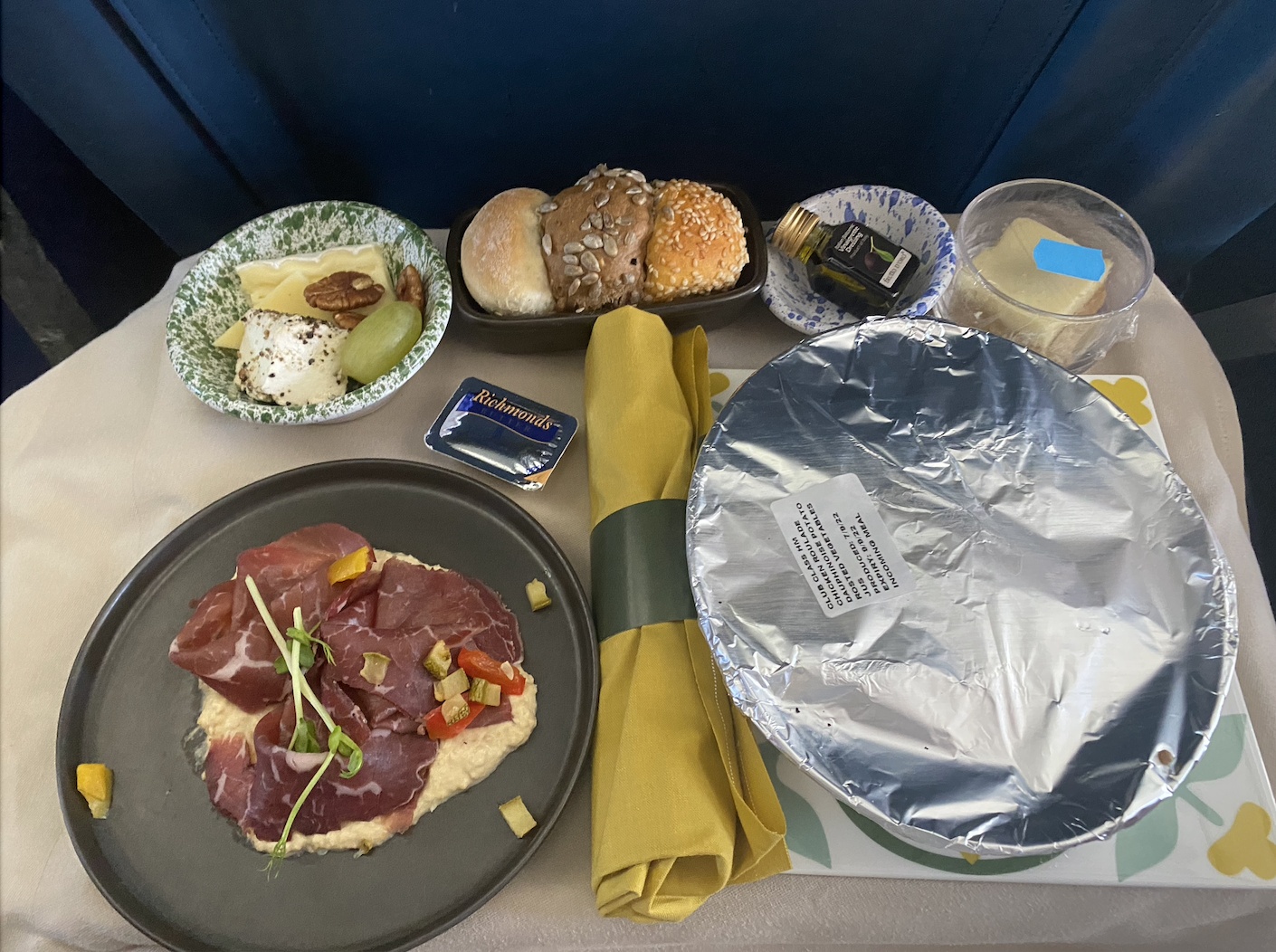
Besides taking our loss of taste into account, there are other aspects that make airplane food less flavorful. It has been proven that you enjoy a meal less in a noisy environment. A full plane with crying children and running engines is therefore somewhat less suitable for a fancy meal than a quiet restaurant.
Shelf life
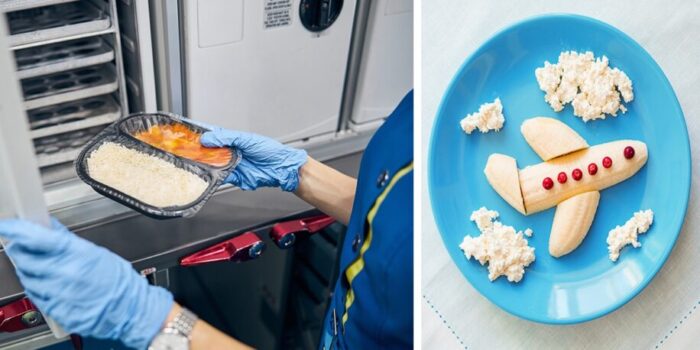
Meals also need to be prepared in a way that works for air travel. Meals are often frozen after being prepared, so they only need to be reheated on the plane. This means meals can be prepared several days in advance. Because not all food can simply be frozen, only a limited number of food types are allowed on board the plane. I’m afraid we’ll still be stuck with that tasteless, soggy little egg for the holidays to come…
Also read:
- Strange: this is what airline meals looked like in the 1960s
- Culinary airplane hacks
- 10x bizarre vending machines: handy or completely crazy?!
Source: Fraunhofer Research Institute


